







Located at the crossroads of international transport corridors, Azerbaijan is undertaking major projects to modernize its railway infrastructure, introduce digital solutions for freight transport and adopt international practices. Making full use of the country’s freight transport potential and setting new targets for export and transit shipments are among the priorities today.
Azerbaijan Railways (ADY) now plays an active role in transporting freight to neighboring countries and to many other countries along international transport corridors. By moving goods from east to west and from north to south, ADY is helping strengthen Azerbaijan’s position in transit freight transport.
Samir Haziyev, Head of the Freight Transport Department at Azerbaijan Railways, an AZCON Holding company, spoke to APA.az about new developments in rail freight, the targets set for the sector and the progress made in recent years.
– Mr Haziyev, rail transport has grown in both importance and volume in recent years. How do you assess Azerbaijan’s role in international transport corridors?
– Azerbaijan enjoys a favorable geographical position. It is one of the main transit hubs linking the East–West and North–South international transport corridors. There is also considerable scope to develop routes such as the South–West and North–West corridors.
Our main priority today is to meet the region’s growing demand for freight transport in full and on time. Interest in transport corridors passing through Azerbaijan is growing across the region, and we are preparing for a further increase in demand. To this end, ADY is upgrading its infrastructure and expanding its freight capacity.
I would also note that transit freight has accounted for most of the growth in recent years. From January to October, transit freight volumes reached 6.582 million tons, up 20 percent year on year. In October alone, we carried 817,000 tons of transit freight, an increase of 49 percent compared with the same month last year.
When discussing freight transport, I would particularly highlight the Baku–Tbilisi–Kars (BTK) railway project. ADY took important steps to increase the line’s annual freight capacity from 1 million to 5 million tons. Following modernization, the line entered full operation on 2 June this year, with an annual capacity of 5 million tons.The BTK railway is a key part of the East–West transport corridor. Previously, freight travelling west along the corridor could reach Europe only via Georgia’s Black Sea ports of Poti and Batumi. The BTK line now provides a direct rail link to Türkiye and opens up routes to Western markets, including Southern Europe and ports along the northern Mediterranean coast.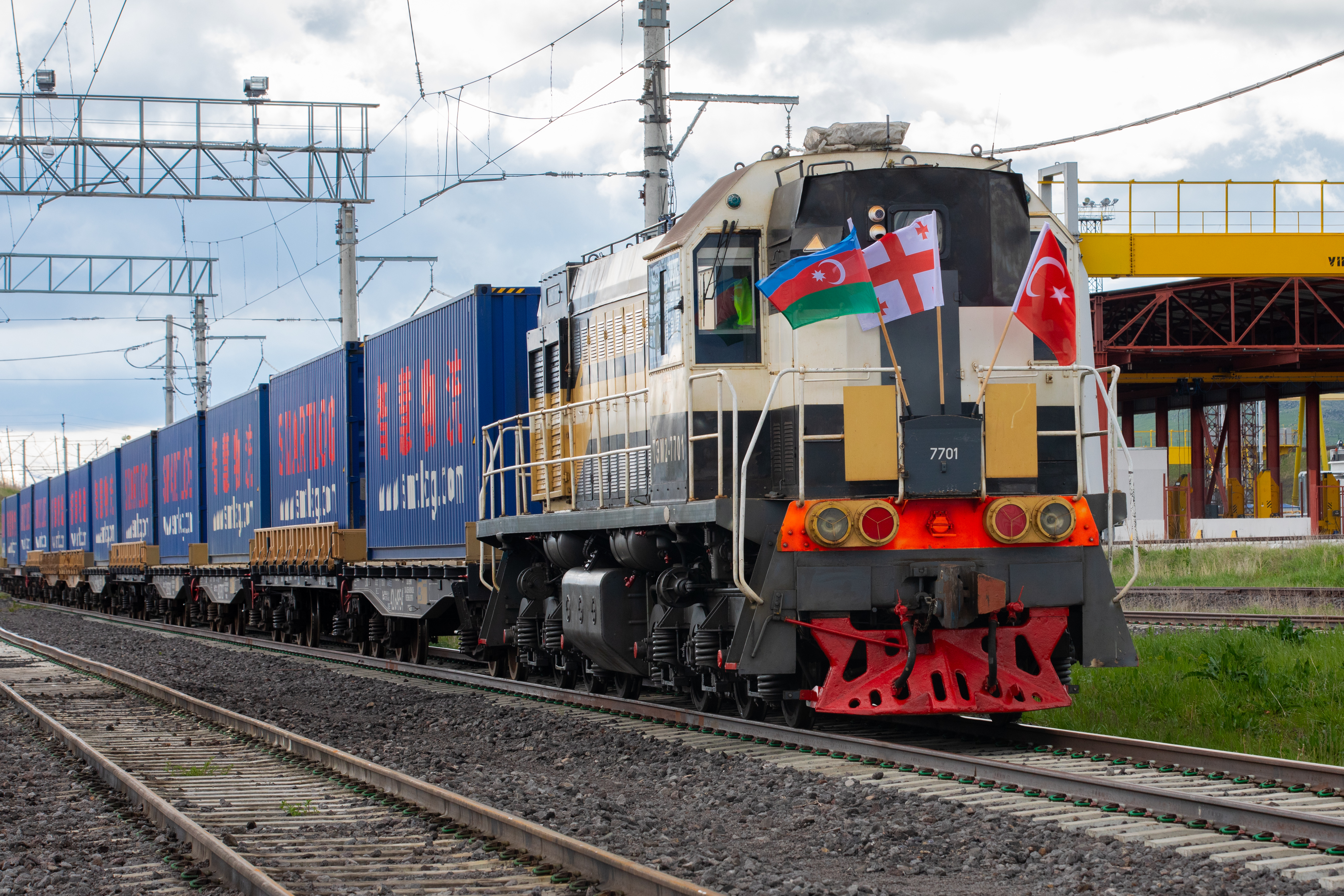
With an annual capacity of 5 million tons, the line has considerable scope to attract large volumes of freight. The Akhalkalaki logistics complex in Georgia has facilities for container transshipment and workshops for changing railway wheelsets.
With freight volumes rising, what steps are being taken to improve infrastructure and renew the rolling stock fleet?
Efficient freight operations depend on improvements to both infrastructure and rolling stock. Major projects are underway to renew the locomotive fleet, expand the freight wagon fleet and increase capacity at border crossings.
In recent years, the Yalama and Boyuk Kasik border stations have undergone extensive modernization. The aim is to speed up customs and border checks and technical inspections, reduce train processing times and allow more trains to pass through the crossings. At Yalama, for example, these improvements have cut train processing time from four and a half hours to three and a half hours, significantly increasing the station’s capacity.
At Boyuk Kasik station, measures such as fencing the site, installing video surveillance systems and streamlining train reception and handover procedures have reduced train processing times and sped up border crossings.
ADY currently has more than 4,200 wagons in service. We have taken significant steps to strengthen our freight fleet. Last year, we used internal investment funds to purchase and put into service 200 open wagons and 100 flat wagons. Preparations are underway to purchase a further 250 wagons next year.
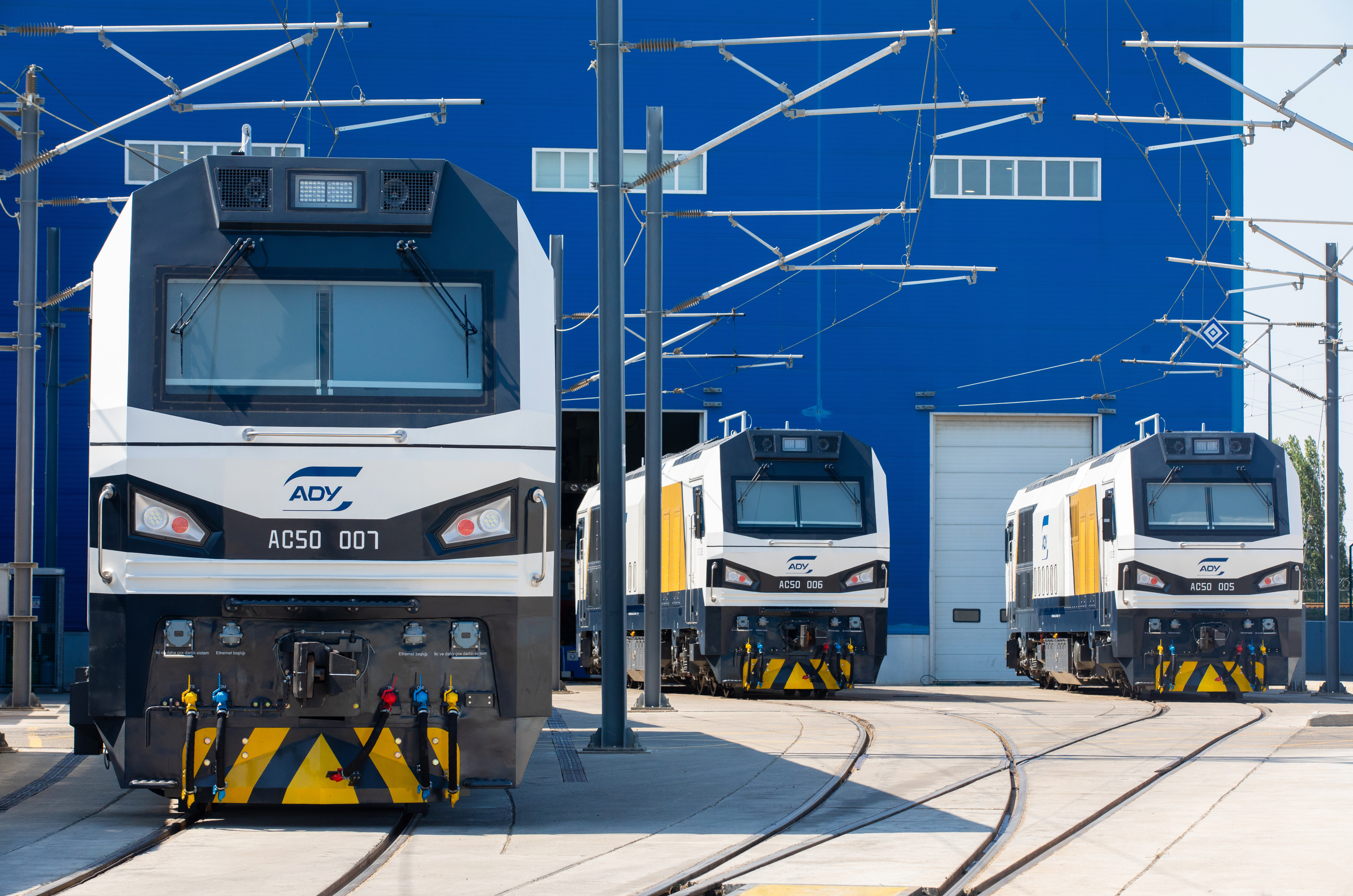
ADY also operates modern electric and diesel locomotives. Last year, we signed a contract to purchase seven new Chinese-built mainline locomotives, which joined our fleet this year. These locomotives feature advanced traction systems, high tractive effort and large fuel tanks, allowing us to operate heavy freight trains more efficiently and safely.
ADY continues to renew its locomotive fleet and upgrade its rolling stock so it can respond flexibly and safely to growing freight demand.
What role does the integration of the Port of Baku with railway operations play in making freight transport along the Middle Corridor more efficient, and what steps are being taken to improve that integration?
Several major projects are underway at the Baku International Sea Port and Bash Alat station. At the port, the number of arrival and departure tracks has increased from 11 to 15. The port can now receive and dispatch 760 wagons carrying 68,400 tons of freight per day, up from 600 wagons and 54,000 tons. This has increased capacity for both freight handling and train formation.
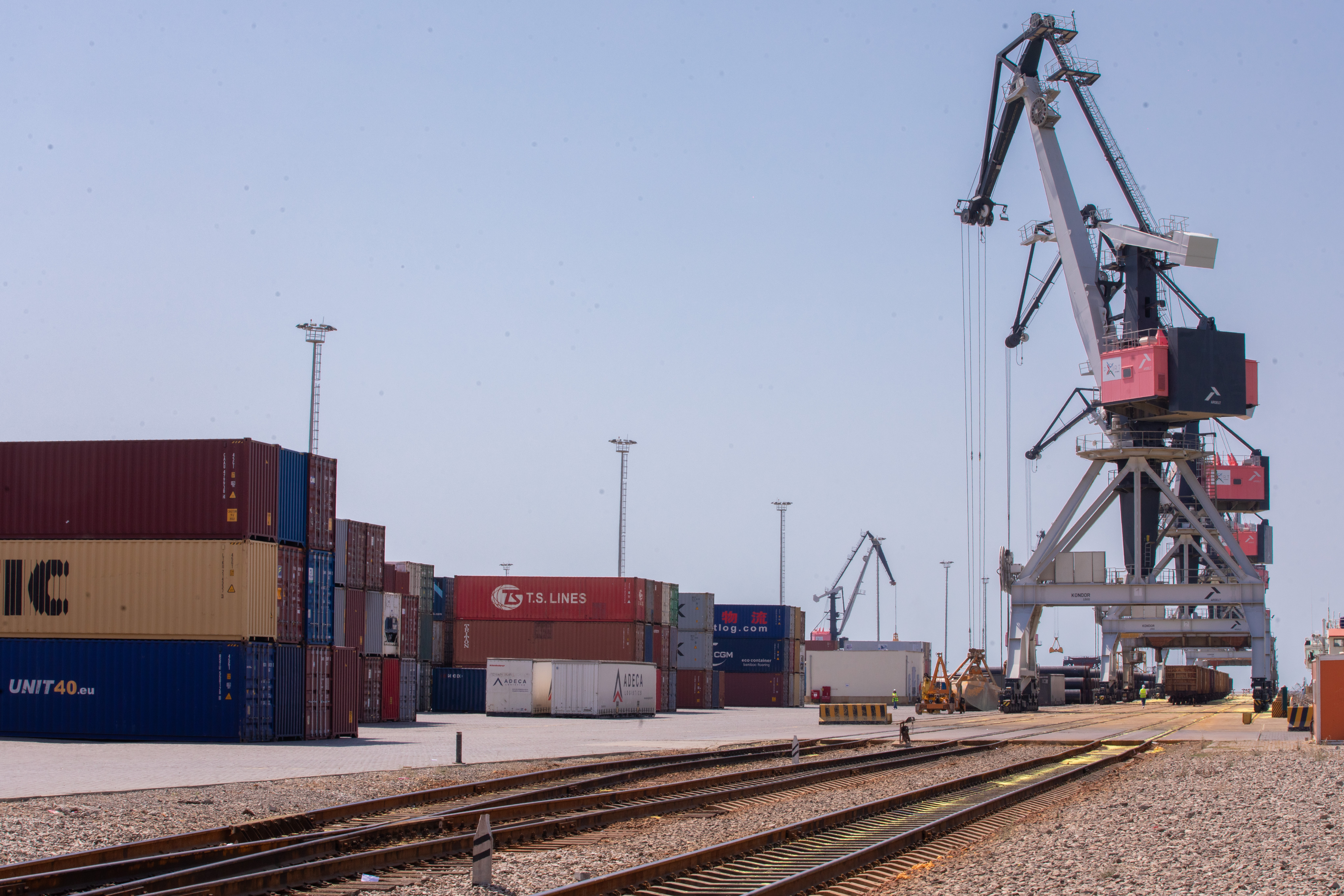
A major reconstruction project is also underway at Bash Alat station, where the tracks, overhead electrification and signaling systems are being fully renewed.
A key part of the project is a new rail link that will allow westbound freight trains to leave the port directly, bypassing Bash Alat station. The link will cut journey times by several hours.
What steps are being taken to develop freight services and improve efficiency along the rail corridors? How will the upgraded lines increase freight capacity?
Reconstruction is continuing on the Alat–Osmanli–Astara line, a key section of the North–South Corridor. Construction work on the Alat–Osmanli section is 60 percent complete.
Once the upgrades are complete, train speeds on some sections will rise from 40 km/h to up to 80 km/h. This will increase the corridor’s capacity and shorten freight delivery times.
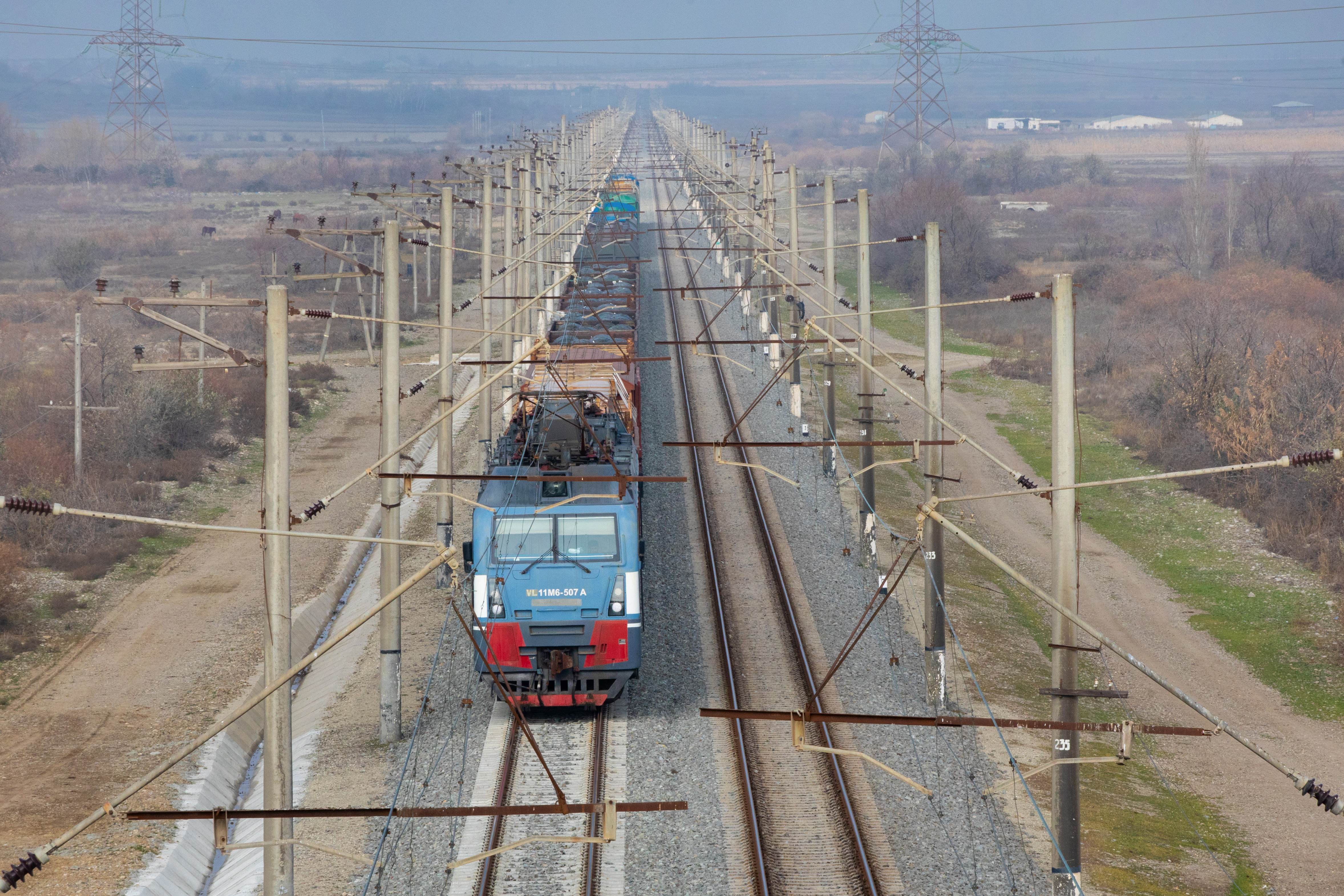
One of our strategic priorities is to convert the rail network to alternating current (AC) electrification in phases. On the Baku–Boyuk Kasik line, we have completed the conversion between Boyuk Kasik and Hajıgabul. The next phase will cover the Hajıqabul–Baku section. Switching to AC improves energy efficiency, enables higher train speeds and reduces operating costs.
Speaking of railway upgrades, I would also like to highlight the projects underway in the territories liberated from occupation. The Yevlakh–Barda line is undergoing repairs and rehabilitation, and the Aghdam–Khankendi line is being rebuilt.
Projects are also underway to provide rail links to strategic sites such as the Aghdam Industrial Park and the Araz Valley Economic Zone. These links will significantly increase freight volumes in those areas in the years ahead.
Samir, what steps are being taken to streamline cross-border rail operations with neighboring countries, and what further measures are planned? What changes can we expect to see this year?
We currently have direct rail links with two neighboring countries, Russia and Georgia. We are discussing both short- and long-term measures with our counterparts to speed up cross-border operations. For example, before a train leaves Russia’s Derbent station for Azerbaijan’s Yalama station, we receive all its data electronically and analyze and process it before the train arrives.
We stay in regular contact with our partners. The railway operators on both sides agree on a monthly freight plan before shipments reach the border. All cross-border shipments are scheduled in advance and received in designated ten-day periods throughout the month.
We are also in talks with Russian Railways to increase capacity along the North–South transport corridor. The goal is to carry 5 million tons of freight annually along the corridor in 2028–2029 and move that freight south to Iran, Iraq and as far as the Persian Gulf. That is an ambitious target, given that we currently carry around 1 million tons in that direction.
Kazakhstan plays a key role in coordinating freight operations along the East–West Corridor. Through the Control Tower project, Kazakhstan Railways sends advance information to our system on freight scheduled to transit Azerbaijan. This allows us to see when trains are due to arrive and what types of wagons to expect, so we can prepare in advance. Georgian Railways also has access to this information.
Freight volumes on Caspian Sea ferries have grown significantly this year. Ferry services operate in both directions on the Alat–Turkmenbashi and Alat–Kuryk (Kazakhstan) routes. Sufficient ferry capacity across the Caspian is essential to keeping freight moving along the corridor.
Construction and installation work is nearing completion at the Astara Terminal, a key part of the International North–South Transport Corridor.
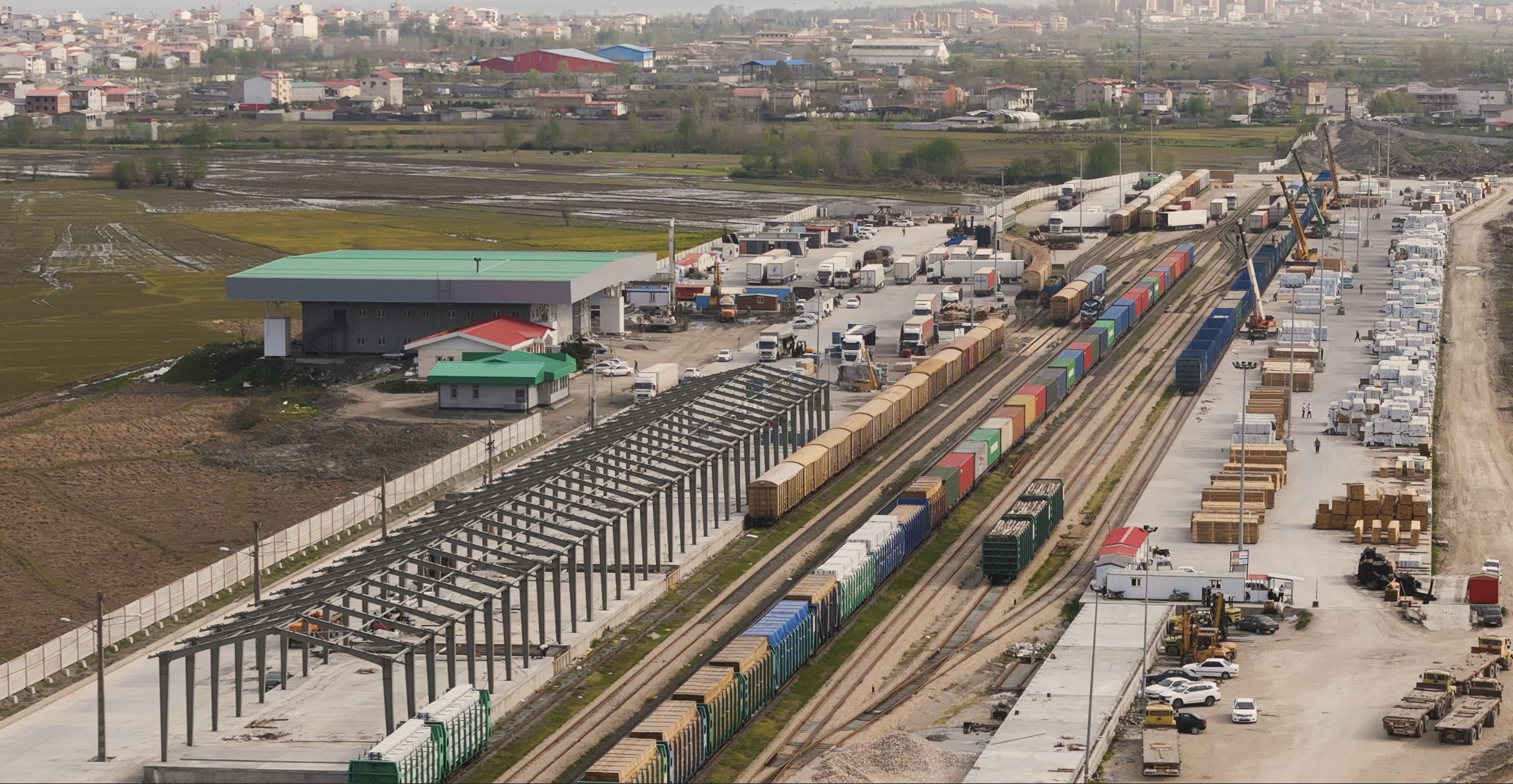
From January to October this year, the terminal handled 753,614 tons of freight, up 37 percent from the same period last year. In October alone, it handled a record 122,216 tons, up 65 percent from October 2025.
Once fully operational, the Astara Terminal will have an annual freight handling capacity of 3.5–4 million tons. This will make freight operations more efficient, strengthen the region’s transit potential and improve the competitiveness of the North–South Corridor.
We’d also like to ask about the use of digital tools. Azerbaijan Railways recently launched its Cargo Tracking system. How easy is it for customers to track their shipments, and what feedback have you received so far?
Developing and introducing digital tools is a priority for ADY, and we’ve made significant progress. The platforms we use today allow shippers and consignees to place and complete freight orders online through a fully paperless process, without visiting a station.
Through their accounts on the ADY Smart platform, customers can manage all their logistics operations, submit requests and track updates and responses online. The launch of Cargo Tracking has further improved customer satisfaction. Customers can follow the current location and status of their wagons and shipments at each stage of the journey, both within Azerbaijan and on foreign rail networks. This visibility helps them estimate delivery times more accurately and notify their business partners in advance.
Customers can already track their wagons and shipments entirely online across China, Kazakhstan, Azerbaijan and Georgia, the main countries along the East–West Corridor. We’re also working with Russian Railways to establish a similar data exchange and integrate our systems.
We’ve set ourselves a more ambitious goal of using artificial intelligence in day-to-day railway operations. Freight handling, train processing and dispatching all involve weighing many possible options. We plan to use AI algorithms to identify the quickest and most efficient course of action. We’re exploring how to use this technology to optimise train schedules across the network and improve operations at stations with complex traffic flows, particularly Bash Alat station, one of our key multimodal hubs.
We’re also rolling out a new digital tool to improve the management of freight and commercial operations. We signed a contract with an international partner to develop the software. Development is complete, and pilot testing is underway at selected stations.

How does the new system differ from ADY Smart, which customers currently use to submit and manage requests? What are its main advantages?
The new platform allows us to manage and monitor the entire supply and transport chain, covering all commercial aspects of rail freight. It is a more modern system with a broader range of functions and more detailed oversight of operations. Once the new platform is ready for full rollout, both systems will operate in parallel for a transition period. We then expect to retire ADY Smart and move its functions to the new platform.
We’ve begun piloting the system at Bilajari depot and its locomotive turnaround points in Hajıqabul, Shabran and Yalama. The software covers every stage of locomotive operations, from assigning locomotives to freight services and scheduling crews to completing train operations and returning locomotives to the depot. The platform will simplify these processes and give us one place to record operational issues and track quantitative and qualitative performance indicators. Analyzing that information will help us identify where to improve operations and plan future changes.
Together, these projects strengthen Azerbaijan’s position along international transport corridors, expand its freight capacity and make logistics services more efficient. Azerbaijan Railways continues to modernize its infrastructure, renew its rolling stock and introduce digital tools. Closer cooperation with international partners also creates opportunities to develop new routes and attract more freight. These efforts help Azerbaijan realize its potential as a transit and logistics hub and strengthen its transport links across the region.


 Follow us on Telegram
 t.me/apanewsaz
 Follow us on Instagram
 Follow us on TikTok
 Follow us on Facebook
 Follow us on X