





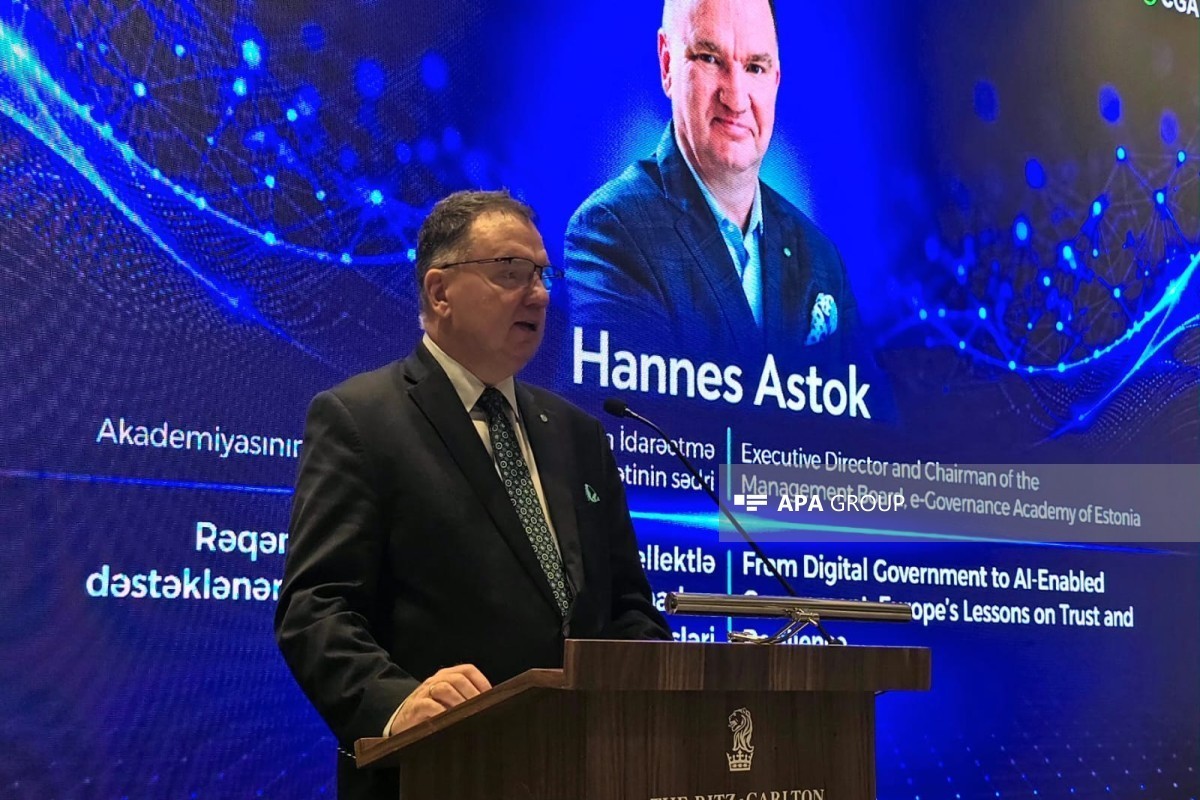


As artificial intelligence systems gain greater capabilities to make independent decisions and carry out operations, mechanisms for overseeing their activities must also be strengthened, Hannes Astok, Executive Director and Chairman of the Management Board of Estonia's e-Governance Academy (eGA), said at the 8th Summit of Information Security Leaders held in Baku, APA-Economics reports.
According to him, traditional cybersecurity systems are primarily focused on protecting information systems from external attacks. However, artificial intelligence creates a new challenge: controlling what operations authorized systems are allowed to perform.
"As systems become more autonomous, governance must become stronger, not weaker," Astok emphasized.
He stated that this requires ensuring reliable identification, access management, monitoring, logging of operations, and auditing capabilities.
The expert noted that it is important to track what operations AI agents actually perform and ensure that they operate within their defined authority.
Astok added that one of the main objectives of the European Union's digital approach is to establish large-scale trust mechanisms.
According to him, the single market, cross-border services, digital identification, and data protection are examples of this approach.


 Follow us on Telegram
 t.me/apanewsaz
 Follow us on Instagram
 Follow us on TikTok
 Follow us on Facebook
 Follow us on X