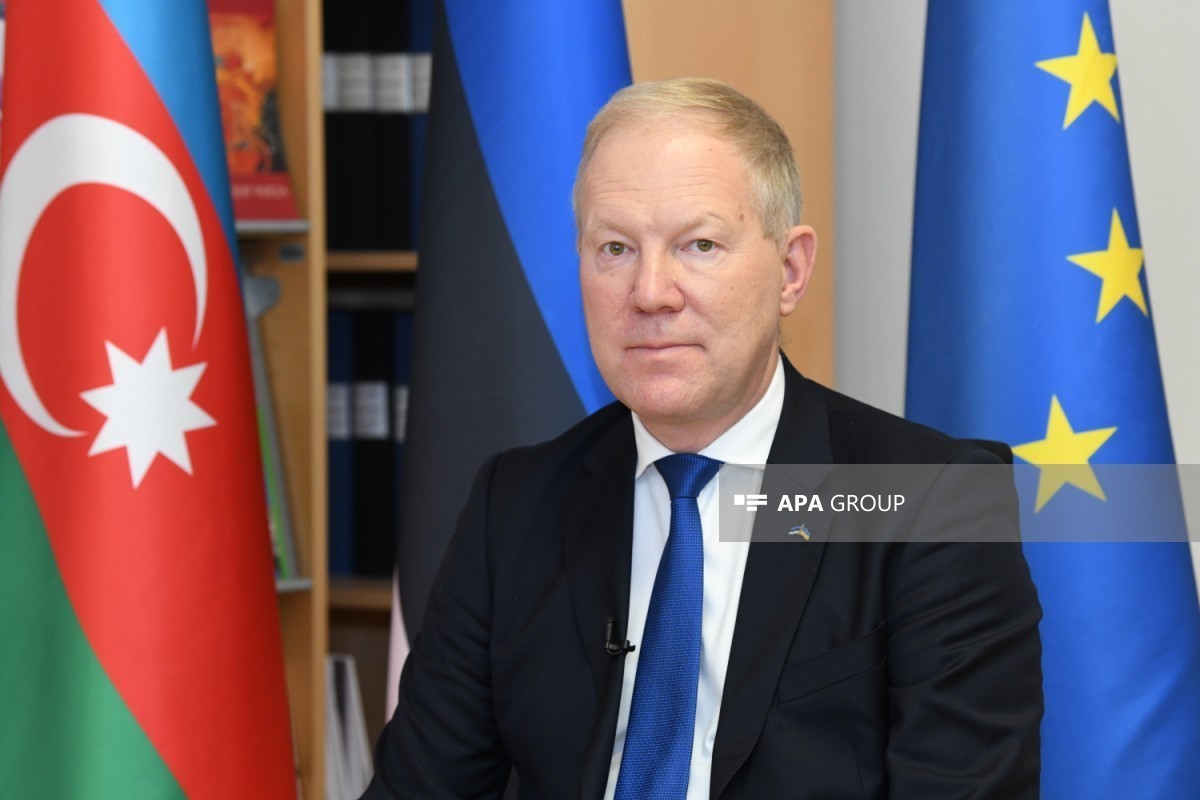


Azerbaijan and Estonia are exploring new opportunities to deepen political, economic and interparliamentary cooperation, while recent developments in the South Caucasus are opening broader prospects for regional peace, connectivity and international partnership.
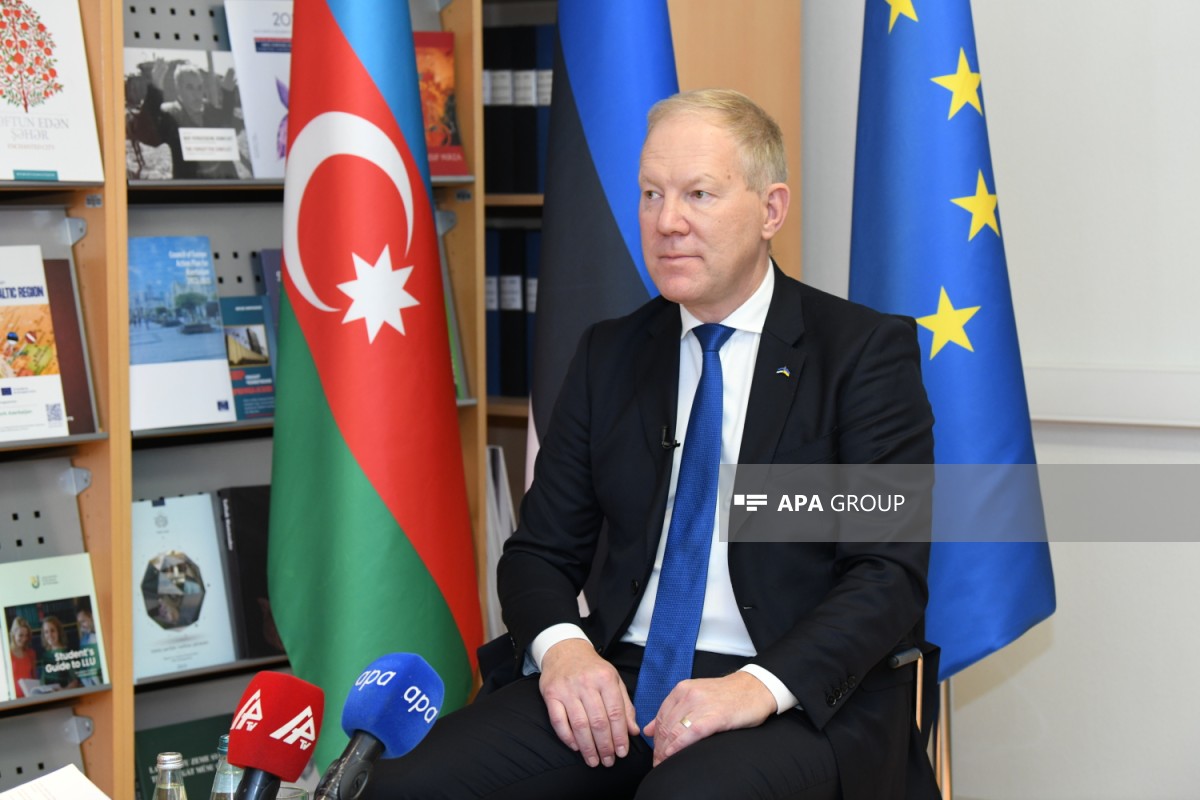
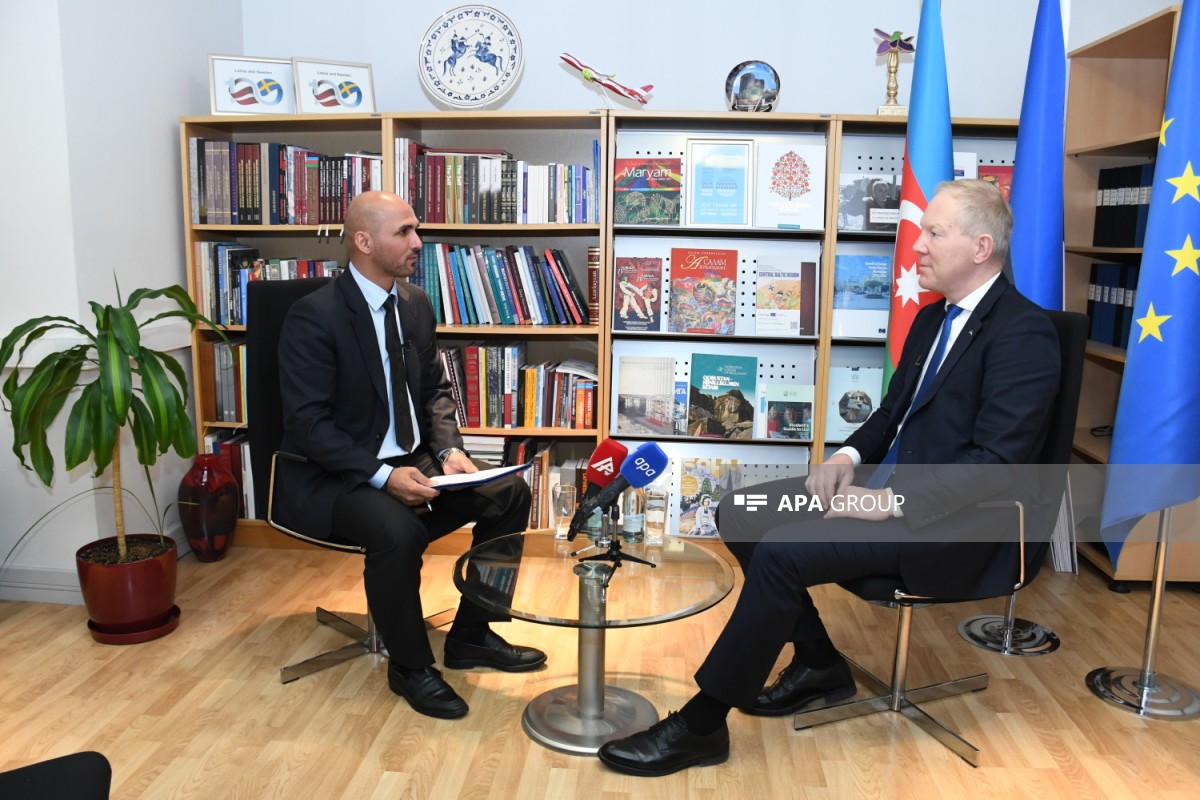
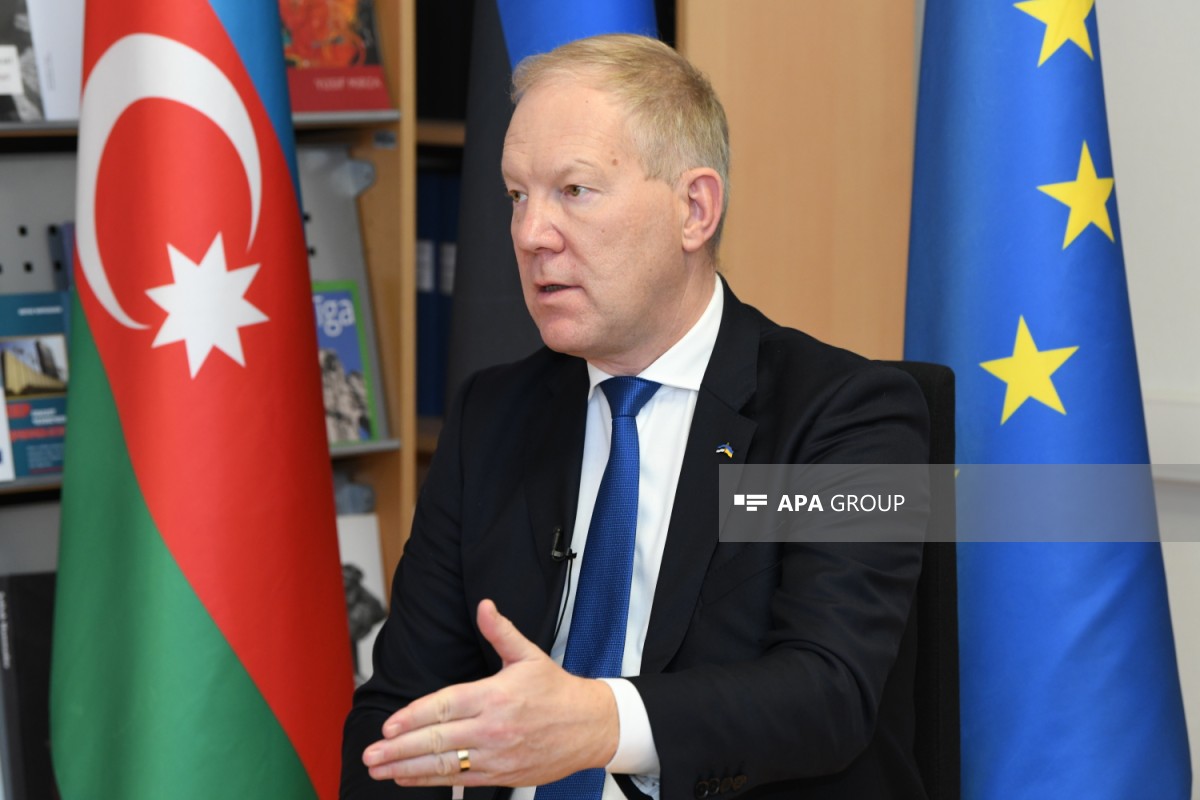
To discuss these issues in greater detail, APA News Agency interviewed Chairman of the Foreign Affairs Committee of the Estonian Parliament Marko Mihkelson. The conversation focused on bilateral relations, Azerbaijan–EU ties, regional security and the prospects for future cooperation.
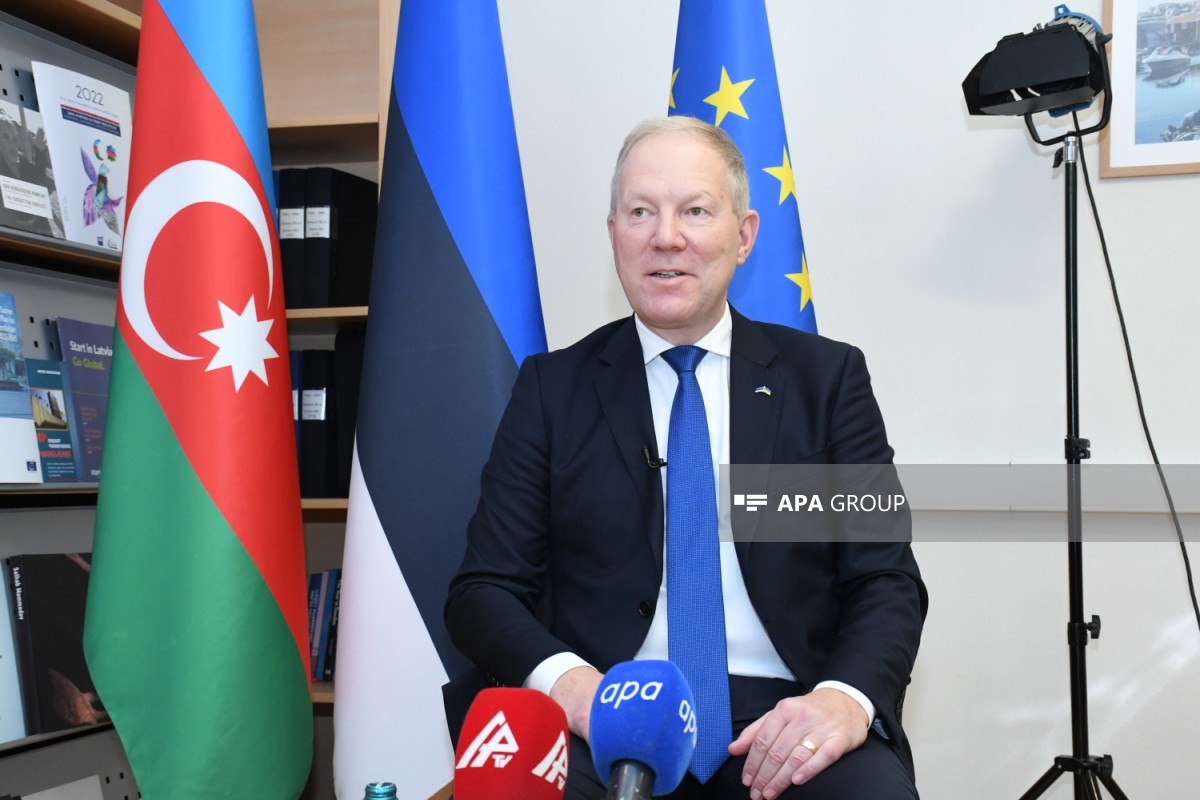
– Mr. Mihkelson, are you satisfied with the current level of interparliamentary relations between Azerbaijan and Estonia?
– I think the two visits by the EU’s High Representative, Kaja Kallas, who represents the European Union in the field of foreign policy, to Baku this year and last year demonstrate that there are clearly areas of mutual interest between Azerbaijan and the European Union. These visits also show that the EU is very much interested in enhancing and developing its cooperation with Azerbaijan in a broader and more comprehensive way.
At the same time, we also know what the deficiencies and challenges in these relations are. We are aware of the questions that have existed in the past, as well as some issues that may still remain today. But what is most important, in my view, is that there is political will and readiness to address these questions, discuss them and look for ways of moving the relationship forward.
And certainly, when it comes to the position not only of the European Union but also of Estonia, as a small member state of the EU, our clear interest is to maintain and strengthen peace, stability and predictability. This is particularly important in regions that have such significant geostrategic importance, as the South Caucasus certainly does.
So, again, if we look at the tremendous developments that we have seen here during the last few years, I think they provide solid ground and a strong basis for developing much better relations in the future. This applies not only to relations between Azerbaijan and Estonia, but also, more broadly, to the relationship between Azerbaijan and the European Union as a whole.
2. What concrete steps can we expect in the near future to further strengthen interparliamentary cooperation between Azerbaijan and Estonia?
– A very concrete step is our current visit to Baku. As I already mentioned, the last time we were here was 22 years ago, so I think now is certainly the right time to enhance and further develop our cooperation. This visit itself is an important opportunity to renew contacts, strengthen existing ties and create a more active framework for future cooperation between our two parliaments.
I know that already next month, in November, our friendship group from Tallinn will also visit Baku, Azerbaijan. And hopefully, as I mentioned today, I also extended an invitation to my very good friend, Mr. Samat Seyidov, to pay a visit to us in Estonia together with his colleagues. I believe that these kinds of reciprocal visits can help us maintain regular contacts and create more opportunities for direct parliamentary dialogue.
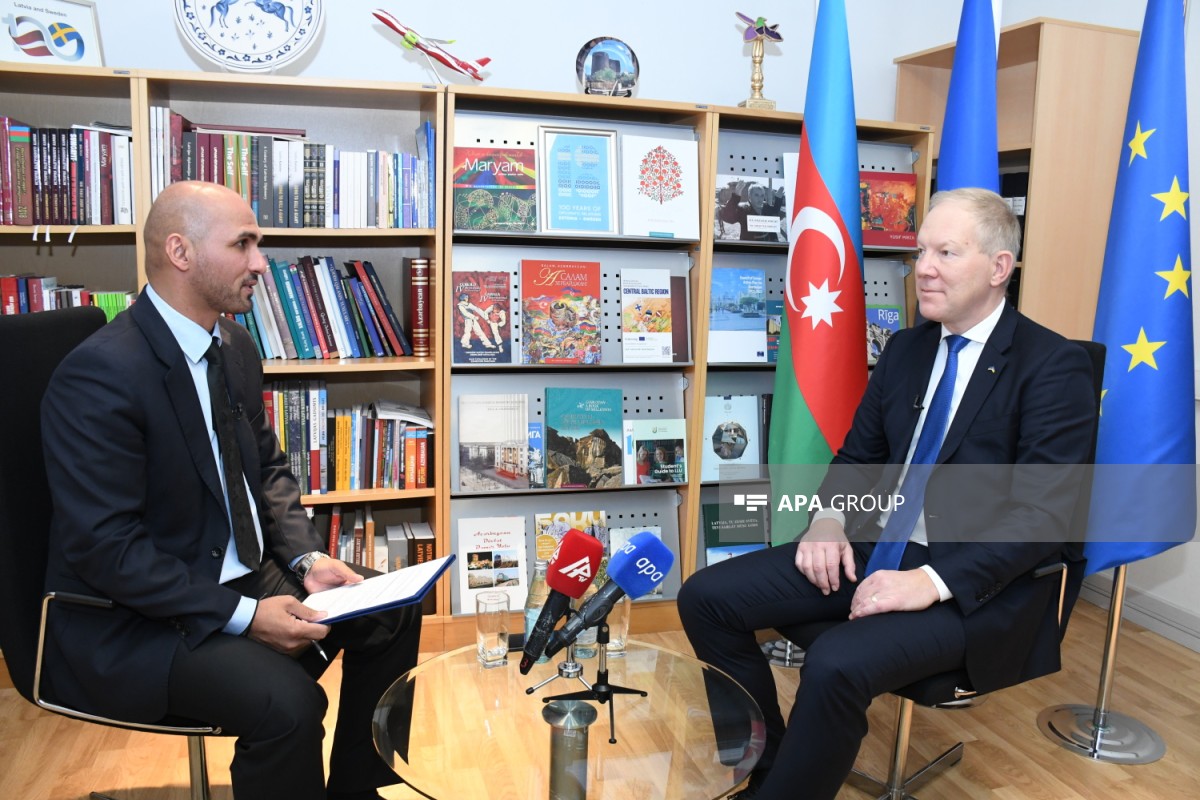
So definitely, I see that there is a lot of potential for cooperation, not only between the committees on foreign affairs or between the friendship groups, but also in more specific areas. This could include, for example, cooperation between committees dealing with economic issues or social affairs, where both sides can exchange experience and discuss matters of mutual interest.
So definitely, there is a lot of space and potential for us to learn from each other, to exchange our experiences and to develop parliamentary cooperation in a broader range of areas.
– What new opportunities could the signing of a peace agreement between Azerbaijan and Armenia create for Estonia’s political and economic engagement with the South Caucasus, as well as for transport connectivity and regional security? In which areas could Estonia benefit from such a peace?
– This is very good news, not only for us, but first and foremost for Azerbaijan, given what has happened during the last few years here in this region. The restoration of territorial integrity is, of course, a significant step forward for peace and stability in the region, where outside forces have fewer and fewer opportunities to manipulate the situation here in the South Caucasus.
And, of course, peace and stability, which will hopefully be strengthened by a peace treaty between Armenia and Azerbaijan, will allow cooperation at the international level to prosper in many different areas. Estonia, as I said, while we are opening a permanent representation, an embassy here in Azerbaijan, is at the same time also doing so in Armenia. It shows how important strengthening cooperation with Azerbaijan is for us, as a small country. And hopefully, the business delegation that will accompany our foreign minister later this month will also seek new opportunities, of course.
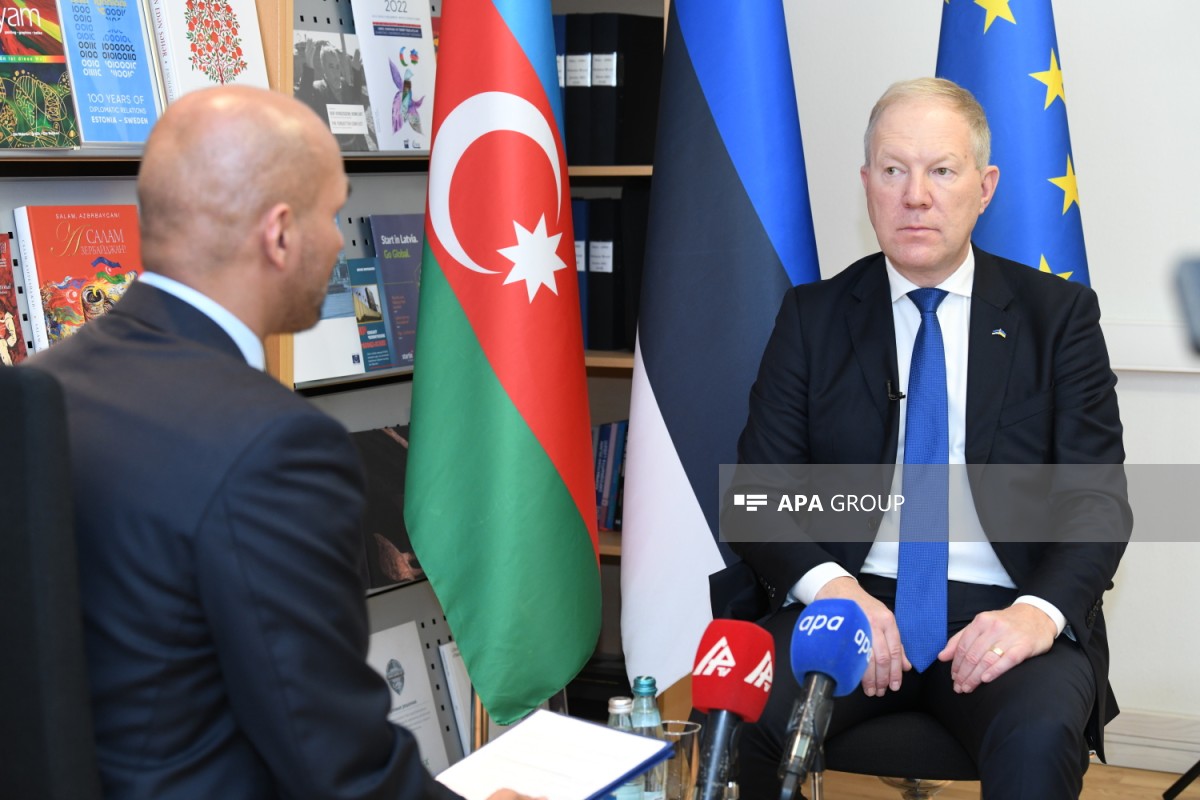
Then, at the beginning of November, we will welcome a governmental delegation from Azerbaijan to Estonia for an intergovernmental meeting, which was last held, I guess, nine years ago. That tells you that there are, again, new openings and new possibilities, both at the governmental level, to make sure that our businesses can find better, let's say, opportunities – both Azerbaijani businesses in Estonia and Estonian companies here in Azerbaijan.
– Azerbaijan is carrying out large-scale reconstruction and development projects in Karabakh and Eastern Zangezur. Could the participation of Estonian state institutions and companies in these projects be considered, particularly in areas such as digital technologies, urban development and infrastructure?
– I think Estonia can be helpful in several different areas of cooperation with Azerbaijan. We have been very successful during the last 35 years in modernising our own society, particularly through the active use of modern information technologies and digital solutions. During this period of time, a number of companies have emerged in Estonia, and many of them have become very successful and globally recognised companies. Some of these companies and their activities can also already be seen here in Baku.
Bolt is actively present here and is one of the most well-known Estonian companies operating globally. But I think that, again, while we are now opening our own embassy here in Azerbaijan, having a permanent government representation also gives our diplomats a better opportunity to observe and understand what can be done in practice. It allows them to explore what kind of possibilities and opportunities could exist for Estonia, and particularly for Estonian businesses, to become more active and more visible here in Azerbaijan.
There are also services and solutions that Estonia has developed and successfully implemented in the area of digital development. I think some of the experience that we have gained in this field, as well as some of the digital services that we have introduced in Estonia, might perhaps be of interest to the Azerbaijani government. These solutions could potentially represent interesting areas for further cooperation and could also be considered for introduction here in Azerbaijan.
– How does Estonia view the future of Azerbaijan–EU relations?
– First and foremost, I think that, coming back again to the question about Azerbaijan and Estonia, you see, we both have neighbours that are quite challenging. For us, it is Russia; for you, it is not only Russia, but also neighbouring countries to the south and to the west. But definitely, we have learned from our past that when you have strong principles and defend those principles of sovereignty and territorial integrity, then that matters a lot for the future of your own country and the defence of your very existence.
When it comes to Azerbaijan-EU relations, I think it is also important for Azerbaijan to make a kind of, perhaps, clearer decision about the areas in which it is seeking to deepen relations with the EU.
Definitely, there are obvious topics and themes when it comes to energy security, as well as the importance of Azerbaijan’s geostrategic location as a bridge between Europe and Asia. This also applies to the question of, let’s say, the Middle Corridor running through Azerbaijan from east to west. Specifically, this is also in the interest of all of us. And what has happened lately — the tremendous development in relations between Azerbaijan and Armenia, and the fact that we are getting closer to the possibility of signing a peace treaty between Azerbaijan and Armenia — definitely creates a lot of opportunities and possibilities to enhance cooperation with the EU.
You know that the EU is not one country. The EU has 27 different countries, and each of them has a different history and also different understandings of how to approach countries in the South Caucasus.
But Estonia is one of them. We will definitely promote mutually beneficial relations with Azerbaijan, as much as with Armenia.
– To what extent would you say that the position of the Estonian Parliament on issues concerning Azerbaijan coincides with the European Union’s broader policy?
– I think the two visits by the EU’s High Representative, Kaja Kallas, who represents the European Union in the field of foreign policy, to Baku this year and last year demonstrate that there are clearly areas of mutual interest between Azerbaijan and the European Union. These visits also show that the EU is very much interested in enhancing and developing its cooperation with Azerbaijan in a broader and more comprehensive way.
At the same time, we also know what the deficiencies and challenges in these relations are. We are aware of the questions that have existed in the past, as well as some issues that may still remain today. But what is most important, in my view, is that there is political will and readiness to address these questions, discuss them and look for ways of moving the relationship forward.
And certainly, when it comes to the position not only of the European Union but also of Estonia, as a small member state of the EU, our clear interest is to maintain and strengthen peace, stability and predictability. This is particularly important in regions that have such significant geostrategic importance, as the South Caucasus certainly does.
So, again, if we look at the tremendous developments that we have seen here during the last few years, I think they provide solid ground and a strong basis for developing much better relations in the future. This applies not only to relations between Azerbaijan and Estonia, but also, more broadly, to the relationship between Azerbaijan and the European Union as a whole.
– In your view, which areas of cooperation between Azerbaijan and Estonia have the greatest potential? Which sectors should receive greater attention in the bilateral relationship?
– I think we can look at cooperation in several different directions. There are, of course, the more traditional areas, such as logistics, energy cooperation and energy security, as well as the use of modern and new technologies in these fields. These are areas where there is already a clear basis for cooperation and where both countries can look for additional opportunities to work together more actively.
But there are also other areas where Estonia has been particularly successful and, in some cases, has even become a global leader. I am referring especially to information technology and to the way modern technologies can be used to modernise society, improve public services and make interaction between citizens and the government much easier, faster and more efficient. Estonia has accumulated considerable experience in this field, and I think this experience can also be relevant when looking at possible areas of cooperation with Azerbaijan.
At the same time, it is, of course, also up to businesses themselves to demonstrate interest and identify concrete opportunities. But the role of the government, the embassy, diplomats and also us, as parliamentarians, is to create the necessary possibilities and pave the way for the business community. Our task is to help create the conditions in which companies can discover interesting opportunities, establish contacts, work together, make investments and, ultimately, benefit from that cooperation.
So I believe there is considerable potential, both in traditional sectors and in newer areas connected with technology, digitalisation and modernisation, and our responsibility is to help make those opportunities more accessible to businesses and other partners on both sides.


 Follow us on Telegram
 t.me/apanewsaz
 Follow us on Instagram
 Follow us on TikTok
 Follow us on Facebook
 Follow us on X