





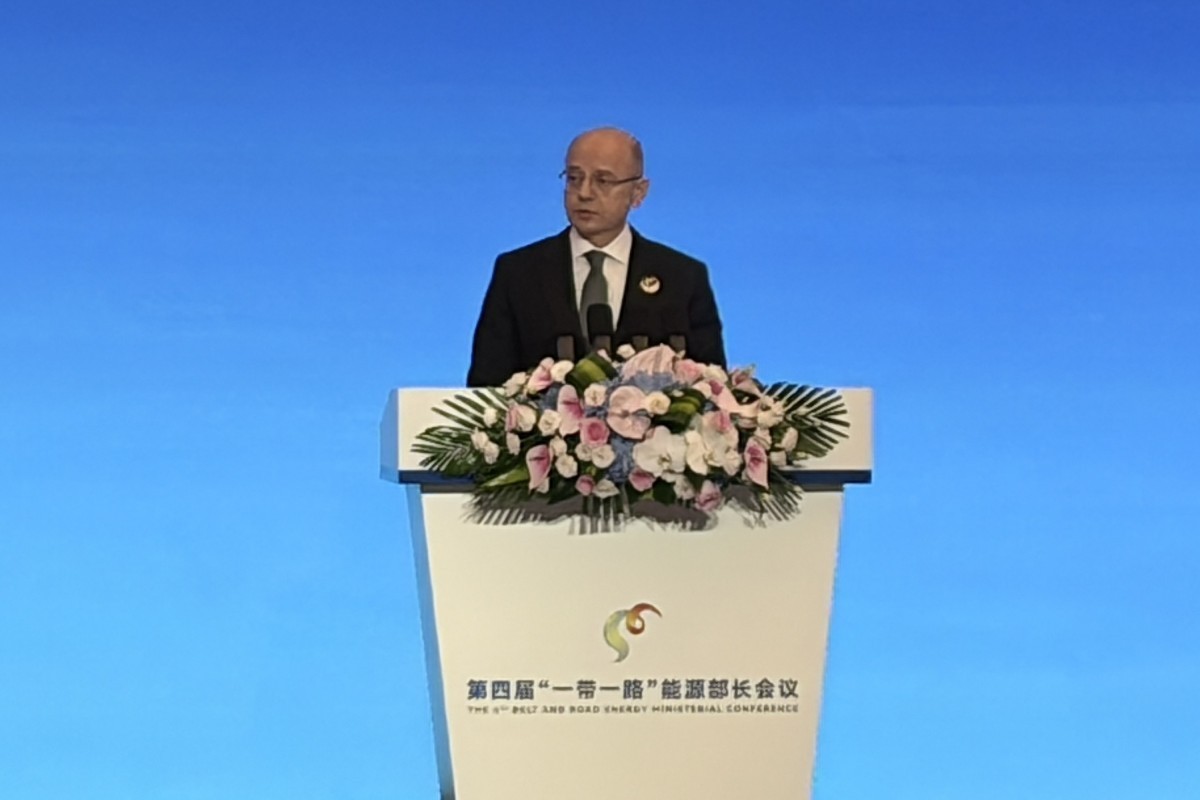


Azerbaijan’s Minister of Energy Parviz Shahbazov addressed the 4th Belt and Road Energy Ministerial Conference held in Qingdao, China, the Ministry told APA-Economics.
In his speech, it was noted that Azerbaijan was one of the first countries to support the Belt and Road Initiative put forward by Chinese President Xi Jinping. As noted by President of the Republic of Azerbaijan Ilham Aliyev, Azerbaijan ranks second after China in terms of the volume of investments made domestically and abroad within the framework of the initiative. It was emphasized that the Middle Corridor strengthens transport links between China and Europe, while the Zangazur corridor will open a new route between East and West.
“The elevation of our relations to the level of a comprehensive strategic partnership through the political will of our leaders supports the expansion of our cooperation within the Belt and Road Initiative and the development of joint projects in the clean energy sector. The signing of numerous agreements with Chinese companies on onshore solar and offshore wind energy, energy storage and power grid infrastructure, the establishment of a comprehensive strategic partnership with China Energy, the recent commissioning of a solar power plant, and the conducting of a power grid study are concrete results of this policy,” the minister added.
It was noted that at a time when connectivity is becoming a strategic resource, Azerbaijan’s new contribution to the Belt and Road Initiative is to connect Eurasia’s electricity markets through green energy corridors. Opportunities for cooperation with Chinese companies in establishing these corridors were highlighted. It was noted that these corridors, encompassing Central Asia, the Caspian region, the South Caucasus, Türkiye and Europe, would form a green energy belt along the modern Silk Road, paving the way for a multifaceted energy partnership with China.
The speech also addressed the objectives of the Joint Ministerial Statement regarding the simultaneous advancement of energy security and the energy transition, increasing investments in cross-border infrastructure, and expanding access to clean energy technologies.


 Follow us on Telegram
 t.me/apanewsaz
 Follow us on Instagram
 Follow us on TikTok
 Follow us on Facebook
 Follow us on X