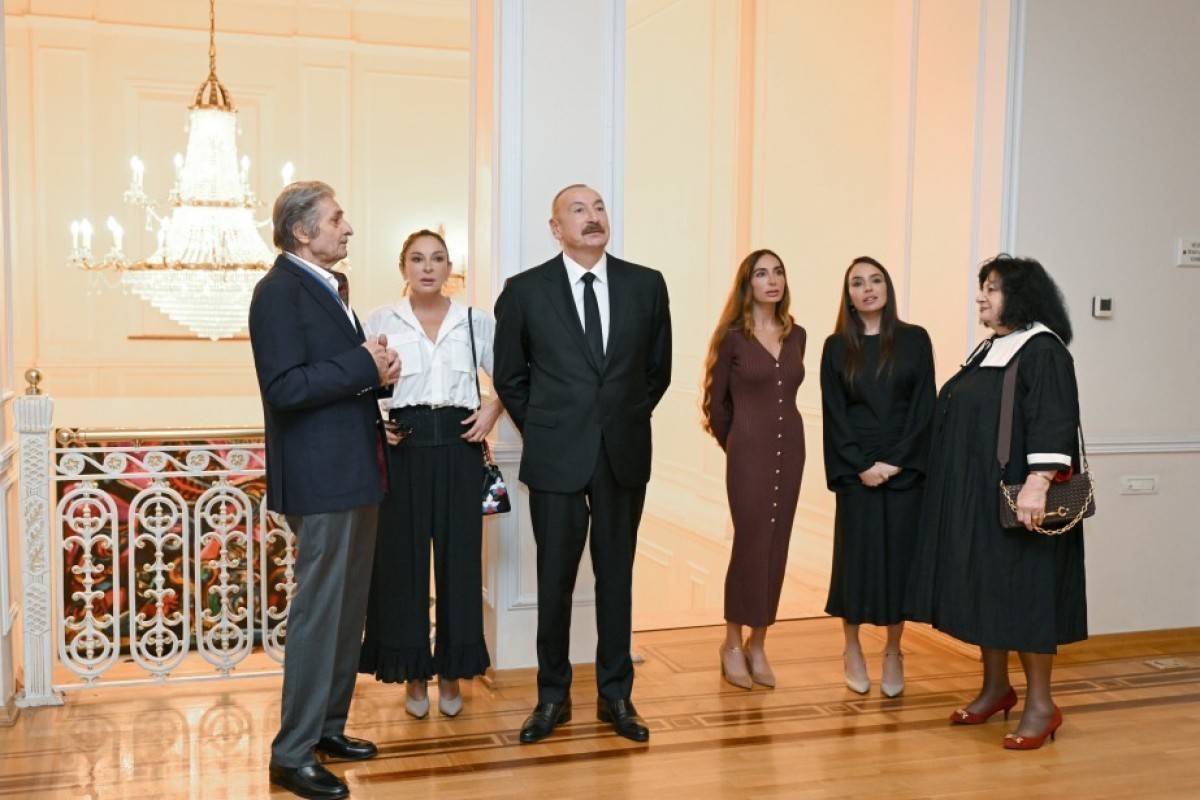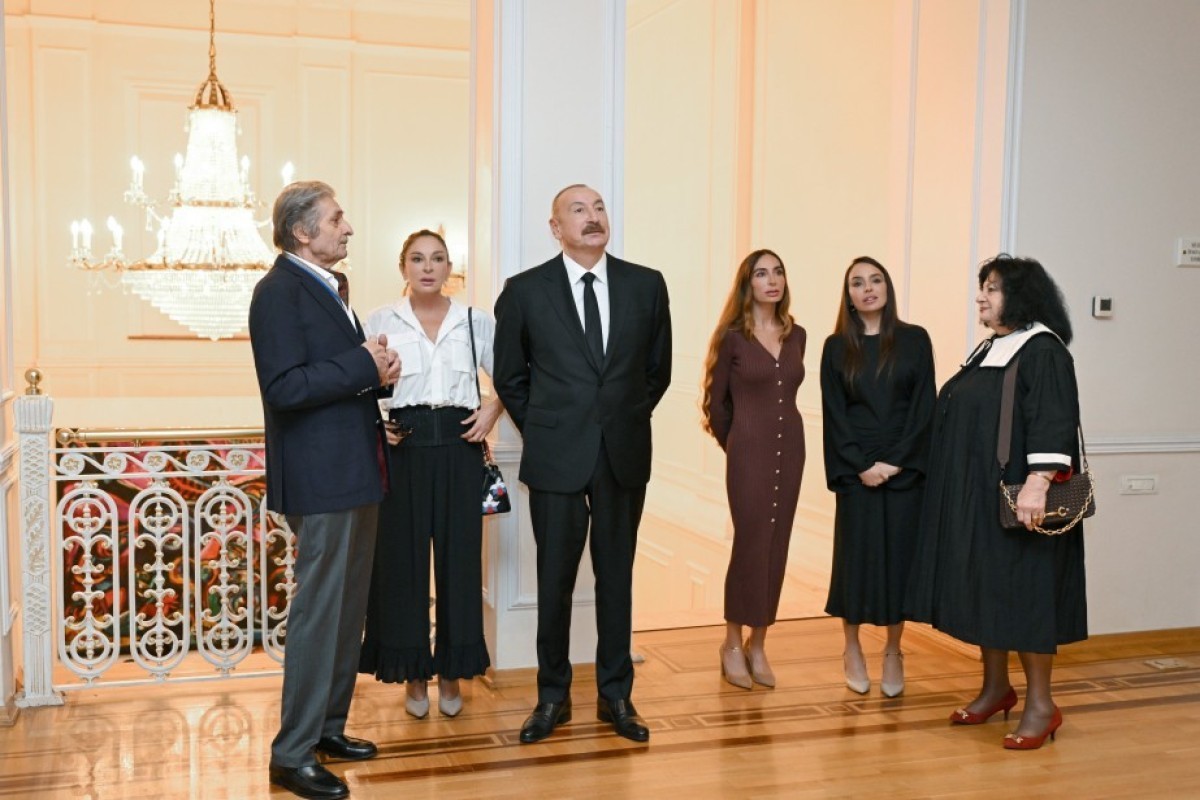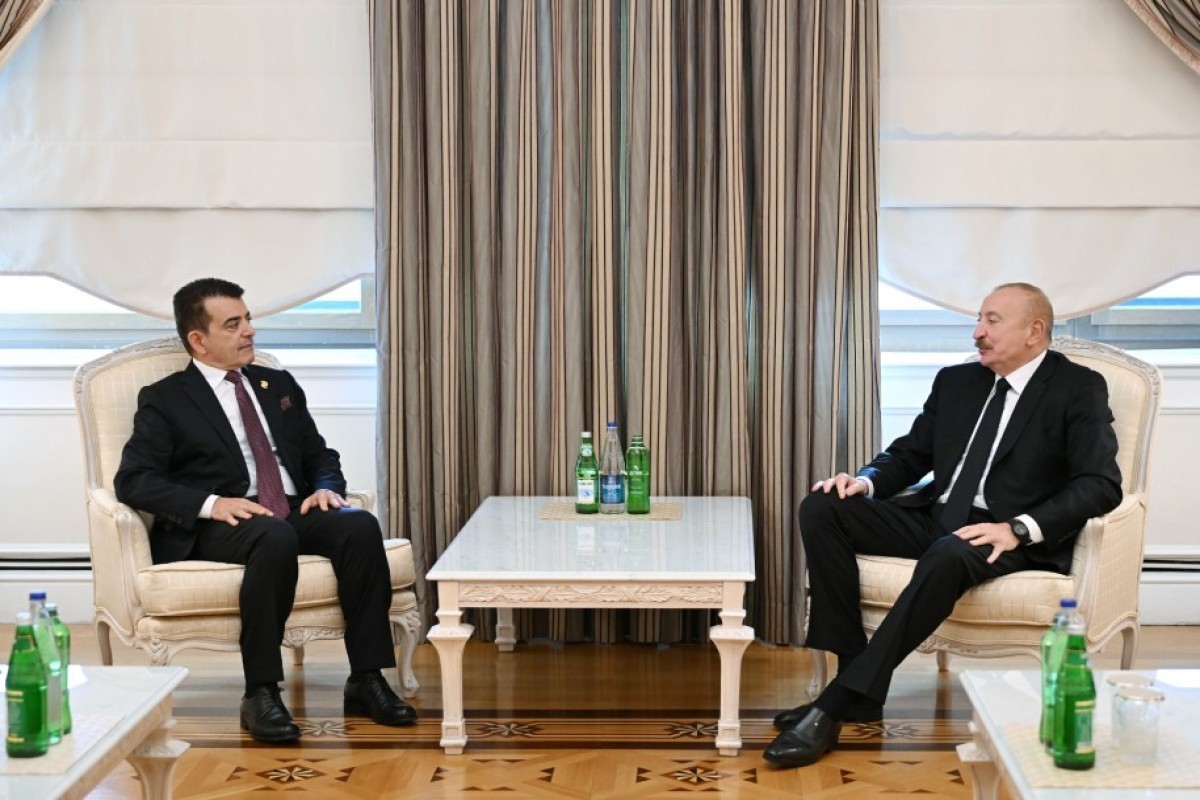





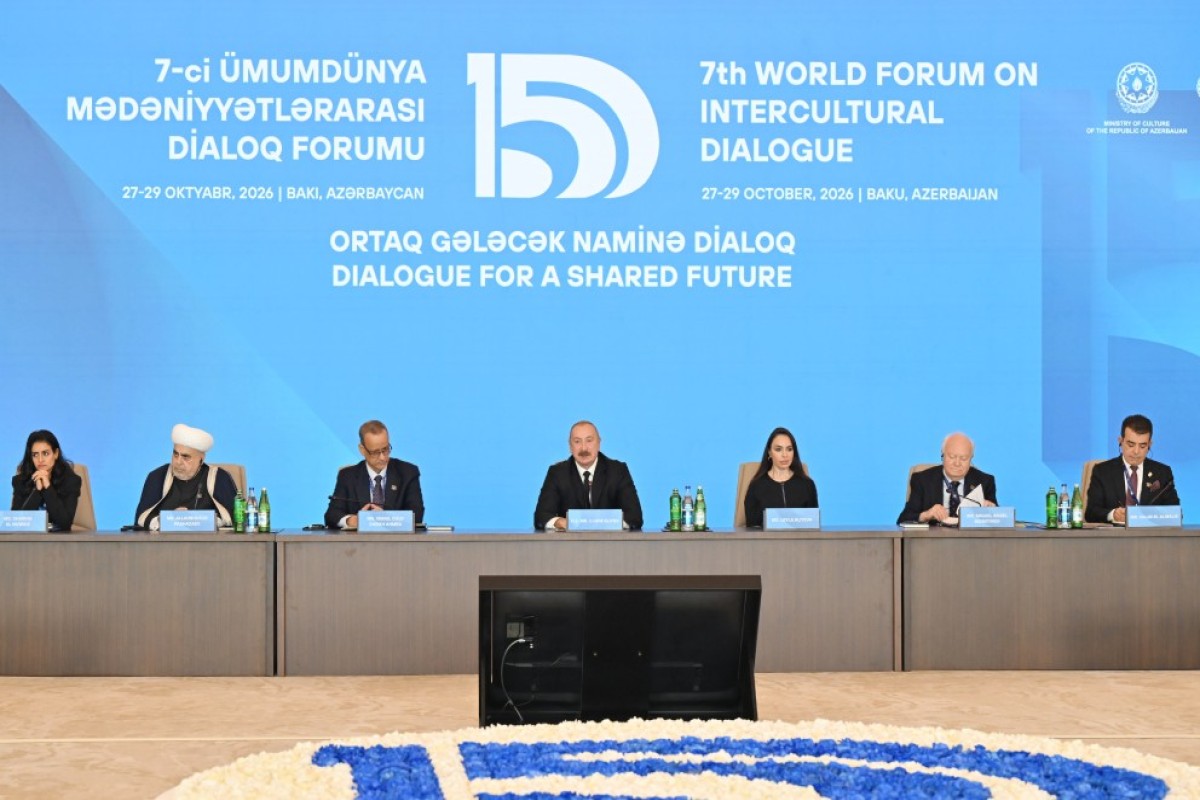


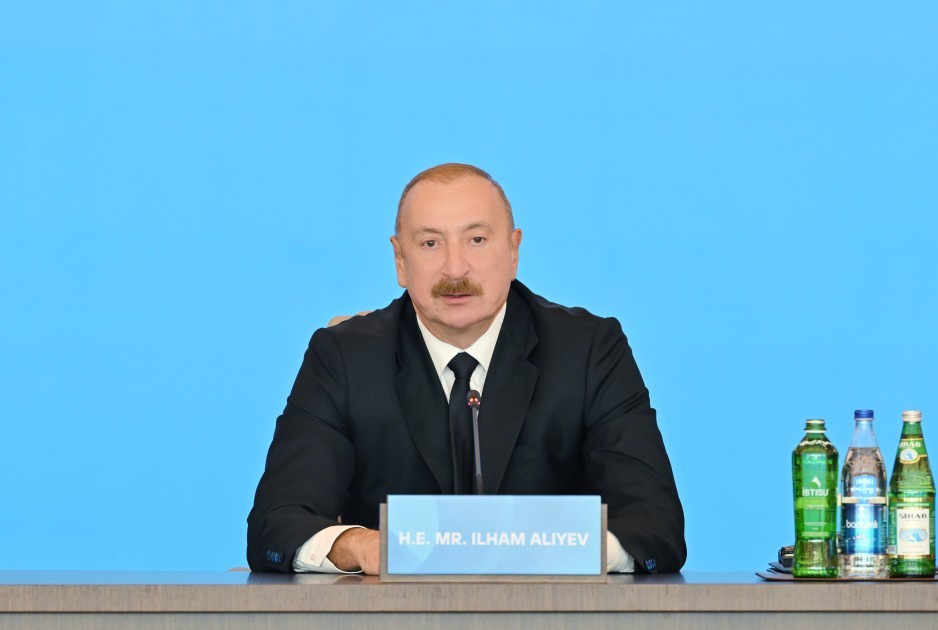
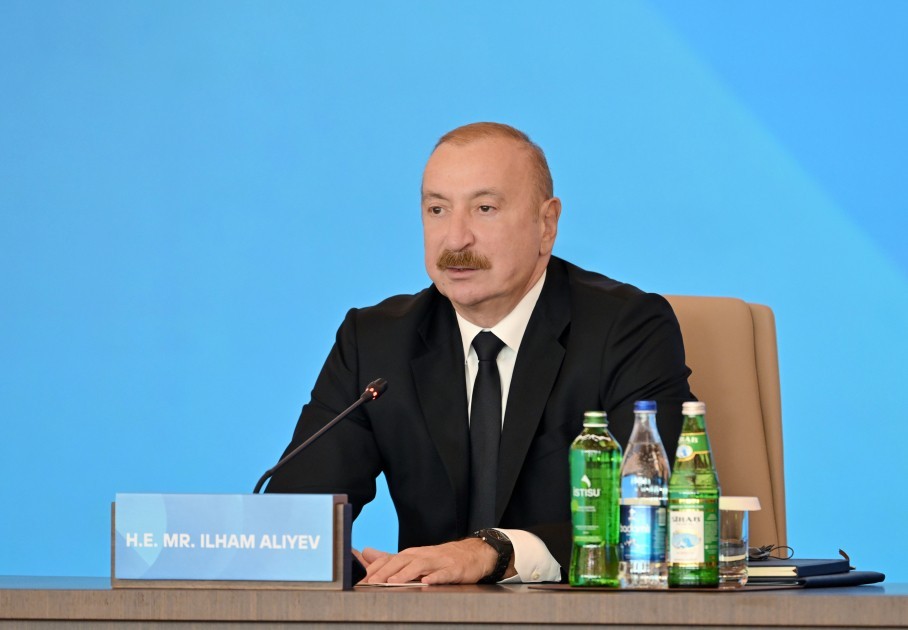
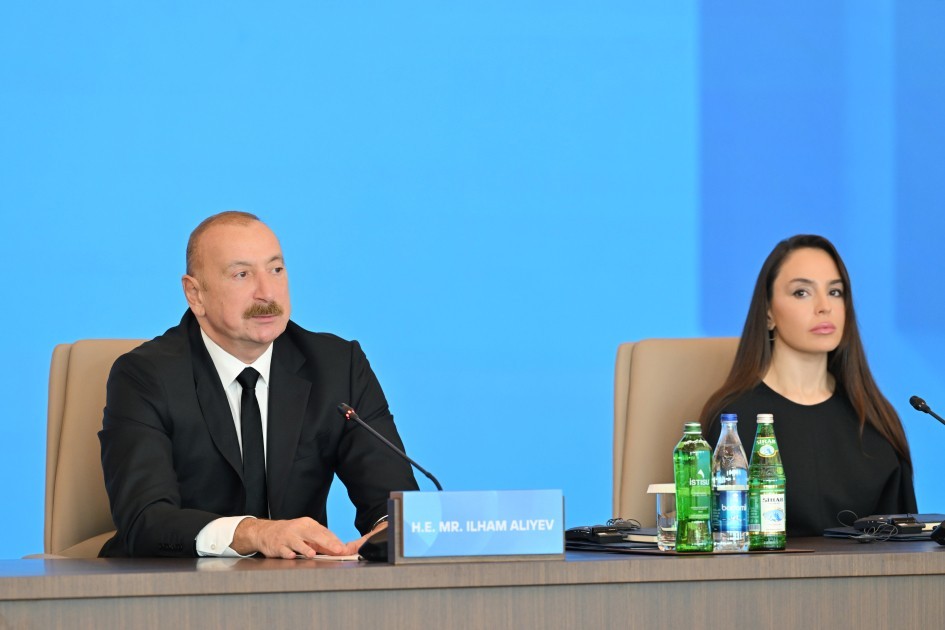
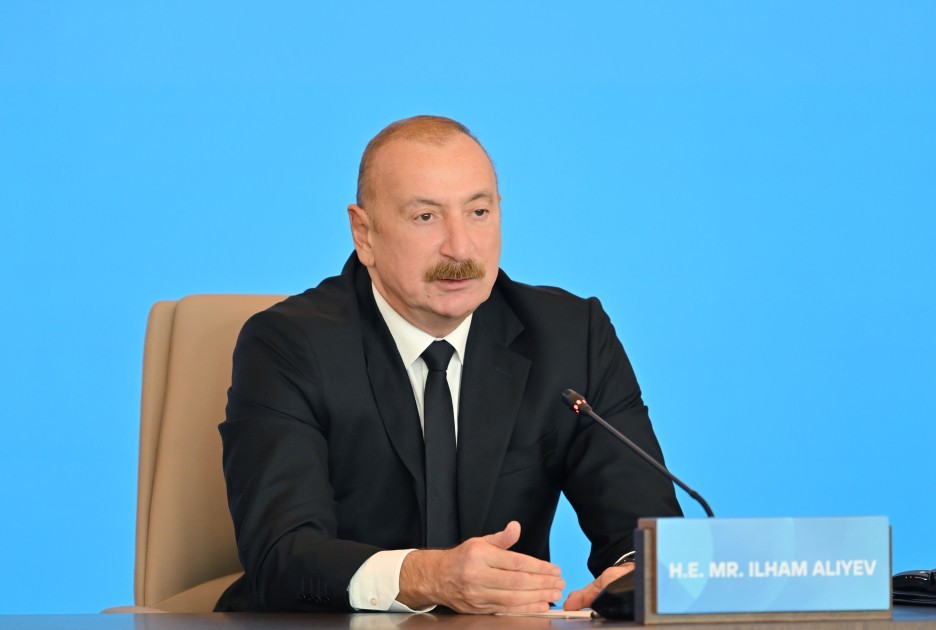
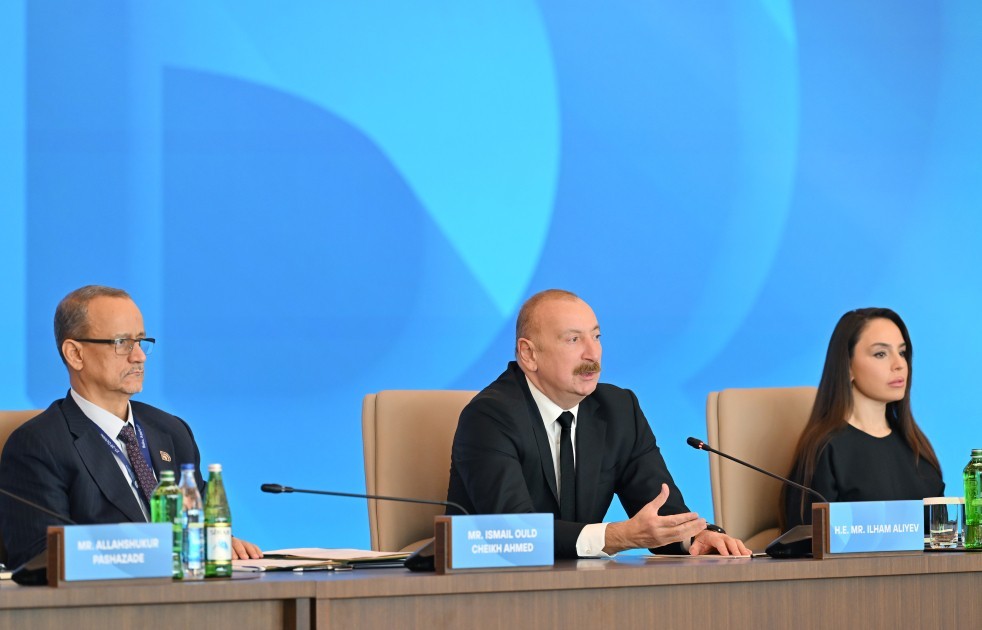
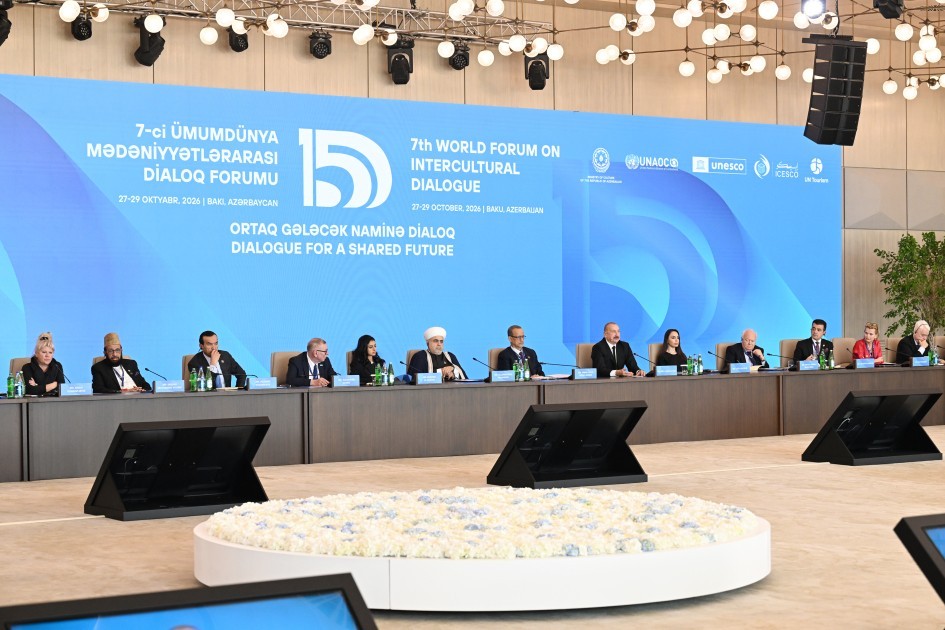
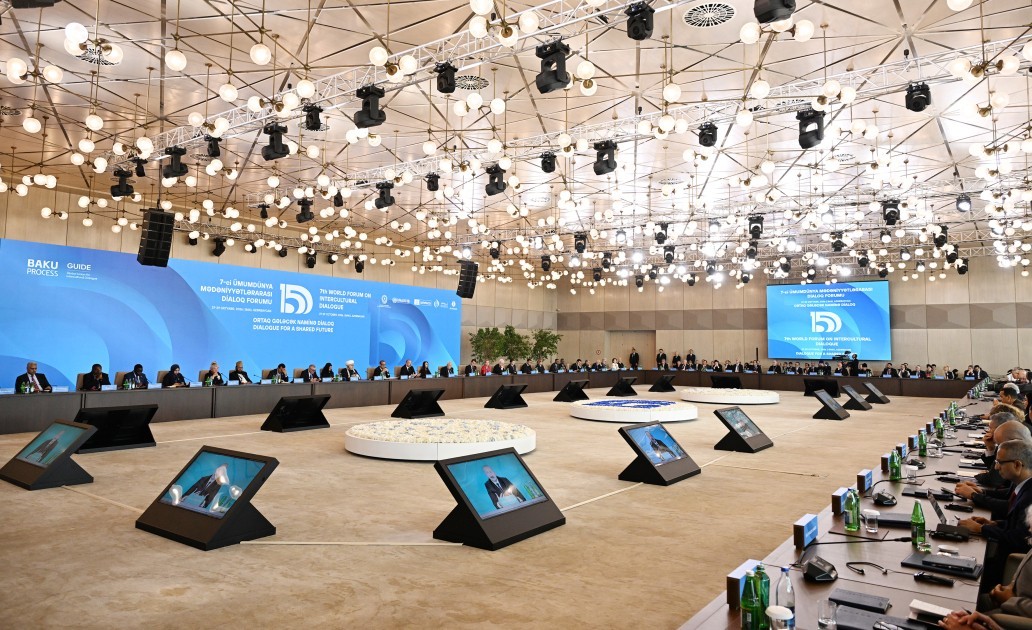
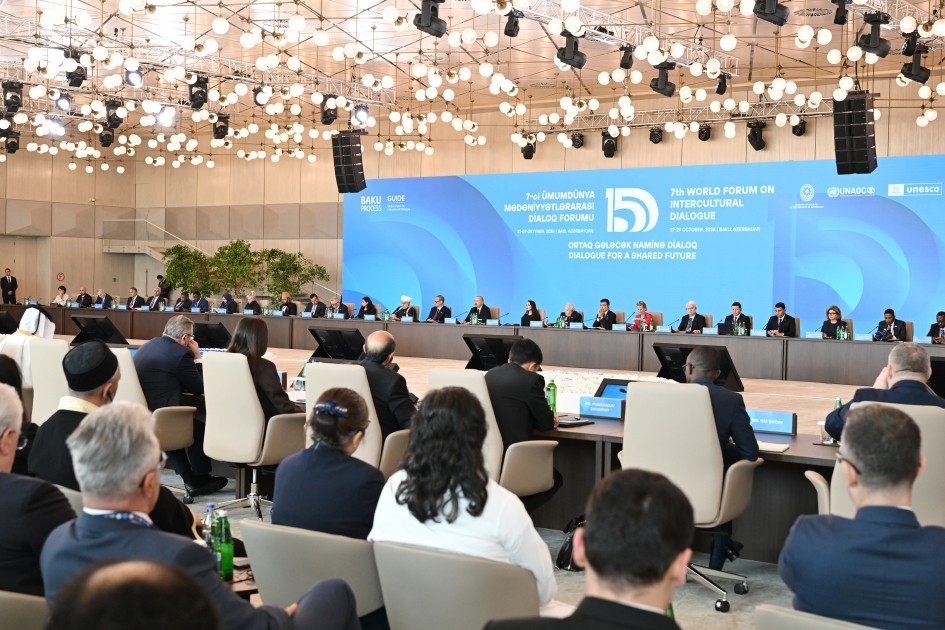
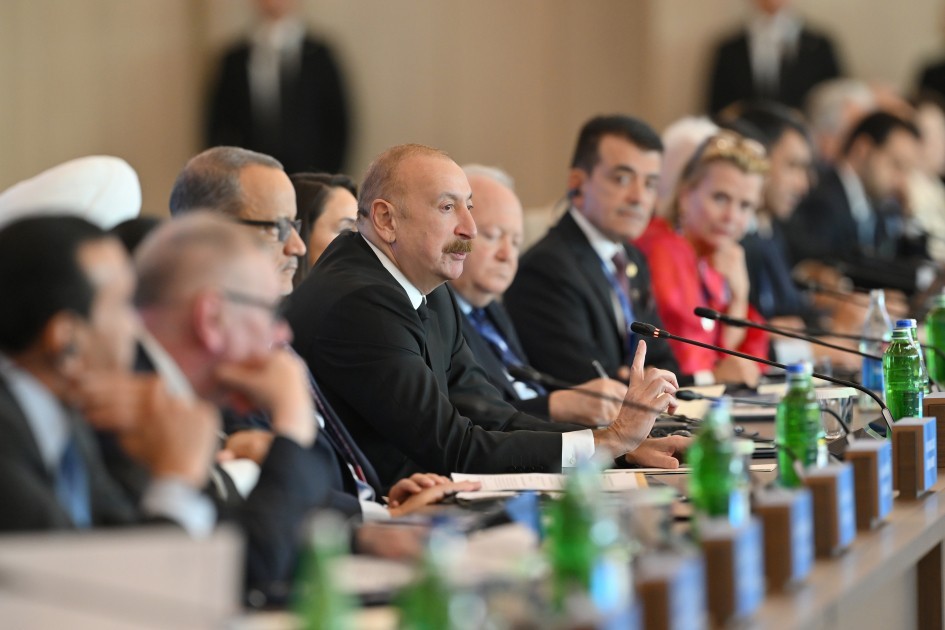
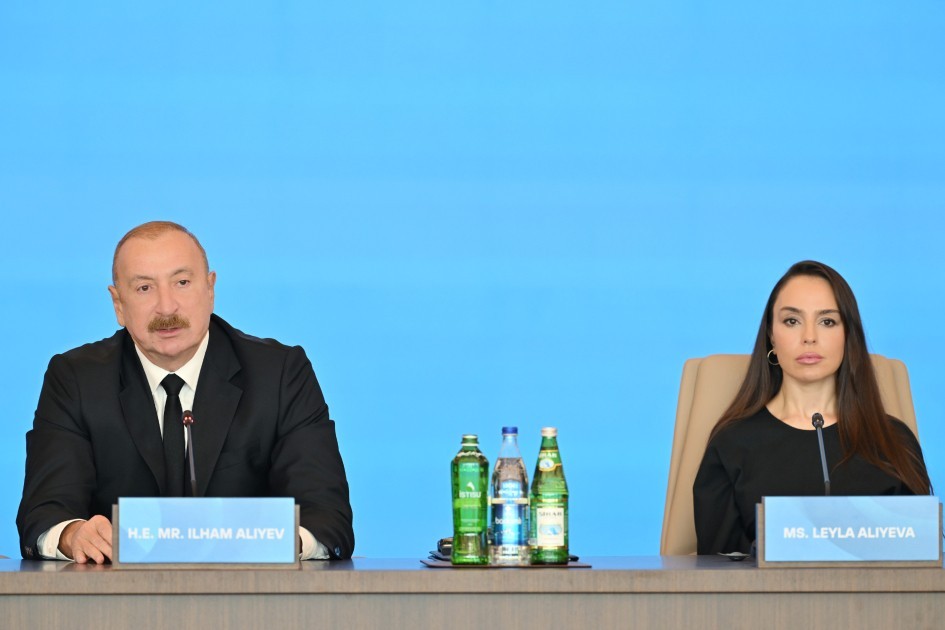
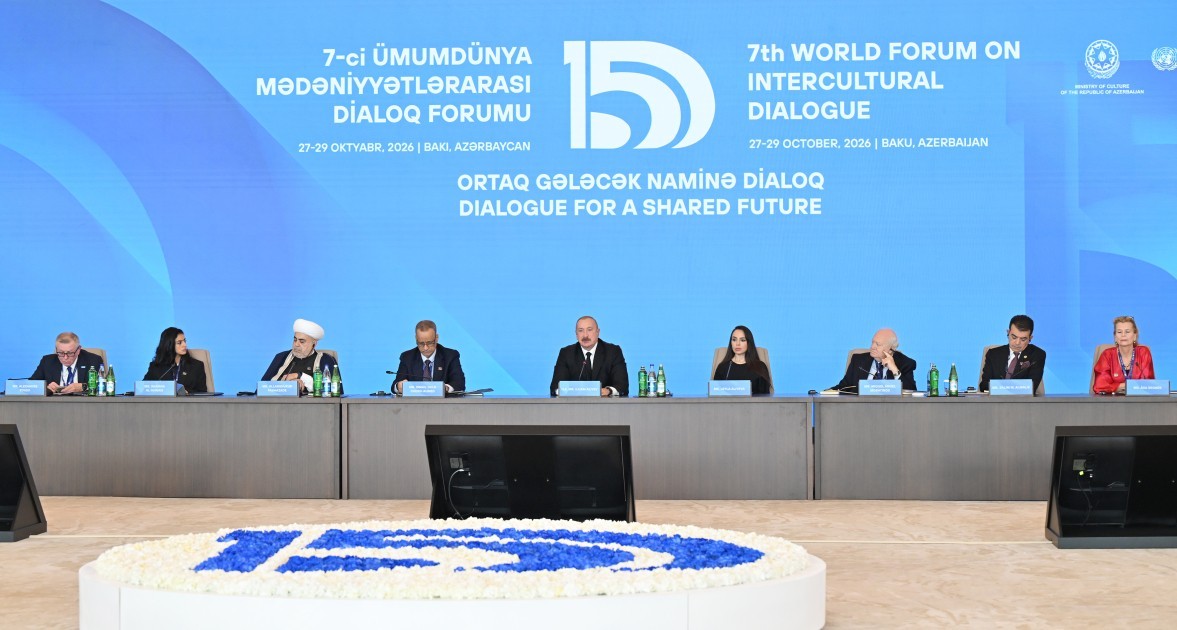
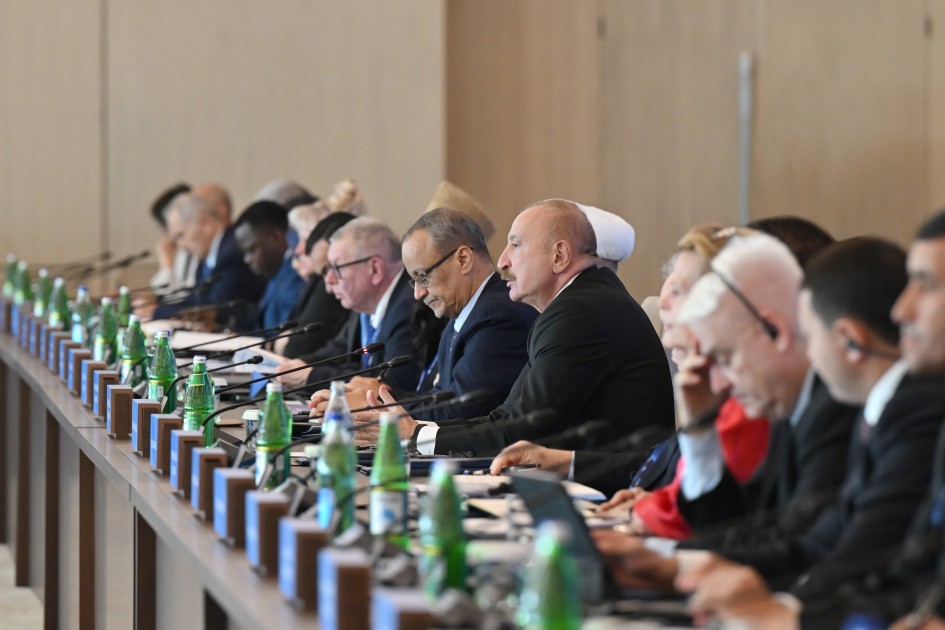
The opening ceremony of the 7th World Forum on Intercultural Dialogue, themed “Dialogue for a Shared Future,” was held in Baku on October 27, APA reports.
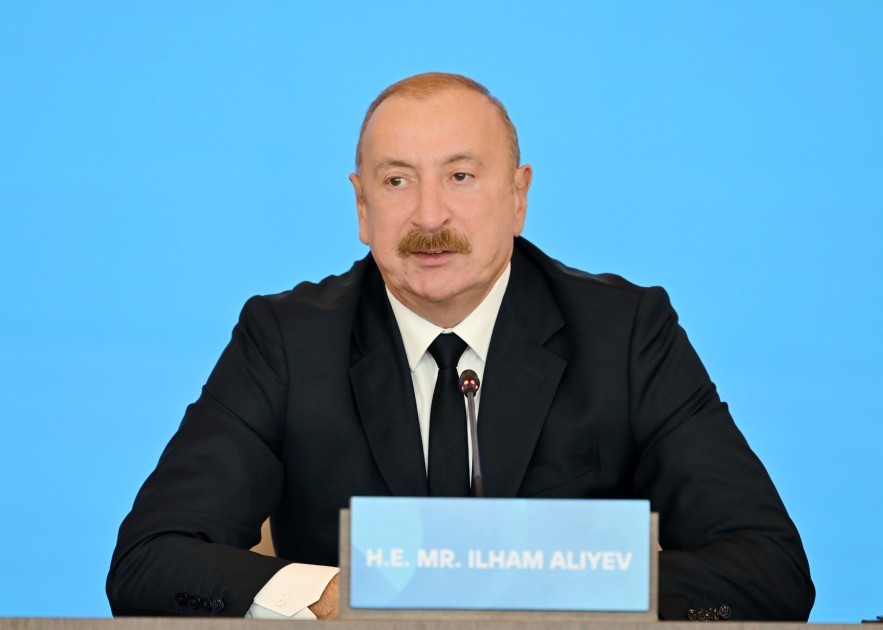
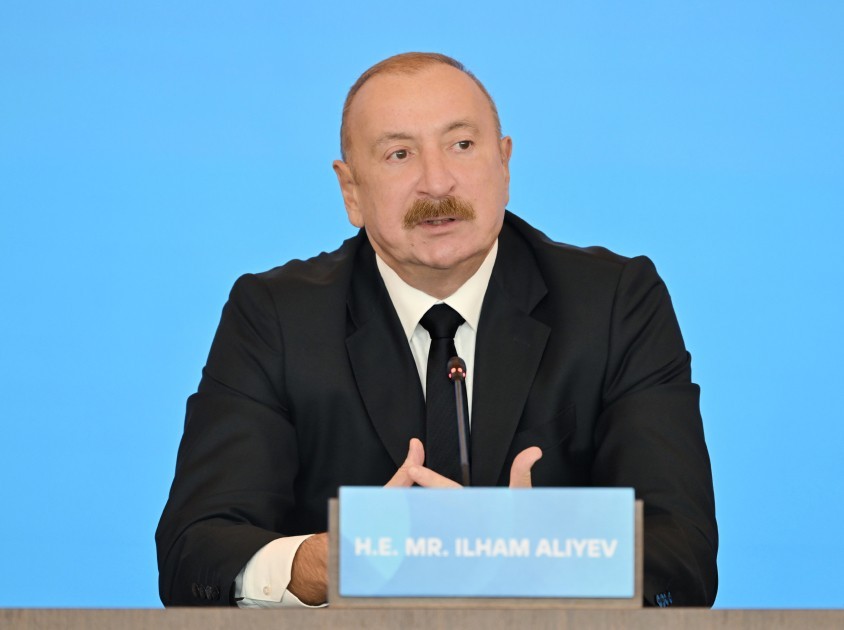
President of the Republic of Azerbaijan Ilham Aliyev attended the event.
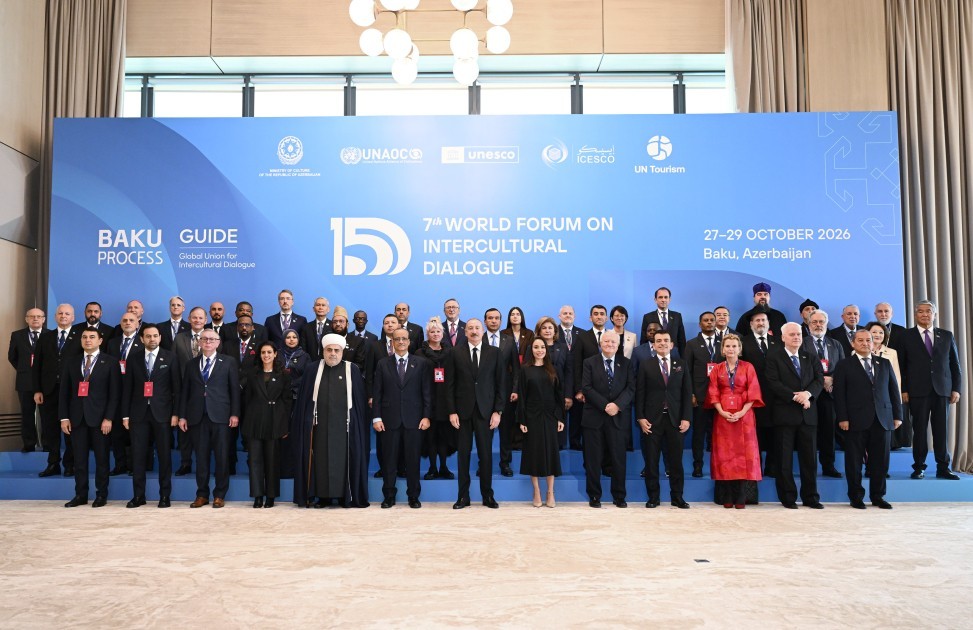
The ceremony began with a family photo.
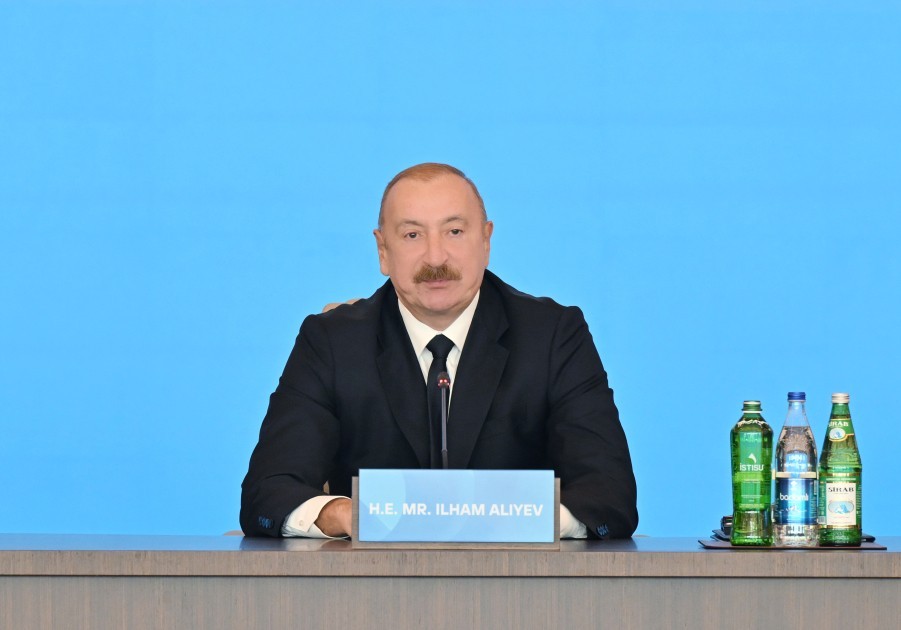
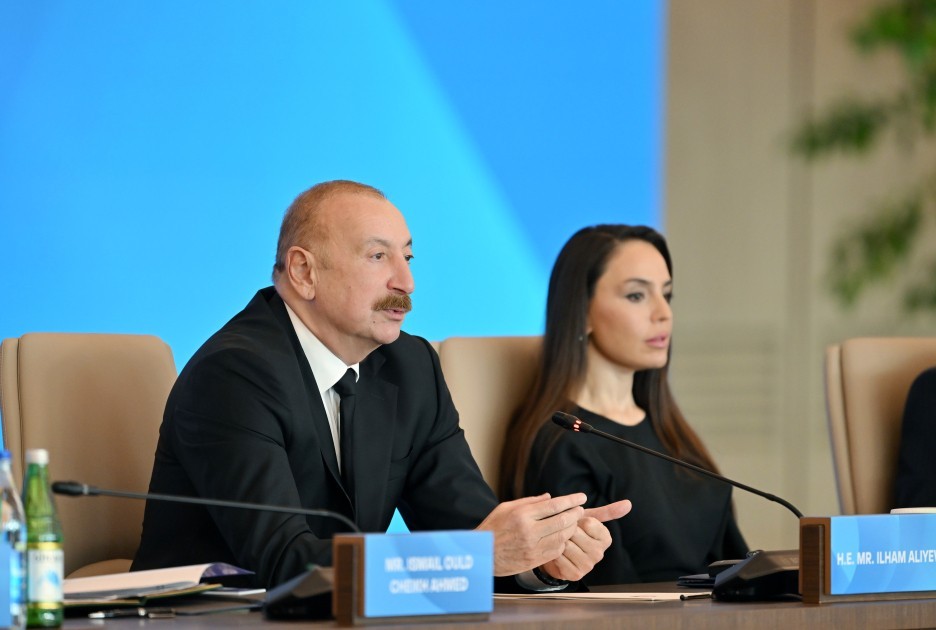
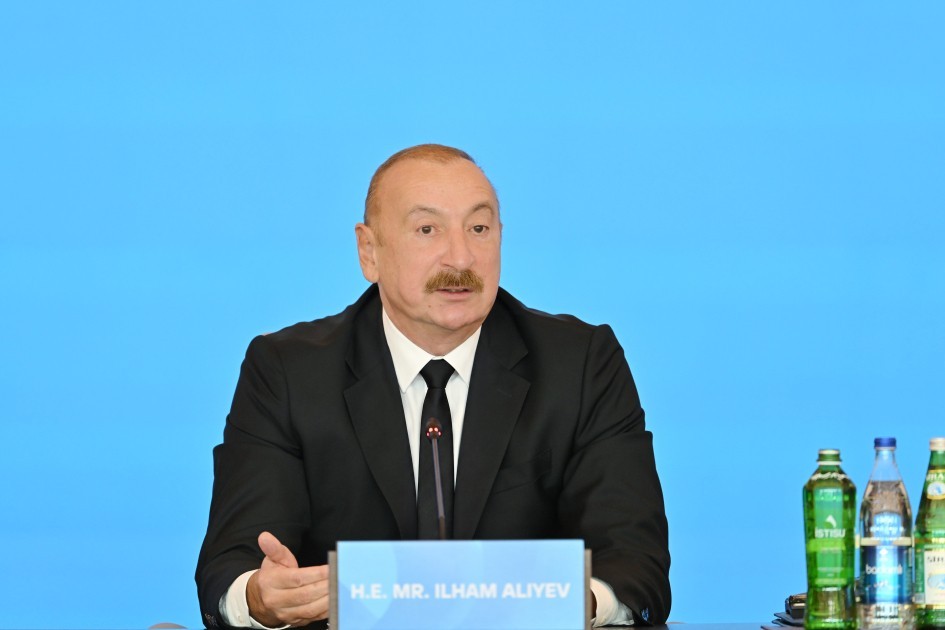
The President of Azerbaijan delivered a speech at the opening ceremony.
Speech by President Ilham Aliyev
- Good morning, ladies and gentlemen.
I greet all the participants of the 7th Forum. Special greetings to all our guests. Welcome to Azerbaijan.
We have more than 2,000 registered participants, including more than 500 foreign guests, coming from more than 100 countries. These figures actually demonstrate that the World Forum on Intercultural Dialogue has really transformed over these 15 years into one of the most efficient and inclusive platforms to address the issues of intercultural relations, and not only. Because traditionally at the forums we talk about urgent issues on the global agenda. I remember very well the first forum, which was organized back in 2011 at our initiative. We are very grateful to our partners, primarily the UN Alliance of Civilizations, for supporting this initiative and supporting us throughout all these years. Many things have changed since that time.
Of course, at every forum, which is held every second year, we talk about what is of concern to all of us. Of course, the issues related to intercultural and interreligious relations are at the top of our agenda. Azerbaijan has historically always been multicultural.
We are situated between Europe and Asia. For centuries, Azerbaijan was a cultural bridge between Asia and Europe. The traditions of multiculturalism, religious and ethnic tolerance are values that our people have lived by throughout the centuries and that we highly value. One of the main reasons for the successful and stable development of Azerbaijan is harmony in our society. Representatives of all ethnic groups and all religions not only enjoy the same rights according to our Constitution, but also live as one family. We really enjoy a very high level of solidarity, mutual respect, and mutual understanding. We are all united around our national ideas. One of them is Azerbaijanism, which embraces all the peoples of Azerbaijan. This unity was demonstrated in the most challenging times of our independent history. During the times of Armenia’s military aggression and occupation, during the times of the Second Garabagh War, representatives of all the ethnic groups and all the religions fought as one “Iron Fist,” which was actually the symbol of our victory, in order to defend our identity and defend justice and to restore our territorial integrity.
So this tremendous demonstration of unity once again demonstrates the status of our society. And again, if we didn't have this real platform of inclusiveness, of mutual respect between all the peoples who inhabit Azerbaijan, we would never have been able to succeed. We are very proud that we managed to preserve these values throughout the centuries.
For many centuries, Azerbaijan was deprived of its statehood, though we had very big traditions of statehood in previous centuries, but during the last couple of centuries we were not independent. But we managed to preserve our values, our language, our traditions, our lifestyle, regardless of the system in which we had to live. And we lived in different systems, as you all know.
But nevertheless, none of the systems under which we had to live was able to suppress our national feelings and our spirit. And that's why when Azerbaijan restored its independence, and by the way, this month we celebrated the 35th anniversary of the restoration of our independence, we became the masters of our own destiny. And what the guests see today in Baku and in other parts of Azerbaijan was mainly created during the times of independence.
When we became the owners of our own fate, then we demonstrated to the whole world what we can achieve. And also one of the important achievements is that during these years of independence we not only preserved our traditions and our lifestyle, but we strengthened them. And today, the Azerbaijani society is demonstrating unity on all the issues.
As I said many times, we do not have any internal risks in Azerbaijan. All the potential risks are coming from beyond our boundaries. And ideological risks are as dangerous as physical risks. Therefore, we must always be alert, we must be very committed to protecting our identity, our statehood, our independence, and our lifestyle. During these 35 years of independence, we had different times, but we have always believed that we will achieve our goals. For the absolute majority of these years, our main goal was the restoration of our territorial integrity, and the liberation of the lands occupied by Armenia. For many years, as many of you know, negotiations did not lead to any result. Actually, the negotiation format was designed in such a way that the conflict was not supposed to be solved, but was supposed to be frozen. It seems that the main powers in the world had a consensus on that, but their miscalculation was only about what the people of Azerbaijan thought, what Azerbaijan's government planned.
We were not supposed to live as an occupied country, as a people whose elementary human rights were violated forever. We've been at negotiations with all sincerity and hopes, but when we saw that this process was leading nowhere, we resolved the issue, taking into account our legitimate rights, including the UN Charter and Article 51, the right to self-defense.
We defended ourselves. We defeated the enemy. We liberated our territories, which had been under Armenian occupation for 30 years. We restored justice. We restored our dignity and international law. We solely implemented United Nations Security Council resolutions, which were adopted in 1993 and which demanded immediate, unconditional, and full withdrawal of Armenian troops from our territories, but they remained on paper for 30 years.
The Second Garabagh War of 2020 and the anti-terror operation of 2023 put an end to occupation. We fully restored our territorial integrity and sovereignty, in line with international law norms.
After that, we offered Armenia peace. And this is also unprecedented. If you look at the history of wars, probably we will not see a case in which, less than two years after the last bloody clash, countries come to peace.
The peace agreement, which was initialed last summer, was prepared by us. We were the initiators of the peace agreement with Armenia. Because we did not want eternal wars, and we did not want to take revenge. Though I think emotions should also be taken into account. I always say that we took revenge on the battlefield, and we should not go further. Because otherwise it will be an endless war.
Today, when we see new wars emerging, almost every year, we see that it is very difficult to end a war. It's very easy to start, but very difficult to end. And also very difficult to win. So I think Azerbaijan's experience, when we won the war, and the war was just, and when the defeated side capitulated, and after that, we didn't go further, we stopped when it was the time to stop, and offered peace.
So I think this experience should be examined by those who are at war now. And they do not know, probably, how to stop them. So I think our experience will be very valuable in order to see which of the precedents we have established can be used to address some conflicts.
Yes, it's true that all conflicts differ from each other, but the basis of all conflicts is the same. It's ambitions, it's aggression, it's a feeling of superiority, it's a feeling that you will not be punished for what you do to those whom you attack. Unfortunately, sometimes conflicts last forever. In our case, the conflict lasted for 30 years, but we put an end to that. As I said, we did everything in line with international law.
One issue which should also be taken into account is the mechanism for implementing decisions of international organizations. Now, many people talk about reforms of the United Nations. I don't want to go into much detail, but I think one of the important issues should be the mechanism for implementing UN Security Council resolutions. We've been in this situation, as I said, for 30 years. The UN Security Council adopted four resolutions which demanded the liberation of Azerbaijani lands. They were not implemented. There was no mechanism of implementation. There have been no sanctions imposed on Armenia.
Now we see sanctions when we look right and left. When you look from Azerbaijan to the north and the south, you see hundreds of sanctions. But Armenia was not sanctioned, and it's a question of double standards. It's nothing more than double standards. We always fought and will continue to fight against double standards in politics. This is one of the important elements of our foreign policy. Because we suffered from that and still continue to suffer from that. Of course, today's suffering maybe is a very harsh word. It's not actually suffering, because we already achieved what we wanted, and we live freely on our land. But nevertheless, the double standard policy should be totally eliminated from international politics. Our society has zero tolerance for double standards.
And also, this is reflected not only in, for instance, addressing the different wars and conflicts. As I say, Armenia occupied almost 20% of our internationally recognized territory, conducted a policy of ethnic cleansing, which led to the deportation of a million Azerbaijanis from their historical lands, destroyed our religious and historical monuments, including 65 mosques in Garabagh, and was not sanctioned and was not punished. So this is a double standard.
But double standards are not only about that. A double standard is also when someone wants to teach you how to live. Though before doing so, you should look into the mirror and ask yourself, “Do you have a moral right to lecture someone, to teach someone, to lecture an independent country on how to live, what to do, and what not to do?”
We never do it. We concentrate on our homework. What is happening in other countries is a matter of the peoples of these countries. It's none of our business. So we expect the same attitude towards us, and we achieve it.
Any sign of disrespect, any sign of baseless feelings of superiority, and baseless feelings that one can dictate something to us have been and will always be met with our resistance and a very firm approach. So I think if the international community agrees on these basic rules of international behavior, then there will be fewer conflicts, fewer problems, and more interaction.
At least that's how we see it. Plus, in order to give you a more comprehensive picture, I also want to say that what has been achieved in Azerbaijan in these 35 years was achieved by the people of Azerbaijan. We didn't have any international assistance, and we came from devastation, occupation, endemic poverty towards progress, towards development, towards success.
Today, if you look at Azerbaijan's foreign policy or economic performance or its role on the global energy and the transportation markets, you will see that the role of Azerbaijan is growing tremendously. And in many cases, Azerbaijan is considered an anchor of stability in the unstable region. And also, our independent policy generated a lot of respect for us. Just several facts I want to bring to your attention.
Our international contacts demonstrate that we really managed to present ourselves as a trusted and respected member of the international community. We have already established strategic partnerships with two superpowers. In 2025, a Comprehensive Strategic Partnership Declaration was signed between us and China. The declaration with China was signed in April, while the Strategic Charter with the United States was signed in August 2025. So with two superpowers, Azerbaijan is in a strategic partnership format. With 10 members of the European Union, we have strategic partnership declarations or agreements.
Next year, we will host the Summit of the Organisation of Islamic Cooperation, and we'll be chairing this important international organization, which unites almost 60 countries. We consider it a sign of respect for our policy, our attitude to our religion, our traditions, our values. In 2028, we will be hosting the Summit of the European Political Community. It's a kind of format which has existed for only four years, and the summits have been held only since 2022. So in 2028, it will be Baku. So in the European Political Community, there are also more than 50 countries. So in one city, in one country, these two important global events take place. So this is a demonstration of the respect we have, and also, once again, it is also driven by what we will discuss these days, intercultural dialogue.
Azerbaijani society and the state's policy of multiculturalism, of building bridges, not walls, really led to this important development. This month, we hosted the Summit of CICA, which is the Conference on Interaction and Confidence Building Measures in Asia, which unites almost 30 countries. And our chairmanship in CICA was unanimously extended for two more years. Last year, Azerbaijan was invited as a full member of the Central Asia Consultative Format. So this format unites the countries of Central Asia. Azerbaijan geographically is not part of Central Asia. We are situated in the Caucasus, but we've been invited as a full member in recognition of our role in different aspects and also as a sign of respect. So all this, really, just all these facts, nothing more than that, really demonstrate the role we play and the international potential we have.
Of course, our experience in putting an end to wars, I think, should be thoroughly examined. If we add to this picture our economic performance, very low foreign debt, which is slightly more than 5% of our GDP, which is the lowest, probably one of the lowest in the world, the role we play on the global energy market as a reliable supplier of energy to international markets, and the role we play in connectivity, especially now when connectivity and transportation have become one of the top items on the international agenda. And here also, if you look at the map, it's difficult to bypass Azerbaijan. Especially when you add to the map infrastructure, investments, modern infrastructure plus political infrastructure. Because in order to play a role on the connectivity track, you have to have good relations with your neighbors and with the neighbors of the neighbors, and this is what happens. So our economic potential, active foreign policy, and inclusive society and traditions of multiculturalism and intercultural dialogue, all these factors create a synergy that allows us to be optimistic.
But nevertheless, we live in an unpredictable world where, as I already said, conflicts start and never end. Therefore, of course, we need to always be very attentive to potential risks and protect ourselves from any potential complications. I'm sure that these and many other important issues will be broadly discussed at the forum.
Once again, I express my gratitude to all the participants, especially to our foreign guests for coming to Baku. These forums are being held every second year with only one exception during COVID. There was a certain break, but now we're back on track. I remember the last forum, 2024, when we also discussed important issues of the global agenda. But in these two years, we see how many things have changed in both positive and negative directions. Among the negative developments are new wars next door to us. Among the positive developments is peace with Armenia, which was actually initialed last August. And it's very symbolic where it was initialed. It was initialed in Washington, in the White House, in the presence of U.S. President Donald Trump. Armenian and Azerbaijani foreign ministers put their signatures, not under a peace agreement, but it was initialed in front of the President of the United States. And a trilateral Declaration was also signed, and the American President signed it as a witness. So we managed not only to restore justice, to liberate our territories, to create an absolutely new situation in the South Caucasus, which never existed in the history of independent South Caucasian countries, but also to put a stamp on that in the White House.
I wish you a pleasant stay in Baku. Once again, thank you for being with us, and I wish the forum success. Thank you for your attention.
x x x
The event continued with speeches by other participants.
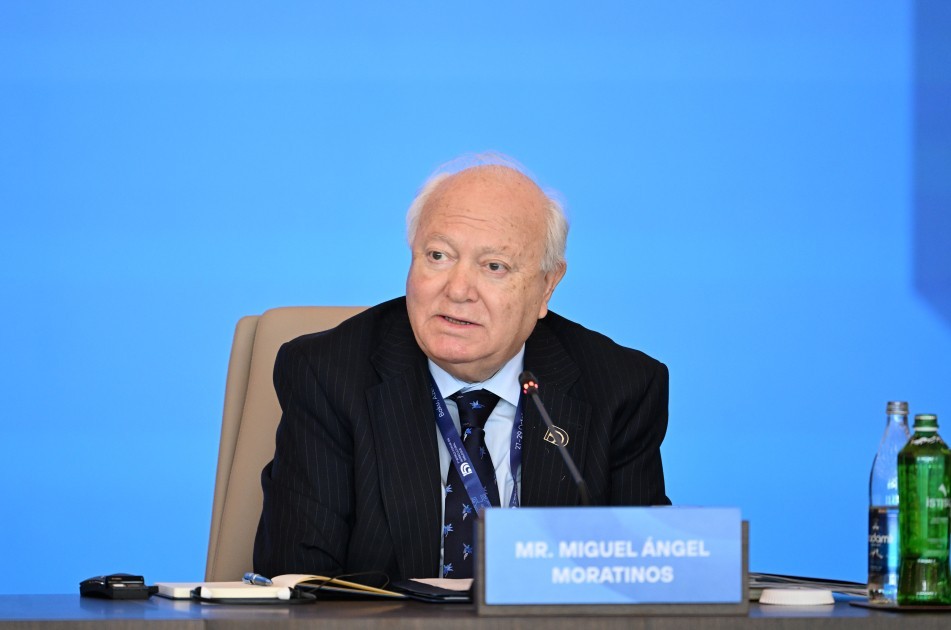
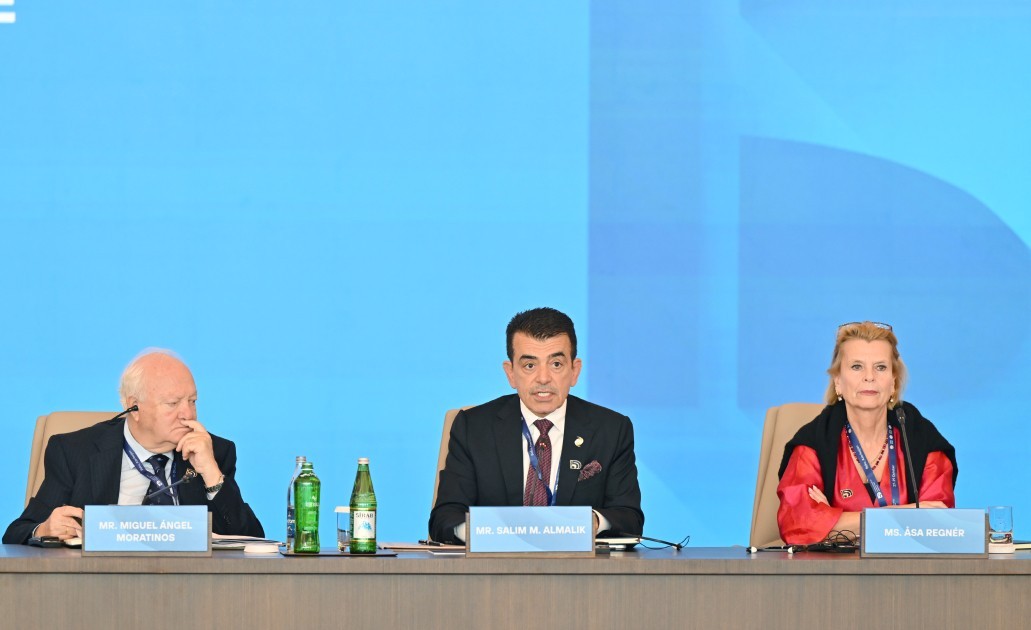
Addressing the event, Miguel Ángel Moratinos, United Nations Under-Secretary-General and High Representative for the United Nations Alliance of Civilizations (UNAOC), who also serves as the UN Special Envoy to Combat Islamophobia, said:
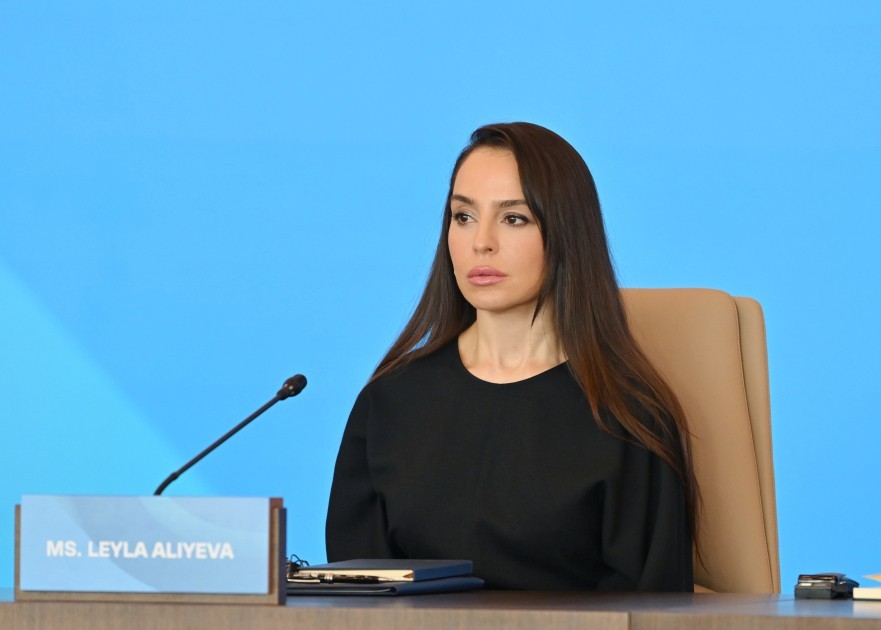
“Your Excellency Mr. Ilham Aliyev, thank you very much, as always, for your inspiring commitments, ideas and vision. We thank you for inviting us to this crucial forum. I would also like to express my gratitude to Ms. Leyla Aliyeva.
Distinguished religious figures, Excellencies, esteemed guests, dear friends,
It is a great pleasure to be in Baku once again. I express my sincere gratitude to Your Excellency President Ilham Aliyev and the Government of Azerbaijan for bringing us together once again within the framework of the World Forum on Intercultural Dialogue. The United Nations Alliance of Civilizations, together with UNESCO, ICESCO and UN Tourism, is proud to continue its long-standing partnership with the Ministry of Culture in supporting this vital platform. This seventh forum coincides with the 15th anniversary of the first World Forum, held here in 2011.”
Miguel Ángel Moratinos also noted that an International Youth Forum had been organized in Guba.
“The event that began in Guba will continue today and tomorrow at the Heydar Aliyev Center. This demonstrates how intercultural dialogue can serve as a subject of discussion while simultaneously bringing together peoples of different cultures and religions,” he said.
Emphasizing the contribution of the Baku Process to international cooperation, he added:
“In 2008, the Baku Process brought together representatives of governments, civil society, international organizations and young people from various countries. The proposals put forward at that time have already evolved into new partnerships. This represents our new philosophy and Azerbaijan’s philosophy of promoting peace. Azerbaijan has extended its hand to foster intercultural cooperation throughout the region. This is also one of the key themes of the seventh forum.”
x x x
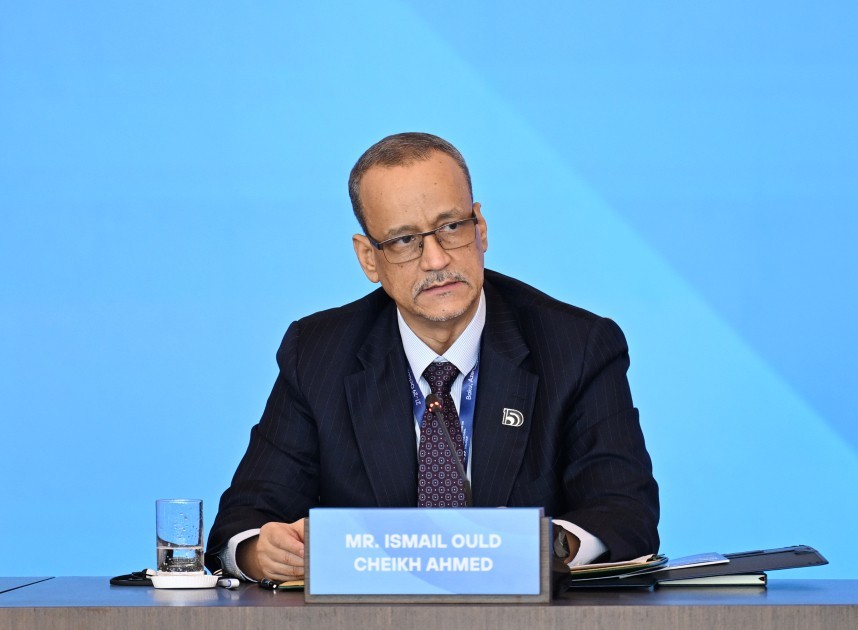
Expressing his gratitude to President Ilham Aliyev for Azerbaijan’s contributions to intercultural dialogue, Ismail Ould Cheikh Ahmed, Secretary-General of the Organisation of Islamic Cooperation (OIC), said:
“It is a great pleasure for me to join you today in the beautiful city of Baku for the 7th World Forum on Intercultural Dialogue. First and foremost, I would like to thank President Ilham Aliyev for his hospitality and the excellent organization of this event.
The issue of building bridges in a fragmented world is, of course, exceptionally important. This contributes to strengthening peace around the world, and I express my gratitude to Azerbaijan for its efforts in this regard.
Distinguished President, esteemed participants,
I would like to note that the Baku Forum has brought together people from various regions of the world. We are doing, and must continue to do, everything in our power to ensure peace, security and stability on a global scale.
Indeed, Islamic values and interfaith coexistence are upheld at a very high level in Azerbaijan. Mr. President, on behalf of the Organisation of Islamic Cooperation, I once again express my gratitude to you for Azerbaijan’s contributions to intercultural dialogue.”
x x x
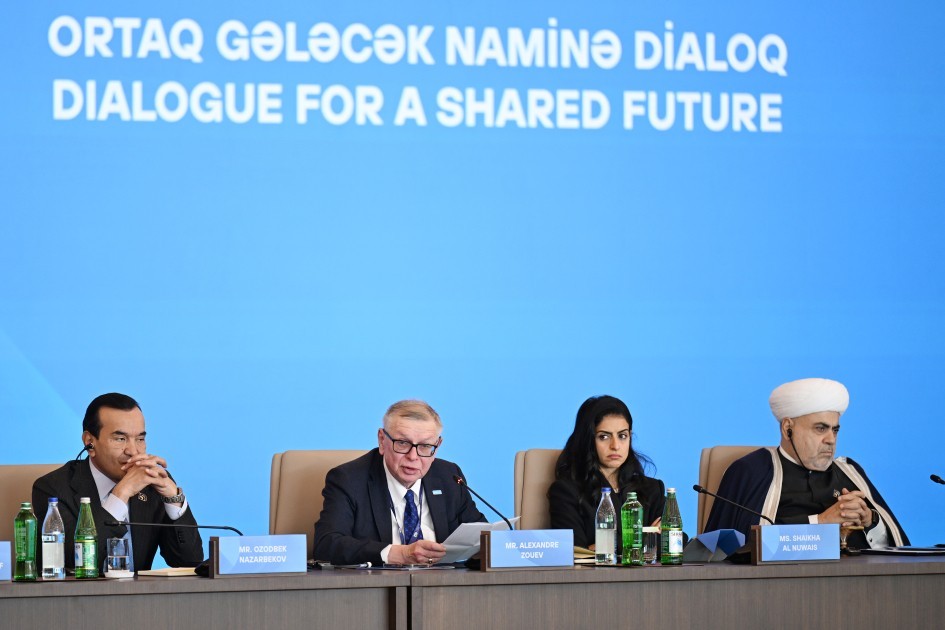
Alexandre Zouev, Acting Under-Secretary-General of the United Nations Office of Counter-Terrorism (UNOCT), expressed his pleasure at attending the opening of the 7th World Forum on Intercultural Dialogue.
Thanking President Ilham Aliyev and the Government of Azerbaijan for their contribution to promoting dialogue through the Baku Process, he said:
“It is a great honor for me to join you at the 7th World Forum on Intercultural Dialogue. I am very pleased to address this important forum once again. I am personally grateful to His Excellency President Ilham Aliyev and the Government of Azerbaijan for their warm hospitality and their efforts to promote dialogue within the framework of the Baku Process.”
Alexandre Zouev highlighted the importance of protecting religious and cultural sites from terrorist attacks. He also emphasized Azerbaijan’s commitment to safeguarding religious heritage and promoting interfaith dialogue.
“The UN’s global programme helps protect religious and cultural sites, as threats to these sites often transcend communities, creating fear and discrimination in societies. Protecting these sites is therefore essential to preserving the willingness and capacity of communities to coexist peacefully.
“Given the importance Azerbaijan attaches to religious heritage and interfaith dialogue, this work is particularly relevant to the country. We are striving to strengthen cooperation between the United Nations Office of Counter-Terrorism and the Republic of Azerbaijan,” he said.
x x x
Emphasizing the importance of the Baku Process, Salim bin Mohammed AlMalik, Director-General of the Islamic World Educational, Scientific and Cultural Organization (ICESCO), said:
“President Ilham Aliyev’s continued support for the Baku Process has established a lasting international platform for intercultural dialogue. This forum calls on us to turn our commitments into concrete decisions and take steps to ensure the protection of human dignity.”
Salim bin Mohammed AlMalik also highlighted Azerbaijan’s support for the development of education in various countries.
“Azerbaijan’s support enables us to restore more than 100 schools and build 10 new ones in Syria. Through the Heydar Aliyev Foundation, we also support girls’ education in Burkina Faso and Niger,” he noted.
The ICESCO Director-General recalled the visits of the organization’s technical missions to Garabagh and East Zangezur, noting the destruction of cultural heritage witnessed there as a result of the occupation.
Speaking about the importance of the ICESCO–Azerbaijan Natavan Heritage Excellence Award, established with the support of the Heydar Aliyev Foundation, he said:
“ICESCO’s two technical missions to Garabagh and East Zangezur witnessed the destruction of cultural heritage resulting from the occupation. Mr. President, I thank Azerbaijan for sustaining and supporting this platform. The success of this dialogue is measured precisely by this.”
x x x
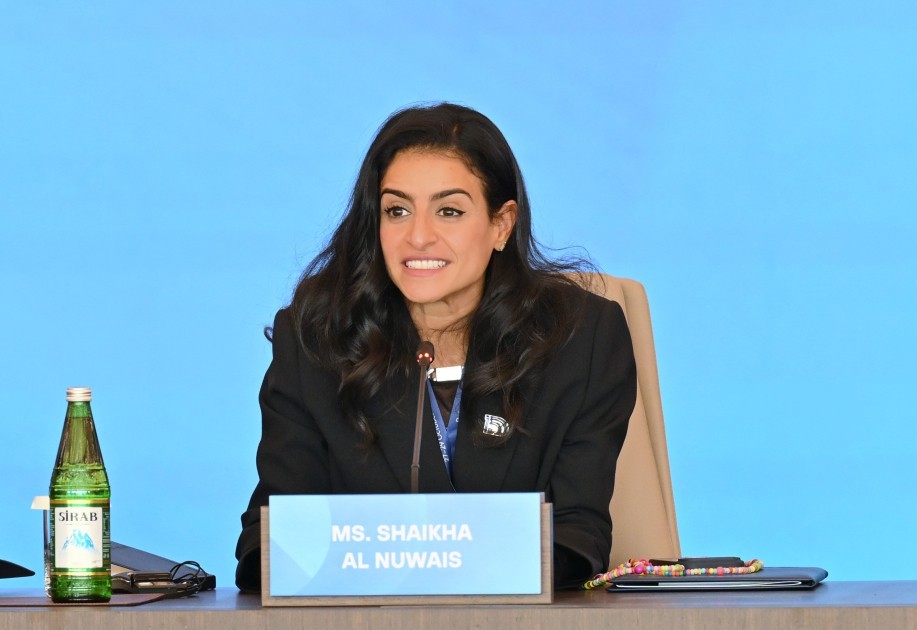
Highlighting Azerbaijan’s efforts to bring together representatives of countries with significant differences at the CICA Summit held in Baku, Shaikha Al Nuwais, Secretary-General of UN Tourism, said:
“When I met with Mr. Ilham Aliyev, he spoke about bringing representatives of different countries together around the same table and also discussed the CICA Summit. He noted that CICA is a very important platform for building trust in Asia.
“Of course, agreement alone is not enough, which is why a Joint Declaration was also adopted. Differences remain, but despite them, the countries took a joint step forward.
“Your Excellency, Mr. President, through the Baku Process, Azerbaijan has supported the challenging task of bringing countries and cultures together. We would like to express our heartfelt gratitude to you for creating the opportunity and providing a platform for us to meet and listen to one another. Common ground has been established, and this is where cooperation begins.”
x x x
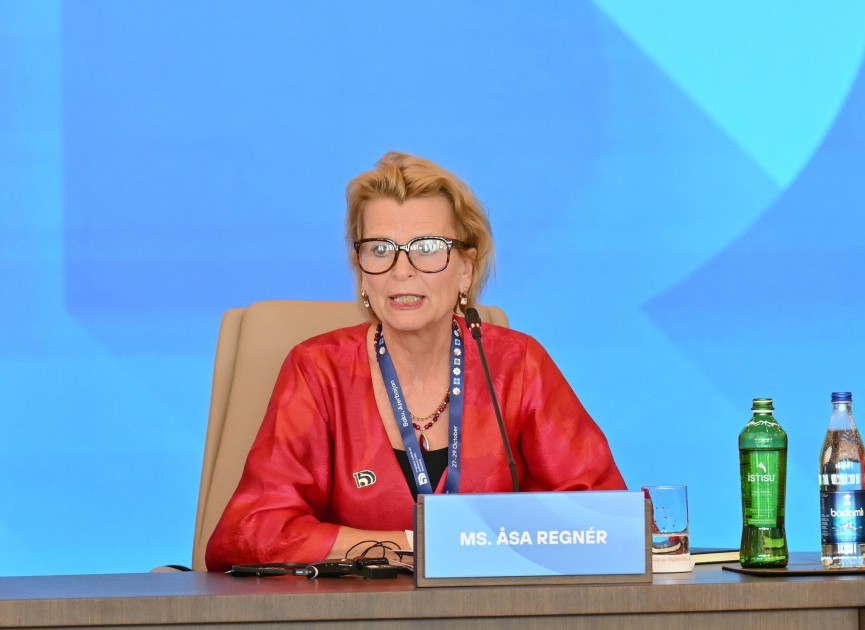
Emphasizing the importance of cooperation between UNESCO and Azerbaijan, Åsa Regnér, Deputy Director-General of UNESCO, said:
“It is an honor to participate in this forum in the beautiful city of Baku. I would like to express my gratitude to President Ilham Aliyev for hosting the 7th World Forum on Intercultural Dialogue and for Azerbaijan’s longstanding cooperation with UNESCO.”
Recalling the launch of a new initiative on intercultural digital competencies in Baku, she noted that it would integrate critical thinking and cultural awareness into digital education. She also highlighted efforts to engage young people in peacebuilding.
Noting that UNESCO and Azerbaijan had worked together to establish the forum as a platform for intercultural dialogue, Åsa Regnér stressed:
“UNESCO has done everything in its power to ensure that this forum becomes a platform for intercultural dialogue. We have worked towards this goal together with Azerbaijan and other countries. Today, we have an opportunity to turn this dialogue into concrete action and measures. This is a commitment we are making for the benefit of people.
“UNESCO will continue working with Azerbaijan and all its partners to ensure that intercultural dialogue serves in practice as a solid foundation for peace among nations and peoples around the world.”
***15:00
The opening ceremony of the 7th World Forum on Intercultural Dialogue, themed “Dialogue for a Shared Future,” was held in Baku on October 27, APA reports.
President of the Republic of Azerbaijan Ilham Aliyev attended the event.
The ceremony began with a family photo.
The President of Azerbaijan delivered a speech at the opening ceremony.
***
10:30
The opening ceremony of the 7th World Forum on Intercultural Dialogue, themed “Dialogue for a Shared Future,” is underway in Baku, APA reports.
President of the Republic of Azerbaijan Ilham Aliyev addressed the event.
***
10:04
The opening ceremony of the 7th World Forum on Intercultural Dialogue, themed “Dialogue for a Shared Future,” is underway in Baku, APA reports.
President of the Republic of Azerbaijan Ilham Aliyev is addressing the event.


 Follow us on Telegram
 t.me/apanewsaz
 Follow us on Instagram
 Follow us on TikTok
 Follow us on Facebook
 Follow us on X