

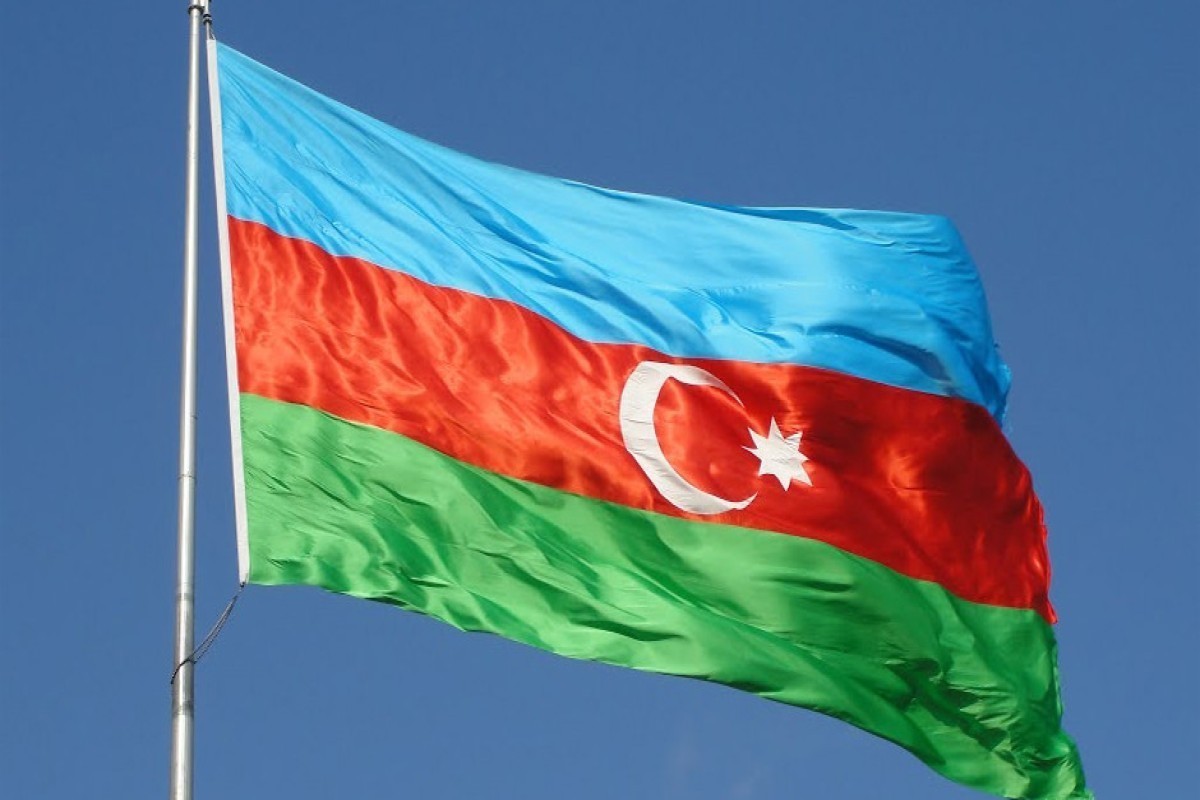


Azerbaijan’s foreign policy has been analyzed in an article published by India’s “The Pioneer” in terms of the parallel development of relations with various centers of power and the protection of national interests, APA reports.
In the article titled “Azerbaijan: The art of being everyone’s exception,” author Bhopinder Singh writes that one of the main features of Azerbaijan’s foreign policy is its ability to build close relations with various countries without fully aligning itself with any geopolitical bloc.
According to the author, Azerbaijan is a predominantly Shia country that is deeply secular, culturally Turkic and strategically close to Israel. It is bound to Türkiye by an almost fraternal alliance, maintains a strategic partnership with Pakistan, is deepening ties with China and, due to its geography, continues to maintain relations with neighboring Iran.
“Azerbaijan’s real strategic asset is not oil, geography or even its military, important though all three are. It is optionality,” the author writes.
The article notes that Baku does not appear to organize its foreign policy around ideological camps, but rather around interests. The author cites Azerbaijan’s close political and strategic relations with Türkiye, cooperation with Israel in defense, intelligence, technology and energy, political partnership with Pakistan and deepening ties with China as examples of this approach.
“That is why Israel and Türkiye can coexist comfortably in Baku’s foreign-policy architecture,” the author emphasizes.
Singh writes that relations with Iran occupy a special place in Azerbaijan’s foreign policy. The article notes that despite the shared Shia identity of the two countries, geopolitical disagreements exist. Iran has long been uneasy about Baku’s relations with Israel and Türkiye, while Azerbaijan has had its own grievances with Tehran. Nevertheless, the two sides have repeatedly sought to restore practical cooperation when their interests converge.
Special attention is also paid to relations with Pakistan
The author also presents Azerbaijan-Pakistan relations as an example of Azerbaijan’s multifaceted foreign policy.
“Baku’s relationship with Pakistan is equally instructive. Azerbaijan and Pakistan call their relationship a strategic partnership and have steadily expanded cooperation in defence, energy, transport and diplomacy,” the article says.
The article recalls Azerbaijan’s position on the Kashmir issue, based on international law and relevant UN Security Council resolutions. It also notes that during the India-Pakistan tensions in May 2025, Azerbaijan expressed solidarity with Pakistan.
In a statement issued by Azerbaijan’s Ministry of Foreign Affairs on May 8, 2025, Foreign Minister Jeyhun Bayramov expressed solidarity with the people of Pakistan and condemned the attacks that resulted in civilian deaths and injuries.
At the same time, “The Pioneer” emphasizes that Azerbaijan has maintained economic ties with India. The author views this as an indication of Azerbaijan’s policy of developing relations with different countries separately from individual disputes.
Nakhchivan incident presented as a test of Azerbaijan’s relations with Iran
The article also addresses Azerbaijan’s relations with Iran against the backdrop of the drone attacks in Nakhchivan in March 2026.
According to Azerbaijan’s Ministry of Foreign Affairs, drone attacks were carried out from Iranian territory against the Nakhchivan Autonomous Republic on March 5. The Ministry said one of the drones struck the terminal of Nakhchivan International Airport, while another landed near a school building in the village of Shakarabad. The Foreign Ministry said two civilians were injured in the incident and demanded an explanation from the Iranian side.
Azerbaijan’s Prosecutor General’s Office later said that four civilians had been injured in the incident and that a criminal case had been launched. The Office stated that the drones had been launched from Iranian territory and that a technical investigation was underway to determine their origin.
The author of “The Pioneer” considers the incident one of the tests of Azerbaijan’s policy of maintaining close relations with Israel and the West while avoiding a complete rupture in relations with Iran.
The article says analysts at Israel’s Institute for National Security Studies have described Baku’s posture as “alignment tempered by restraint” rather than neutrality — strategically close to Israel and the West, but careful to preserve working relations with Tehran and avoid being drawn into the conflict.
“Aligned, but not subordinate. Friendly, but not ideological. Pragmatic, but not neutral,” Singh writes.
“Azerbaijan’s real strategic asset is optionality”
One of the main arguments of the article is Azerbaijan’s ability to cooperate simultaneously with several centers of power.
According to the author, Türkiye’s strategic interests in its relations with Azerbaijan, Israel’s cooperation with Azerbaijan, Pakistan’s political partnership, China’s interest in connectivity and other areas, Iran’s geographical proximity, as well as the interests of Russia, Europe and the United States in the South Caucasus, provide Baku with various foreign policy options.
Singh describes this as Azerbaijan’s “strategic optionality.” In his view, Baku seeks to shape its foreign policy in such a way that no single side gains a sufficiently dominant position to dictate Azerbaijan’s entire foreign policy.
“Baku has constructed a foreign policy in which several competing powers have reasons to value Azerbaijan simultaneously. Turkey needs it. Israel values it. Pakistan embraces it. China is investing in its connectivity. Iran cannot ignore it. And Russia, Europe and the United States all have interests in the South Caucasus that intersect with Baku,” the author writes.
At the end of the article, Singh presents Azerbaijan’s foreign policy not as a choice between friends and enemies, but as a balancing of the interests of friends, neighbors and the country’s own security interests.
Bhopinder Singh is an Indian military veteran and former lieutenant governor of the Andaman and Nicobar Islands and Puducherry. “The Pioneer” notes that the views expressed in the article are his personal views.


 Follow us on Telegram
 t.me/apanewsaz
 Follow us on Instagram
 Follow us on TikTok
 Follow us on Facebook
 Follow us on X