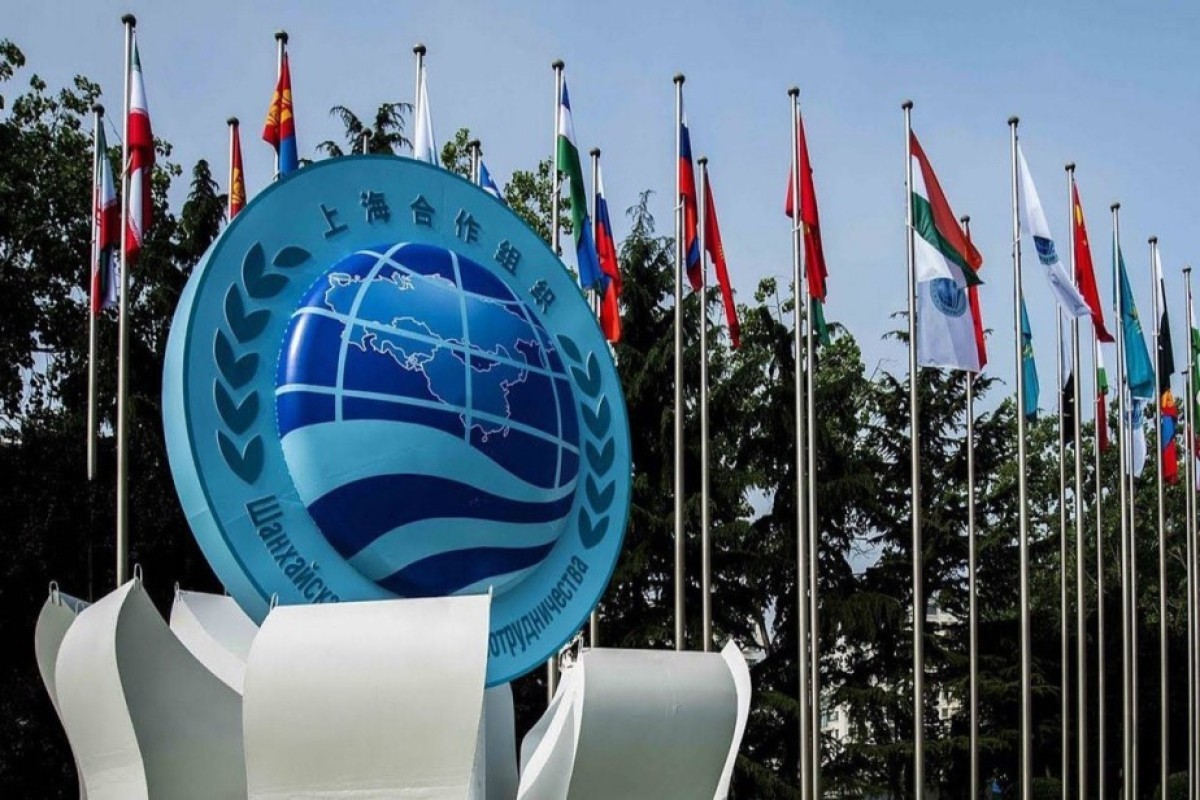


The Shanghai Cooperation Organisation (SCO) is one of the world’s largest regional organizations in terms of territory, population and geopolitical reach. Bringing together major centers of power such as China, Russia, India, Pakistan and Iran, as well as the Central Asian states, the organization’s scope of activity is not limited to security. Alongside the fight against terrorism and extremism, the SCO’s agenda includes trade, transport, energy, digitalization, agriculture, the environment, education, tourism and cultural cooperation.
The organization is sometimes described as the “NATO of the East” or as a military bloc created to counter the West. However, this comparison does not fully reflect the SCO’s legal and institutional nature. The SCO has no unified army, joint military command or collective defense obligation requiring other members to automatically provide military assistance in the event of an attack on one of its members. Nor is it a supranational union like the European Union, a customs union or a single economic market.
The SCO is an intergovernmental Eurasian platform that seeks to reconcile the common interests of states with different political systems, economic capabilities and foreign policy priorities. The organization’s main strength lies in bringing together some of the world’s largest states within a framework of sustained political dialogue, security cooperation and economic ties. Its main limitation stems precisely from this diversity, rivalry among its members and the fact that decisions are made solely by consensus.
How was the SCO established?
The history of the SCO dates back to 1996, when China, Russia, Kazakhstan, Kyrgyzstan and Tajikistan formed the “Shanghai Five.” The initial purpose of this format was to reduce military tensions along the former Soviet-Chinese border, limit the number of armed forces in border areas, strengthen mutual trust and prevent disputes.
Following the collapse of the Soviet Union, the emergence of newly independent states in Central Asia brought the issues of border demarcation and maintaining regional security to the forefront. The “Shanghai Five” initially took shape as a consultation mechanism designed specifically to address these needs.
After Uzbekistan joined the process, the six states established the Shanghai Cooperation Organisation on June 15, 2001. The Organisation’s Charter was signed on June 7, 2002, and entered into force on September 19, 2003. This transformed the SCO into an international organization with permanent bodies, decision-making mechanisms and defined areas of activity.
The SCO’s political philosophy is expressed through the concept of the “Shanghai Spirit.” This concept encompasses the principles of mutual trust, mutual benefit, equality, consultation, respect for cultural diversity and common development. Sovereignty, territorial integrity and non-interference in internal affairs hold a special place in the organization’s official documents.
The SCO does not define itself as an organization created against a third country or another international organization. Nevertheless, the organization has evolved into a political platform that advocates a multipolar world order, the central role of the UN, the right of states to independently choose their development models, and limiting the use of unilateral pressure in international relations.
Which countries are members of the organization?
The SCO currently has ten full members: China, Russia, Kazakhstan, Kyrgyzstan, Tajikistan, Uzbekistan, India, Pakistan, Iran and Belarus.
China, Russia, Kazakhstan, Kyrgyzstan, Tajikistan and Uzbekistan are the founding members of the organization. India and Pakistan became full members in 2017, Iran in 2023, and Belarus in 2024. As a result of the latest expansions, the SCO’s geographical reach has extended from Central Asia to South Asia, Eastern Europe and the Middle East.
Afghanistan and Mongolia retain observer state status. Azerbaijan, Türkiye, Armenia, Bahrain, Egypt, Cambodia, Qatar, Kuwait, Laos, the Maldives, Myanmar, Nepal, the United Arab Emirates, Saudi Arabia, and Sri Lanka are dialogue partners.
Thus, the SCO comprises 27 countries with varying legal statuses. The ten full members cover an area of approximately 36 million square kilometers and have a combined population of more than 3.4 billion. This area accounts for approximately one-quarter of global gross domestic product and more than 15 percent of international trade.
The representation within the same organization of major economies such as China and India, major energy producers such as Russia and Iran, four nuclear-armed states, and Central Asian countries located along key continental transport routes gives the SCO significant geopolitical weight.
At the 2025 Tianjin summit, a decision was made to merge the observer and dialogue partner categories into a single “SCO partner” status. However, this change requires amendments to the organization’s legal documents. As the process has not yet been fully completed, the previous observer and dialogue partner statuses remain in force as of August 2026.
How is the SCO governed?
The SCO is not a supranational body. The organization’s Secretariat cannot issue binding instructions to the governments of member states or determine their national policies. The implementation of decisions adopted within the SCO framework depends on the governments of member countries and their national legislation.
The organization’s highest decision-making body is the Council of Heads of State. The Council usually meets once a year and determines the SCO’s main political priorities, development directions, positions on international issues and the admission of new members.
The Council of Heads of Government considers issues related to economic cooperation, practical projects and the budget. The Council of Foreign Ministers carries out political and diplomatic coordination and prepares documents to be submitted to the summit of heads of state. The Council of National Coordinators ensures day-to-day coordination within the organization.
In addition, cooperation mechanisms operate at the level of ministers and experts in the fields of defense, security, internal affairs, economy, transport, energy, agriculture, customs, education, science, culture, healthcare, tourism, the environment and emergency situations.
The SCO has two permanent bodies. The Secretariat, based in Beijing, handles organizational, administrative and diplomatic activities. The Regional Anti-Terrorist Structure (RATS), based in Tashkent, is responsible for information exchange among security agencies and the coordination of joint measures. The organization’s official working languages are Chinese and Russian.
Decisions within the SCO are made by consensus rather than by majority vote. If one member objects to a decision, the document is not adopted. This rule formally gives smaller states an equal say with major powers. On the other hand, disagreements among members can delay decision-making and result in documents being limited to more general wording.
What role does security play in the SCO’s activities?
Security is the oldest and most developed area of the SCO’s activities. In the organization’s initial documents, terrorism, separatism and extremism were defined as the “three evils.”
In subsequent years, the SCO’s security agenda expanded to include drug trafficking, transnational organized crime, illicit arms trafficking, border security, radicalization, cyber threats and international information security.
The Regional Anti-Terrorist Structure facilitates the exchange of information on terrorist organizations and dangerous individuals, joint risk assessments and coordination among the relevant agencies of member countries. SCO countries conduct anti-terrorism and military exercises and hold consultations at the level of defense ministers, secretaries of security councils, internal affairs bodies and prosecutors’ offices.
The situation in Afghanistan is of particular importance to the SCO. Instability in the country poses common risks to member states in terms of the activities of terrorist groups, drug production, smuggling, illegal migration and border security.
Nevertheless, the SCO is not a military alliance. There is no legal obligation requiring other members to automatically provide military assistance if one of the member countries is attacked. The organization has no unified army, joint military command or collective defense mechanism similar to Article 5 of the NATO treaty.
For this reason, SCO membership provides states with opportunities for information sharing, consultation and cooperation in the field of security, but does not provide an automatic military defense guarantee.
What are the SCO’s economic opportunities?
The SCO’s economic agenda includes trade facilitation, customs cooperation, transport, logistics, energy, agriculture, industry, e-commerce, digitalization, artificial intelligence, the green economy and investment.
The development of East–West and North–South transport routes, the coordination of ports and logistics centers, and the digitalization of border-crossing procedures occupy an important place in the organization’s economic discussions.
The SCO Business Council serves to develop ties between companies from member and partner countries. The Interbank Consortium, established in 2005, promotes the financing of government-backed investment projects. However, the consortium is not a separate supranational bank; it is a cooperation mechanism among the financial institutions of member countries.
The SCO does not have its own free trade area, common customs tariff, common currency or single market. Most projects agreed upon within the organization are subsequently implemented bilaterally or with the participation of several interested countries.
In this regard, SCO membership does not automatically provide a state with preferential loans, a free trade regime or large investment inflows. The organization provides a political platform, institutional links and opportunities for intergovernmental dialogue to facilitate such agreements.
The SCO’s activities are not limited to the economy and security. Various formats of cooperation also exist in education, science, culture, tourism, healthcare, youth policy, women’s forums, ecology and emergency situations.
How is the SCO’s budget formed?
The SCO’s annual budget is funded through mandatory contributions from member states and is approved by the Council of Heads of Government.
Under the current distribution, China and Russia each contribute 17.6 percent of the budget, Kazakhstan 15.2 percent, Uzbekistan 12.6 percent, Kyrgyzstan 7.6 percent, Tajikistan 6 percent, India and Pakistan 5.9 percent each, and Iran and Belarus 5.8 percent each.
The 2026 budget was approved on November 18, 2025. However, the total amount of the budget was not disclosed to the public in the official final communiqué.
The organization’s budget is mainly used to finance the activities of the Secretariat, the Regional Anti-Terrorist Structure, meetings and administrative mechanisms. These funds do not constitute a common investment fund for financing major railway, port and energy projects.
Dialogue partners do not pay permanent membership fees to the organization. They cover their own expenses related to participation in meetings. Specific projects are financed through intergovernmental agreements, investments by state-owned companies and bank loans.
A political decision to establish the SCO Development Bank was made in 2025. However, as of August 2026, the bank has not begun operations. Consultations on its capital, governance model, voting structure and financing mechanisms are ongoing.
What does membership offer, and what are the SCO’s limitations?
A full member participates in drafting SCO decisions, can protect its national interests through the consensus mechanism, put forward initiatives, chair the organization, and make use of all permanent mechanisms.
Regular meetings of leaders also create an additional diplomatic channel for discussing bilateral issues, presenting trade and transit projects, strengthening political ties, and seeking support on international issues.
Although an observer state has broader opportunities to participate and speak at meetings, it does not take part in decision-making. A dialogue partner, meanwhile, may be invited to ministerial meetings, working groups, economic and humanitarian forums, as well as “SCO Plus” events in agreed areas.
A dialogue partner has no voting rights. It does not participate in drafting decisions and does not sign SCO documents as a member state. Therefore, dialogue partnership is not full membership, but an initial institutional stage for developing relations with the organization.
The SCO’s main advantage is that it brings together Eurasia’s major centers of power on a single platform. Its main weaknesses are the conflicting interests of its members, the consensus requirement, the absence of a fully functioning common financial institution, and dependence on the implementation of decisions at the national level.
It is at this point that Azerbaijan’s relations with the SCO attract particular attention. Although Azerbaijan is not a full member of the organization, it occupies an important position along transport routes connecting the SCO region and has participated in the organization’s summits in recent years as one of its partner countries.
How have Azerbaijan–SCO relations developed?
Azerbaijan’s institutional relations with the SCO were formalized in 2015. On July 10, at a meeting of the Council of Heads of State held in Ufa, Russia, a decision was adopted to grant Azerbaijan dialogue partner status.
An important distinction should be noted here: Ufa 2015 was the summit at which Azerbaijan received dialogue partner status; it was not Ilham Aliyev’s first participation in an SCO summit.
The memorandum legally regulating the status was signed in Beijing on March 14, 2016, by Azerbaijani Foreign Minister Elmar Mammadyarov and SCO Secretary-General Rashid Alimov.
On April 12, 2018, Ilham Aliyev received SCO Secretary-General Rashid Alimov in Baku. That same year, the organization’s observation mission monitored Azerbaijan’s presidential election. This was the first election observation mission in the SCO’s history sent to a dialogue partner country. Azerbaijan Culture Day was also organized in Beijing.
In November 2019, a meeting was held in Shanghai between SCO Secretary-General Vladimir Norov and Azerbaijani Deputy Prime Minister Shahin Mustafayev. The sides discussed cooperation in combating terrorism and drug trafficking, as well as in trade, transport, digitalization, e-commerce, and tourism.
On February 14, 2020, Vladimir Norov, during a meeting with Ilham Aliyev on the sidelines of the Munich Security Conference, described Azerbaijan as one of the SCO’s most active dialogue partners in the fields of security, economy, culture, and humanitarian cooperation.
In June 2021, an Azerbaijani delegation participated in the SCO Economic Forum held in Dushanbe. In August 2022, AZPROMO was represented at the SCO Economic Forum and Industrial Innovations Exhibition in Tashkent.
Thus, even before the President of Azerbaijan began participating in SCO summits, political, economic, and humanitarian ties had already been established with the organization.
How did Azerbaijan’s participation in SCO summits begin?
Ilham Aliyev participated in an SCO summit for the first time on September 15–16, 2022, in Samarkand, Uzbekistan. The Azerbaijani President attended the summit as an honorary guest at the invitation of Uzbek President Shavkat Mirziyoyev, whose country held the SCO chairmanship at the time.
The main theme of the speech in Samarkand was Azerbaijan’s transformation into a transport and logistics hub of Eurasia. Ilham Aliyev presented the East–West and North–South corridors, the Alat port, the civilian cargo fleet in the Caspian Sea, the Baku Shipyard, and the country’s railway infrastructure.
Plans to increase the annual handling capacity of the Alat port from 15 million tons to 25 million tons, the growth of transit shipments through Azerbaijan, and the importance of the Zangezur Corridor for regional connectivity were highlighted.
On the sidelines of the summit, Ilham Aliyev met with Uzbek President Shavkat Mirziyoyev, Turkish President Recep Tayyip Erdoğan, Chinese President Xi Jinping, Pakistani Prime Minister Shehbaz Sharif, and Russian President Vladimir Putin. Samarkand thus demonstrated that the SCO platform serves Azerbaijan both as a multilateral forum and as a venue for important bilateral meetings.
The Azerbaijani President’s second SCO summit was held in Astana on July 3–4, 2024. Ilham Aliyev participated in the “SCO Plus” meeting at the invitation of Kazakh President Kassym-Jomart Tokayev.
In his Astana speech, he presented the increase in the annual capacity of the Baku–Tbilisi–Kars railway from 1 million tons to 5 million tons, the digitalization of the Middle Corridor, the expansion of the Alat port, and opportunities to increase freight transportation along the North–South Corridor.
Meetings with the leaders of Russia, Kazakhstan, and China were held on the sidelines of the summit. A Joint Declaration on the establishment of a strategic partnership between Azerbaijan and China was adopted. China also expressed support for upgrading Azerbaijan’s legal status within the SCO.
The first trilateral summit of the leaders of Azerbaijan, Türkiye, and Pakistan was also held in Astana. On July 18, Azerbaijan officially applied for observer status in the SCO. This was not a direct bid for full membership, but an initiative to move to a higher institutional level than dialogue partnership.
The summit held in Tianjin, China, on August 31–September 1, 2025, marked Ilham Aliyev’s third participation in an SCO summit. The Azerbaijani President addressed the “SCO Plus” format at the invitation of Xi Jinping.
In his Tianjin speech, the comprehensive strategic partnership with China, the Belt and Road Initiative, and the Middle Corridor were brought to the forefront. It was stated that freight transportation through Azerbaijani territory along the Middle Corridor had increased by approximately 90 percent compared with 2022.
The expansion of the Alat port, transport links between Azerbaijan’s mainland and Nakhchivan, and the possibility of the Zangezur Corridor becoming part of the Middle Corridor and the North–South route in the future were highlighted.
During the meeting with Xi Jinping in Tianjin, trade, renewable energy, the digital economy, and the Trans-Caspian route were discussed. Ilham Aliyev also met with Armenian Prime Minister Nikol Pashinyan and Maldivian President Mohamed Muizzu.
A comparison of Azerbaijan’s speeches at the summits shows that Baku has consistently promoted the same strategic line on the SCO platform: Azerbaijan is a reliable transport and logistics hub connecting China, Central Asia, the Caspian region, and Europe.
What issues will be in focus at the Bishkek summit?
The 26th meeting of the SCO Council of Heads of State will be held in Bishkek, the capital of Kyrgyzstan, on September 1, 2026. The high-level program will begin on August 31. The summit will be chaired by Kyrgyz President Sadyr Japarov.
The motto of Kyrgyzstan’s chairmanship is “25 years of the SCO: Together towards sustainable peace, development and prosperity.” The summit coincides with the 25th anniversary of the organization’s establishment.
Leaders of 17 states, UN Secretary-General António Guterres, and heads of a number of international and regional organizations will participate in the meeting. Azerbaijani President Ilham Aliyev is also on the list of participants. If the announced participation takes place, the Bishkek summit will mark Ilham Aliyev’s fourth participation in an SCO summit.
Two main meetings are planned in Bishkek. The first format is the meeting of the Council of Heads of State, attended by the organization’s ten full members. The second format is the “SCO Plus” meeting, which will be attended by representatives of partner countries and international organizations.
The summit is expected to discuss the international and regional situation, the SCO’s future development, security, trade, economy, transport, digitalization, ecology, and humanitarian cooperation. At the “SCO Plus” meeting, the UN’s central coordinating role, international law, sustainable development, and mutually beneficial cooperation will be among the main topics.
At the conclusion of the meeting, the Bishkek Declaration dedicated to the SCO’s 25th anniversary, decisions aimed at improving the organization’s activities, and a number of thematic statements by the leaders are expected to be adopted. The exact content of the documents will only become known after they are adopted at the summit.
On the economic agenda, decisions concerning the SCO Development Bank will attract particular attention. Whether a concrete roadmap will be adopted regarding the bank’s capital, governance model, financial commitments, and launch of operations will be an important indicator of the organization’s economic capabilities.
For Azerbaijan, a key issue is how the Middle Corridor, the North–South route, and other transport links will be reflected in the final documents. The fate of Baku’s application for observer status and the legal framework of the new “SCO partner” category should also be closely watched.
For Azerbaijan’s participation this time, it will also be important how the Alat port, the Baku–Tbilisi–Kars railway, the Trans-Caspian route, trade with China and Central Asia, connectivity between Azerbaijan’s mainland and Nakhchivan, and the regional peace agenda are presented.
The main test for the Bishkek summit will not be the organization’s size, but the practical value of the decisions adopted. The SCO already brings together a large share of the world’s population and Eurasia’s major political and economic centers of power. The key issue now is turning this potential into financed projects, faster transport links, increased trade, and functioning security mechanisms.
For Azerbaijan as well, the main measure of the outcome will not be participation in the summit itself, but which concrete agreements the country’s geographical position, transport infrastructure, and diplomatic ties can be translated into.


 Follow us on Telegram
 t.me/apanewsaz
 Follow us on Instagram
 Follow us on TikTok
 Follow us on Facebook
 Follow us on X