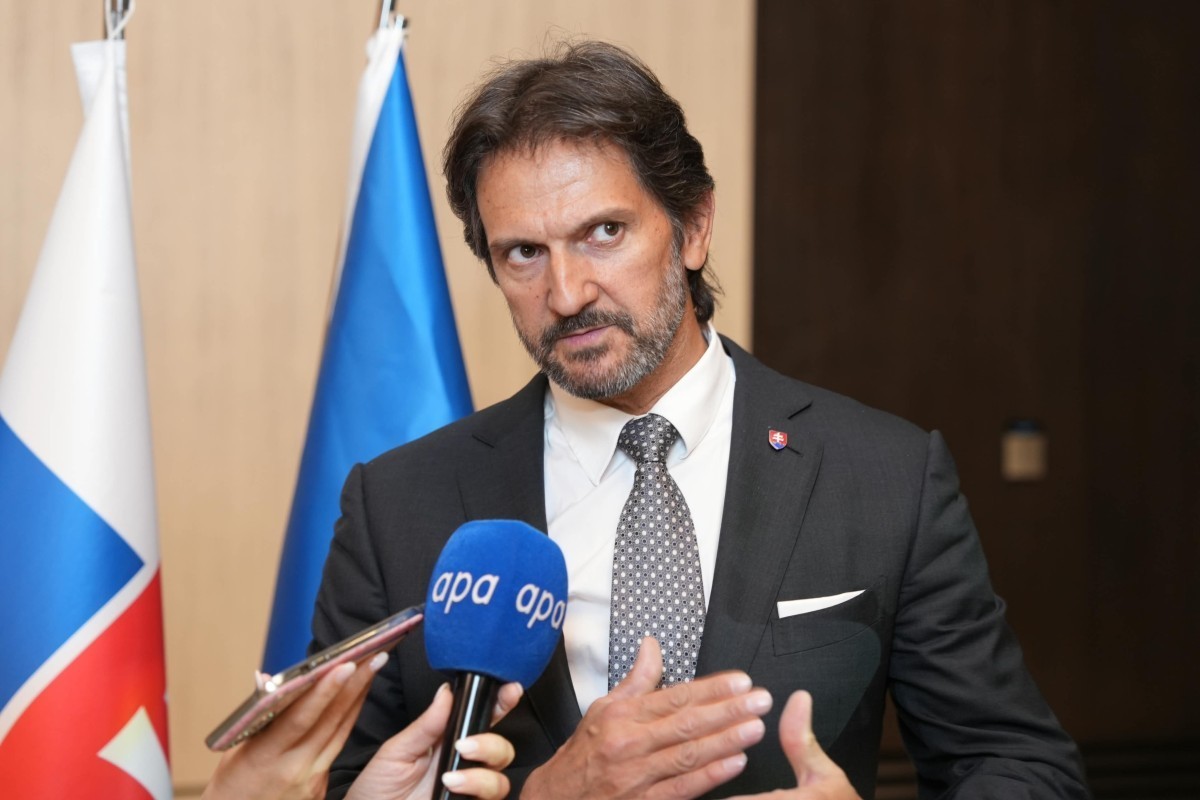


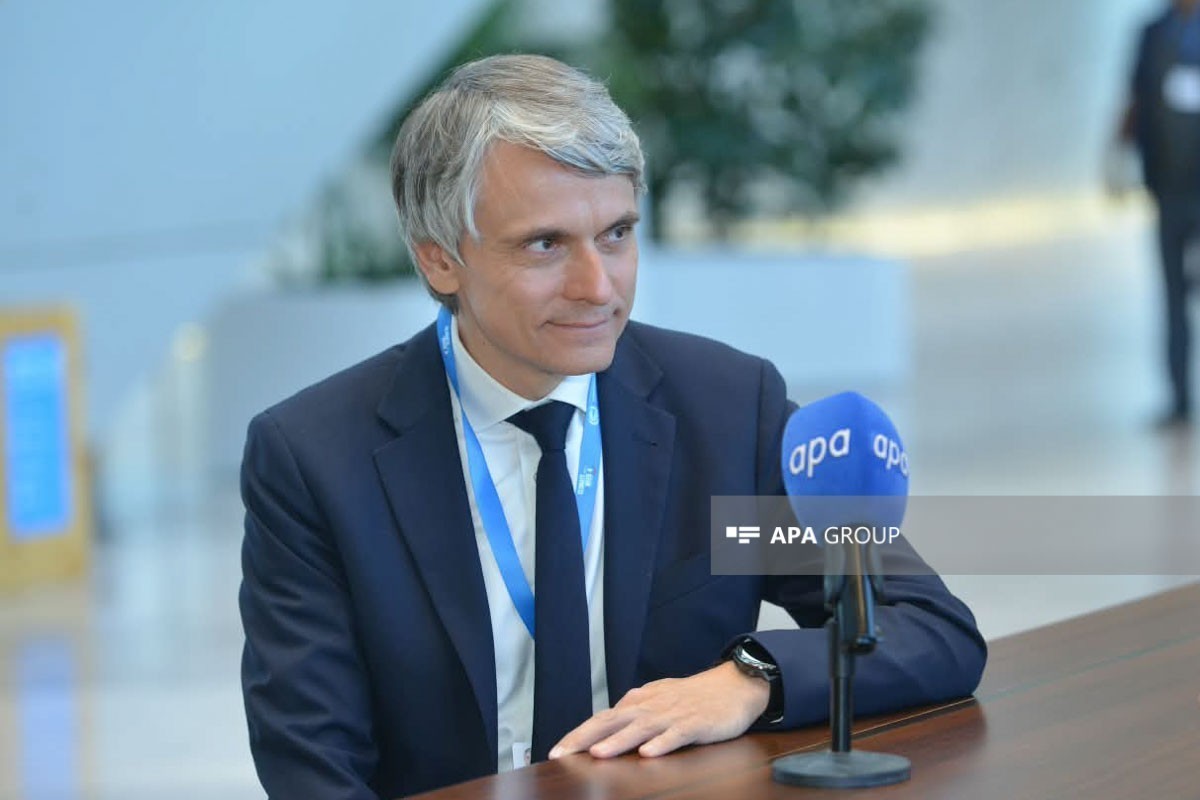


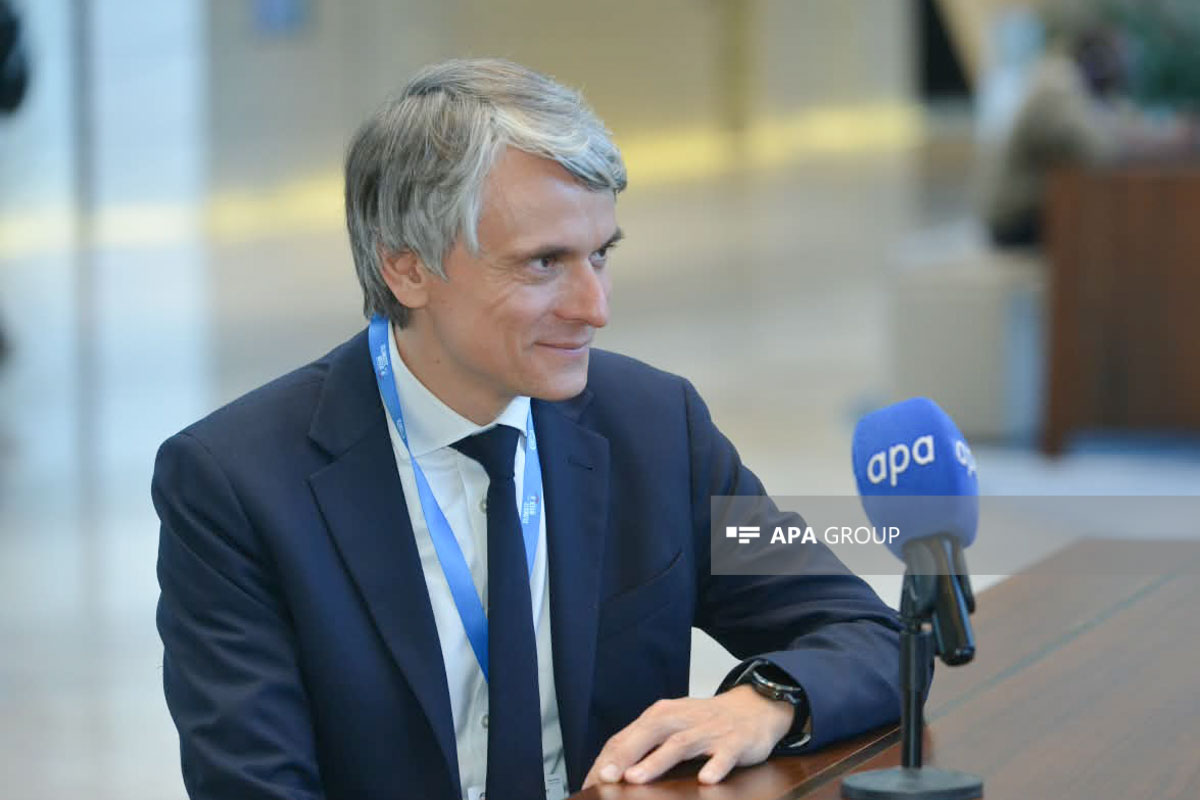
APA conducted an interview with the Deputy Executive Secretary of the United Nations Economic Commission for Europe (UNECE), Dmitry Mariyasin
We are currently focusing our attention on the Middle Corridor, which is a priority for Azerbaijan, Central Asian countries, and many partner countries in Europe
- During your speech as part of Baku Climate Week, you said that developing the Middle Corridor as a “green corridor” creates an important opportunity for Azerbaijan. What technical and institutional support can UNECE provide in this direction?
- UNECE has been working in the fields of transport and trade for many years. Within this framework, we support countries in the region in developing efficient, effective, green, and digitalized transport corridors. We support countries in developing all routes of the corridors. When it comes to corridors connecting Asia and Europe, these include the Northern, Middle, and Southern routes. Here in Baku, we are currently focusing our attention on the Trans-Caspian International Transport Route – the Middle Corridor, which is a priority for Azerbaijan, Central Asian countries and many partner countries in Europe.
The main focus is on ensuring that the corridor can operate seamlessly based on UN norms and standards, that digital solutions are compatible and interoperable with each other, and that transportation times are reduced.
When designing infrastructure, its “greening” and decarbonization should be taken into account. This issue was first discussed about two years ago during COP29 in Baku. Since then, within the framework of the activities of UNECE’s Working Party on Transport Trends and Economics under Türkiye’s leadership, we have begun more detailed discussions on what is required for the decarbonization and “greening” of corridors. We hope that COP31 in Antalya will provide an opportunity to continue this work.
Work should be carried out to prevent the shallowing of the Caspian Sea
- What do you think should be done first for this?
- First, we need more efficient and digitized operations to reduce the waiting time for trucks at the borders.
Second, we need to optimize logistics. This can reduce both transportation time and emissions generated during waiting periods. Artificial intelligence and other digital tools can be used for this purpose.
Third, we need to ensure that the corridor is resilient to the impacts of climate change and various disasters. This includes various risks ranging from drought and extreme heat to sudden floods that could disrupt the operation of a railway or road. Of course, there is also the extremely pressing issue of the declining level of the Caspian Sea, which is also quite sensitive to climate events.
Thus, we have a broad agenda ranging from vehicles to port infrastructure, from intermodal logistics operations to road design. At the same time, work should also be carried out to prevent the shallowing of the Caspian Sea.
We support five Central Asian countries and Azerbaijan in improving trade and transport connectivity
- You touched upon the issue related to the Caspian Sea. What projects is UNECE implementing or planning in the Caspian Sea region, particularly with Azerbaijan, and how can these projects contribute to the development of transport, logistics, and regional connectivity across the Caspian Sea?
- The Roadmap for the Digitalization of the Trans-Caspian Corridor is a very important document. This document was adopted at the summit of the UN Special Programme for the Economies of Central Asia (SPECA), held in Baku in 2023.
SPECA is a programme jointly implemented by UNECE and our partner regional commission, the United Nations Economic and Social Commission for Asia and the Pacific (UNESCAP). We support five Central Asian countries and Azerbaijan in improving trade and transport connectivity. The Roadmap envisages concrete actions related to the digitalization of UN conventions that form the basis of transport and the creation of new norms and standards that will help reduce transit time through the corridor.
For example, work is underway on our newest convention, the Unified Railway Law. It is also envisaged that UN standards, namely UN/CEFACT standards, will be used by traders along the corridor.
Discussions are currently underway in all three areas, and we hope that these activities will be supported through the newly established SPECA Multi-Partner Trust Fund. Azerbaijan, together with Uzbekistan and Türkiye, has made a significant financial contribution to this fund.
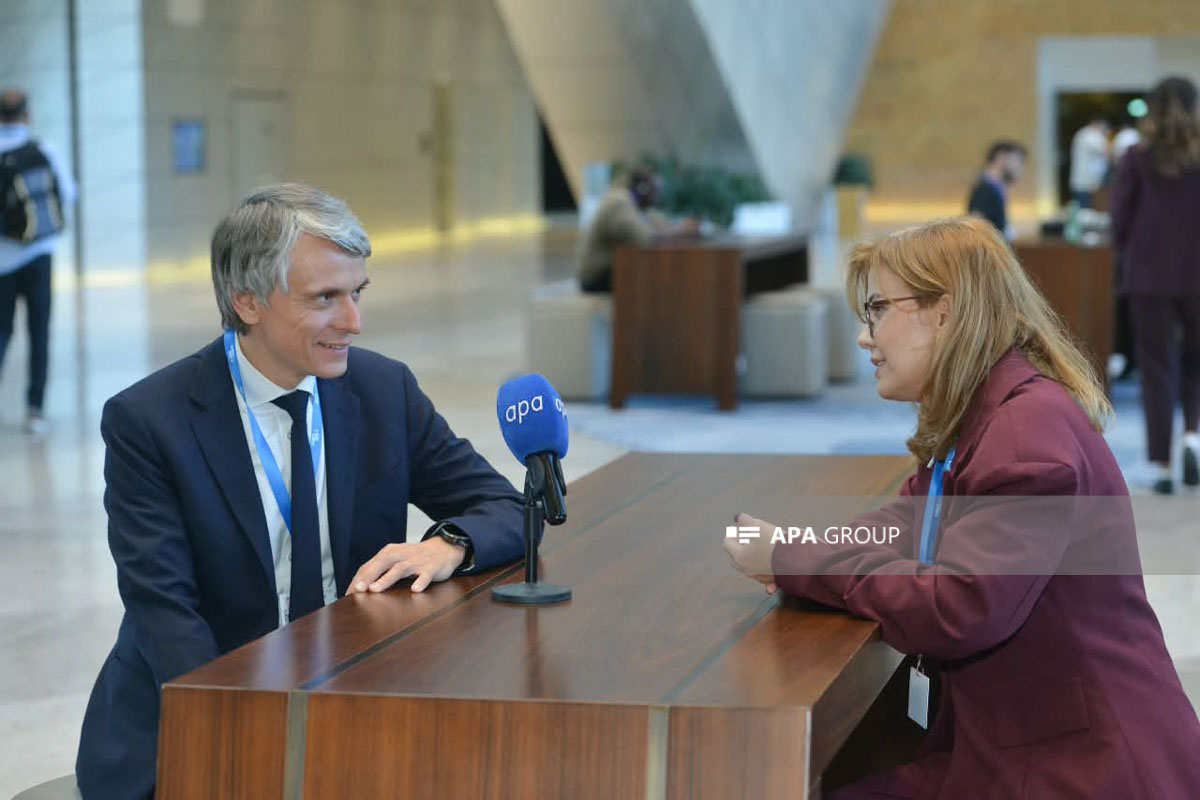
- How does UNECE assess the potential of Azerbaijan’s Karabakh and East Zangezur regions, particularly in terms of the development of transport, logistics and regional connectivity in the context of the Middle Corridor?
- We are starting discussions with Azerbaijani and Armenian officials, as well as with Türkiye, regarding the TRIPP initiative. This is one of the routes within the Middle Corridor. As I mentioned, we support the development of all routes so that there are as many complementary routes as possible. This route could also lead to improved regional cooperation and trade. We are ready to support all countries in the region in developing this route, including through the use of the digital tools I have already mentioned.
At the same time, we encourage all countries in the region to join UNECE’s AGTC Convention. This convention sets standards for the development of infrastructure along corridors.
Depending on the outcome of discussions between the countries, work to be carried out in this direction still lies ahead. I think, first of all, this is a matter for bilateral discussions between Azerbaijan and Armenia, as well as other neighboring states.
If the countries need UN support in developing concrete solutions to make TRIPP operational, we would be happy to help.
We continue to support the Baku Dialogue on Water and Climate established during COP29
- My last question is related to Azerbaijan’s active role in climate diplomacy. After hosting COP29, Azerbaijan continues to play an active role in the climate agenda. How does UNECE support Azerbaijan’s potential in renewable energy, “green energy” and energy transition? Are any new UNECE projects related to Azerbaijan planned in these areas?
- We continue our cooperation in the field of policy and expert advice. Azerbaijan participates in the activities of UNECE’s Committee on Sustainable Energy and the relevant expert groups. We benefit from the country’s strong knowledge and experience, while Azerbaijan can also benefit from the experience of other countries through the UNECE platform. Thus, first and foremost, it is about knowledge exchange and expert dialogue.
Second, we are interested in discussing the issue of reducing methane emissions in the oil and gas sector. This is also one of the priority topics for the upcoming COP. At the same time, this direction could be a continuation of the work at COP29 focusing on methane emissions from the food and agriculture sector.
In our view, energy issues are also linked to water issues. Therefore, together with UNEP and the World Meteorological Organization (WMO), we continue to support the Baku Dialogue on Water and Climate established during COP29. This dialogue will remain a very important part of Azerbaijan’s COP legacy.
In fact, we are currently holding an event related to the Baku Water and Climate Centre as part of Baku Climate Week, and we believe that this initiative could become part of the global architecture for managing water issues within the climate agenda.
Photo - Rufat Mustafayev ©️ APA GROUP


 Follow us on Telegram
 t.me/apanewsaz
 Follow us on Instagram
 Follow us on TikTok
 Follow us on Facebook
 Follow us on X