


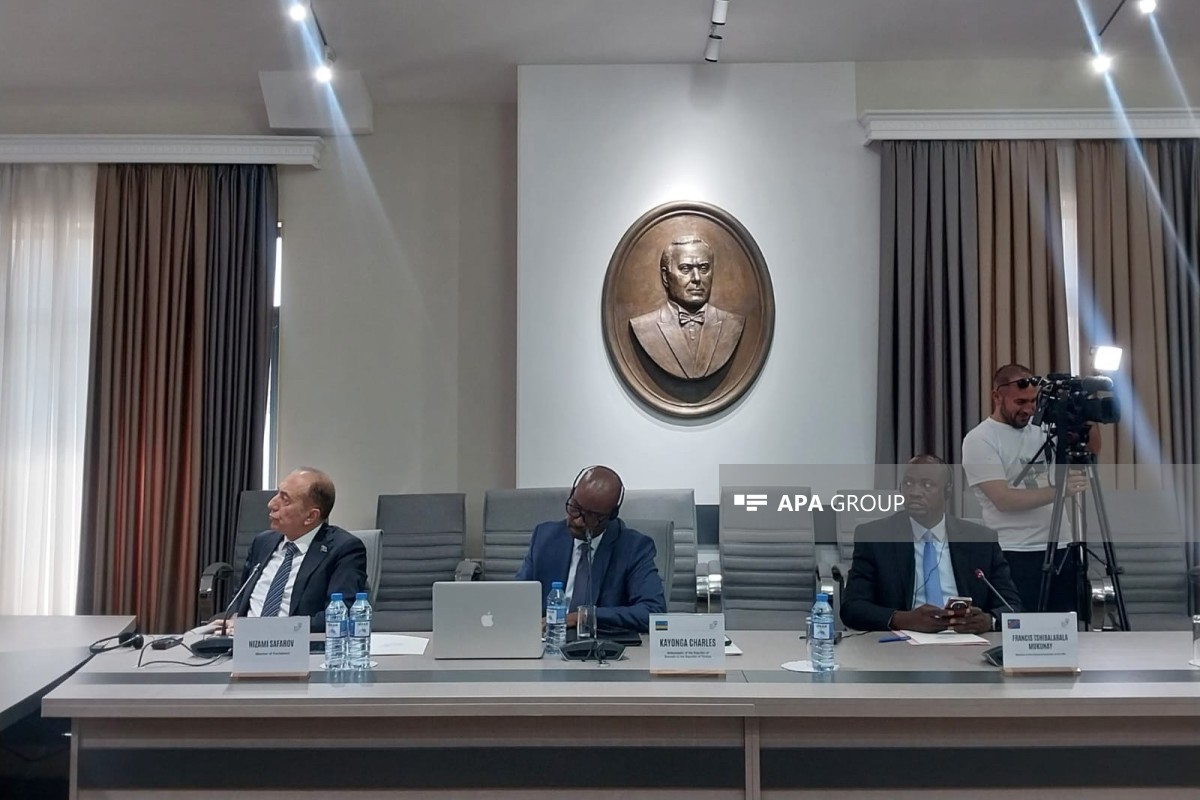


Belgium’s colonial policy was one of the main factors that led to the emergence of the economic and social crisis in Congo, Esther Kile, Assistant for Youth Programs at Congo’s National Commission for UNESCO, said at the international conference titled “Injustices of Belgian Colonialism and 101 Years of Struggle for Reparations,” organized by the Baku Initiative Group, APA reports.
Esther Kile stated that the economic model formed during the colonial period continued the country’s dependence on external resources and externally oriented economic relations in subsequent years.
According to her, the effects of that period were not limited to the economic sphere. Polarization in society, racial discrimination and prejudice against certain groups, as well as relations between colonial administrators and the local population, are among the long-term consequences of this policy:
“The restriction of the rights of numerous citizens led to a loss of respect for the principle of equality. The traces of this situation can still be clearly seen today.”
She emphasized the importance of preserving historical memory and properly conveying what happened during that period to future generations.
Esther Kile also noted the importance of providing support to Congo in this regard.


 Follow us on Telegram
 t.me/apanewsaz
 Follow us on Instagram
 Follow us on TikTok
 Follow us on Facebook
 Follow us on X