







More than 92% of taxes paid to Azerbaijan's state budget are voluntarily declared. Simplifying the fulfillment of tax obligations, expanding digital services and introducing a pre-filing system that provides for the preparation and submission of pre-filled tax returns have played an important role in achieving this result, APA-Economics reports.
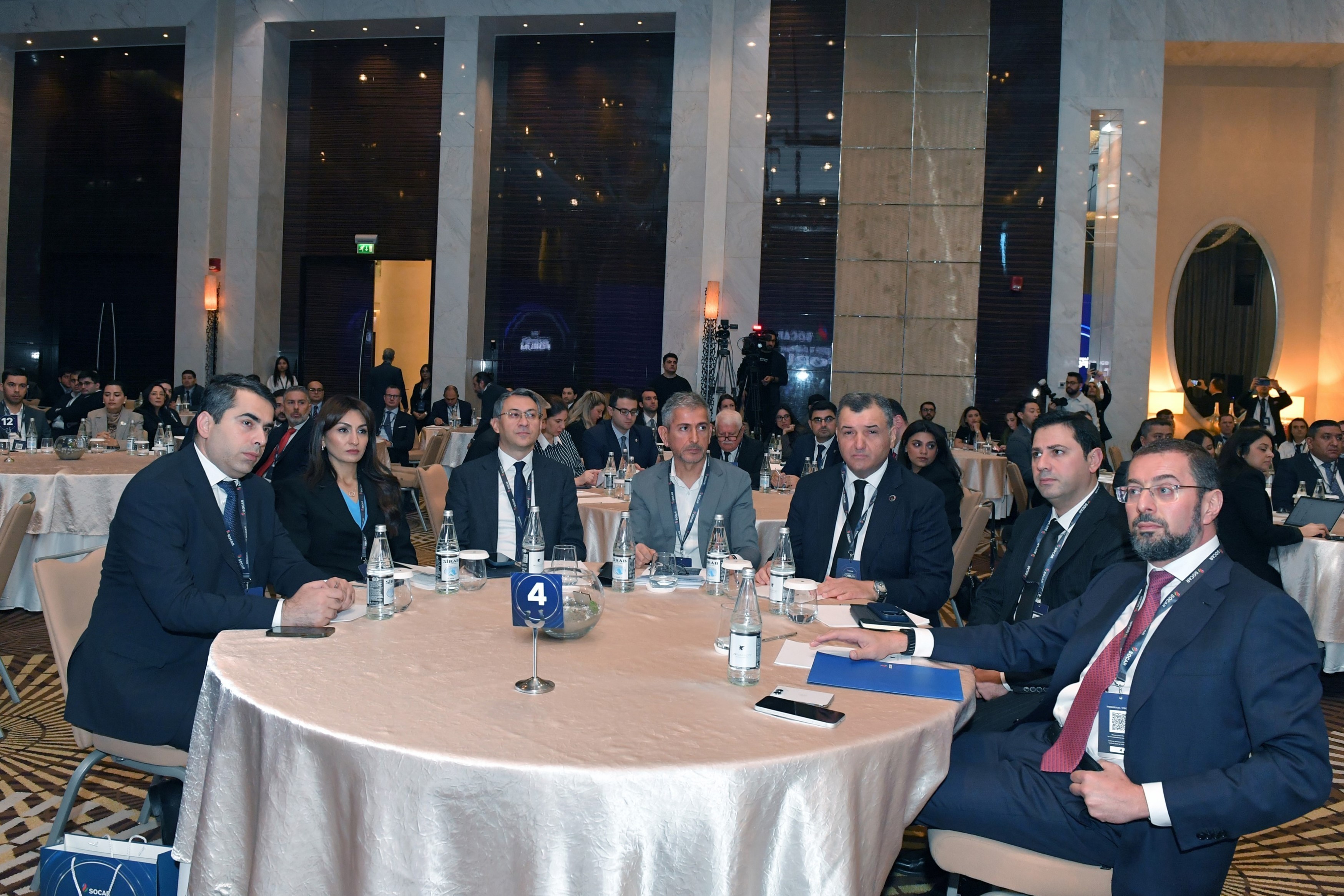
Deputy Head of the State Tax Service Samira Musayeva made the remarks during her speech at the "Law and Compliance" forum organized by the State Oil Company of Azerbaijan (SOCAR) in Baku.
Addressing the role of compliance in ensuring sustainable development and improving the business environment, Samira Musayeva spoke about efforts to promote voluntary tax compliance and identify risks in a timely manner.
She stated that implementing preventive measures to establish compliance principles in the business environment and adhering to international compliance standards in the activities of multinational companies are particularly important.
In this regard, Azerbaijan has joined several major initiatives aimed at expanding international tax cooperation and ensuring tax transparency. These include the OECD/G20 Inclusive Framework on Base Erosion and Profit Shifting (BEPS), the Convention on Mutual Administrative Assistance in Tax Matters, and the Multilateral Convention to Implement Tax Treaty Related Measures to Prevent Base Erosion and Profit Shifting.
Azerbaijan also participates in multilateral agreements on the exchange of information concerning financial accounts and country-by-country reports of multinational companies.
The deputy head emphasized the importance of implementing international tax standards, expanding information exchange and strengthening transparency to ensure that companies operating in different countries properly fulfill their tax obligations.
Samira Musayeva stated that one of the main objectives of modern tax administration is to create favorable conditions for entrepreneurs to voluntarily fulfill their tax obligations, analyze business transactions accurately and promptly, and establish effective risk management mechanisms.
According to her, studying the needs of businesses, promoting compliance with legislation, identifying risks in advance and developing a horizontal monitoring system are among the key priorities in this area.
She also highlighted the importance of the "Check Counterparties" electronic service, which enables entrepreneurs to obtain information about potential business partners and assess their economic resources, workforce, business experience and history of compliance with tax obligations.
She stated that this service is one of the important areas of government support for businesses, contributing to increased voluntary tax compliance and stronger trust between businesses and the state.
Samira Musayeva noted that more than 92% of taxes paid to the state budget are voluntarily declared. She emphasized that simplifying the fulfillment of tax obligations, expanding digital services and introducing the pre-filing system, which provides for the preparation and submission of pre-filled tax returns, have played an important role in achieving this result.
Noting that public expectations of government institutions are high, the deputy head pointed out that tax authorities annually present reports on the results of their activities to the public.
According to her, these reports also reflect business development indicators and measures taken to promote voluntary tax compliance.
Samira Musayeva stated that dialogue with businesses plays an important role in increasing voluntary tax compliance.
She noted that studying entrepreneurs' proposals and expectations allows for more effective tax regulation and that several amendments to the Tax Code were prepared based specifically on proposals submitted by businesses.
The deputy head emphasized that strengthening trust between businesses and the state, developing mutual dialogue and promoting voluntary tax compliance are essential conditions for sustainable economic development.



 Follow us on Telegram
 t.me/apanewsaz
 Follow us on Instagram
 Follow us on TikTok
 Follow us on Facebook
 Follow us on X