







Ukraine has never agreed to stop carrying out strikes against Russian oil refineries, The Kyiv Independent reports, citing Ukrainian officials.
Earlier, Western media outlets, citing their sources, reported that Ukraine had agreed to pause attacks on Russian oil refineries. However, sources interviewed by The Kyiv Independent denied these reports.
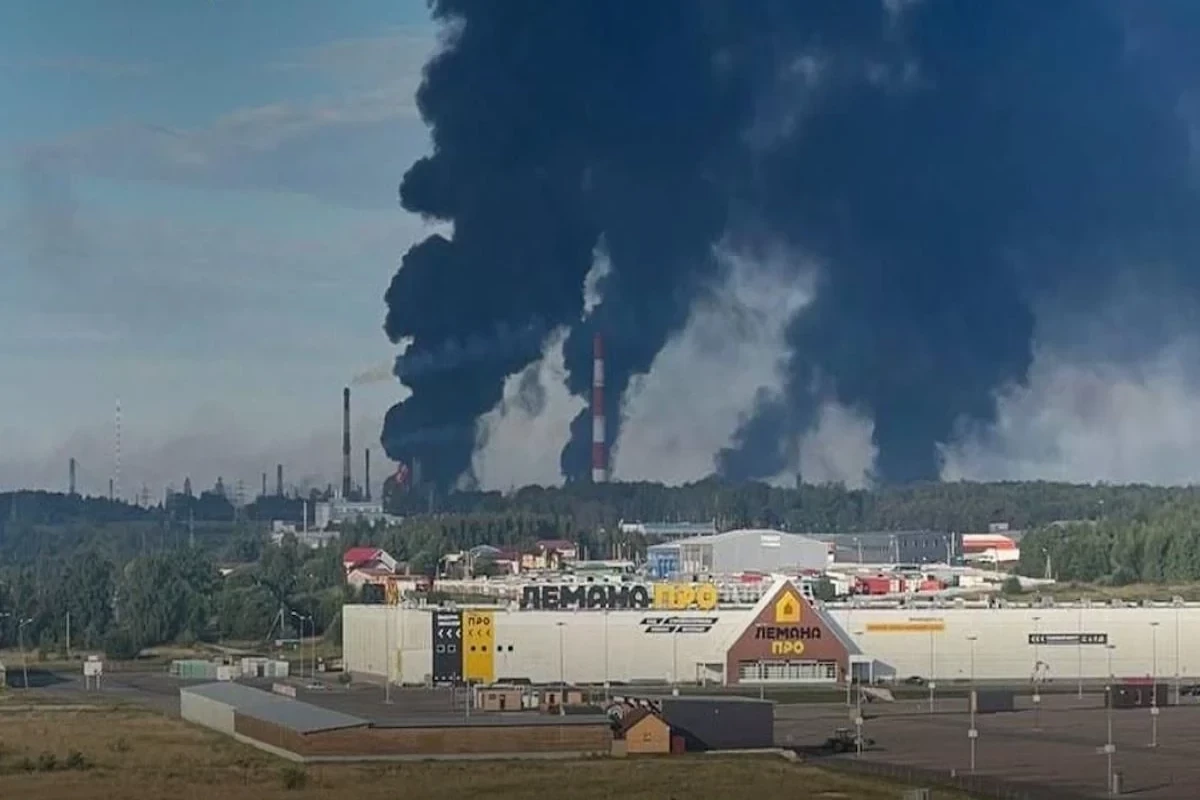
The publication recalled that on October 30, Ukrainian Defense Forces struck the Novokuybyshevsk oil refinery in Russia's Samara region. A fire was reported at the refinery shortly after the attack.
Ukrainian officials told journalists that Jared Kushner, the US President's special envoy, had indeed insisted that Ukraine suspend strikes on Russian oil refineries, at least temporarily. However, Kyiv never agreed to this.
"Jared suggested that we refrain from striking oil refineries for 30 days. But no one gave such an order," a senior Ukrainian official told journalists.
Another senior Ukrainian official told the publication that Ukraine would continue striking Russia's oil infrastructure but would not publicly claim responsibility for such attacks. Kyiv wants to avoid creating the impression that it is deliberately confronting the Donald Trump administration.
Despite the Ukrainian government's lack of public statements, Ukrainian defense company Fire Point continues to share the results of strikes on Russian oil refineries. In particular, the company recently reported a strike on the Novokuybyshevsk refinery.
The Russian government has also confirmed Ukrainian strikes on its oil refineries. Russian Deputy Prime Minister Alexander Novak said on October 30 that Ukraine had struck three oil refineries and one gas chemical complex in Russia.
The only brief pause in attacks on Russian oil refineries
The publication noted that the only interruption in Ukraine's prolonged campaign of attacks against Russian oil infrastructure occurred after US President Donald Trump unilaterally announced an "energy ceasefire" on October 11. At that time, Ukraine suspended strikes for approximately 72 hours until it became clear that Russia had no intention of complying with the terms announced by the US leader.
The publication recalled that shortly after Trump announced what he called an "energy ceasefire" agreement, Russia launched cruise missile strikes against Kharkiv Combined Heat and Power Plant No. 5 (CHP-5). The incident led Ukraine to conclude that Russia had no intention of observing the ceasefire.
In addition, a source close to the White House told journalists that much of the Trump administration's rhetoric regarding Ukrainian strikes on Russian oil infrastructure was aimed at a domestic audience. The source noted that the Central Intelligence Agency (CIA) continues to provide Ukraine with intelligence on the locations of Russian air defense systems. This has enabled Ukraine to carry out its campaign of strikes against Russian oil refineries.
It should be recalled that a fire broke out on the morning of October 30 at an oil refinery in Novokuybyshevsk, in Russia's Samara region. Earlier, a drone attack alert had been issued in the region, and the local airport was closed.
The Novokuybyshevsk refinery produces more than 20 types of petroleum products, including fuel for Russian aviation. The facility has a designed annual oil refining capacity of approximately 8.8 million tonnes.
Fire Point confirmed that Ukrainian Defense Forces had struck the refinery using FP-1 drones.
In addition, on October 31, drones attacked the Northern Industrial Zone in the Russian city of Ufa. The area contains three oil refineries located very close to one another. A fire broke out in the area following the attack.
A fire occurred at the Bashneft-Novoil refinery. Reports indicated that the flames may have engulfed the L-35 catalytic reforming unit. This unit is one of the most important sections of any major oil refinery.


 Follow us on Telegram
 t.me/apanewsaz
 Follow us on Instagram
 Follow us on TikTok
 Follow us on Facebook
 Follow us on X