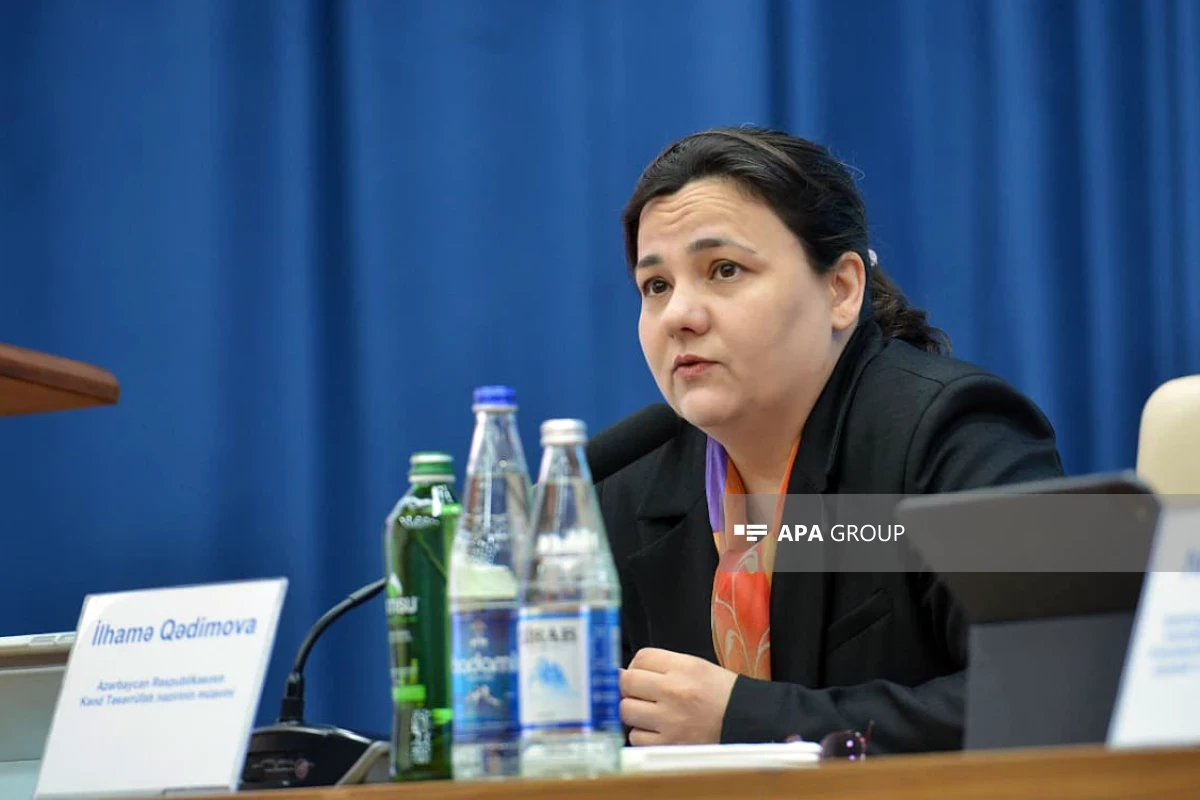


Currently, 151 climate stations provide data for preparing weather forecasts, Deputy Minister of Agriculture Ilhama Gadimova said during a panel discussion titled “Benefits and Challenges of Integrating Artificial Intelligence into Multi-Hazard Early Warning Systems” held as part of Baku Climate Action Week 2026 (BCAW 2026), APA reports.
She said that an additional 30 climate stations are planned to be installed. This is expected to bring the total number of stations in the network to 181.
The Deputy Minister noted that data creates real value only when it is transformed into a specific service and benefit for the farmer:
“That is precisely why our artificial intelligence programme covers practical applications such as monitoring plant health, assessing disease and pest risks, forecasting yields and water demand, as well as irrigation management.
The discussions held and work carried out in Baku this week are also aimed precisely at continuing this partnership towards COP31.
Artificial intelligence should not replace human decision-making; on the contrary, it should strengthen it. Meteorological data may be generated by one institution, data on water resources by another institution, and agricultural data in another system. However, farmers face all these risks simultaneously. Therefore, the interaction between our information systems and institutions must be equally strong.”
Gadimova emphasised that as artificial intelligence becomes more deeply integrated into decision-making processes at the state level, particular attention should also be paid to data governance, cybersecurity, transparency, reliability and digital inclusion.
“Most importantly, we must not allow digital transformation to create new inequalities in agriculture. A small farmer should be able to benefit from the capabilities of early warning systems just as much as a large agricultural enterprise.
The main criterion is ensuring that the right information reaches the right farmer at the right time and enables them to make the right decision in a timely manner. If we can achieve this, artificial intelligence will cease to be merely a technological innovation and become an important tool for strengthening the resilience of the agricultural sector,” the Deputy Minister added.


 Follow us on Telegram
 t.me/apanewsaz
 Follow us on Instagram
 Follow us on TikTok
 Follow us on Facebook
 Follow us on X