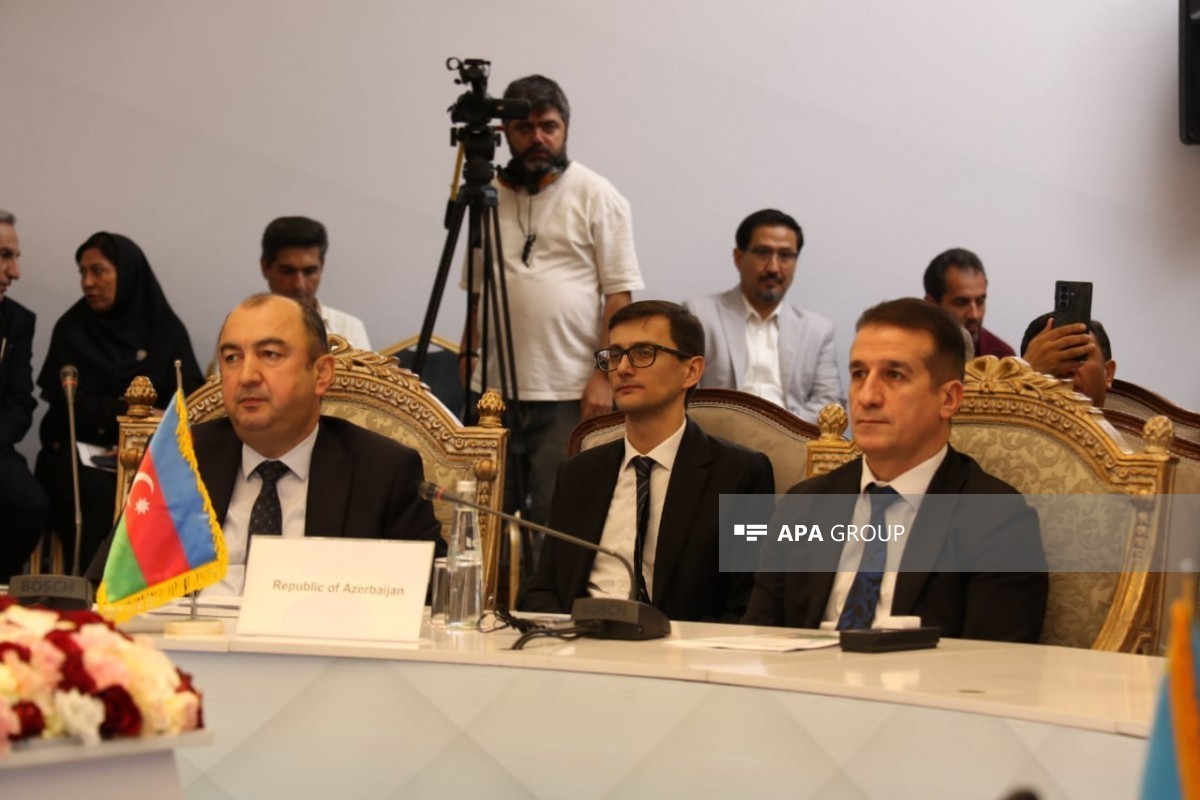


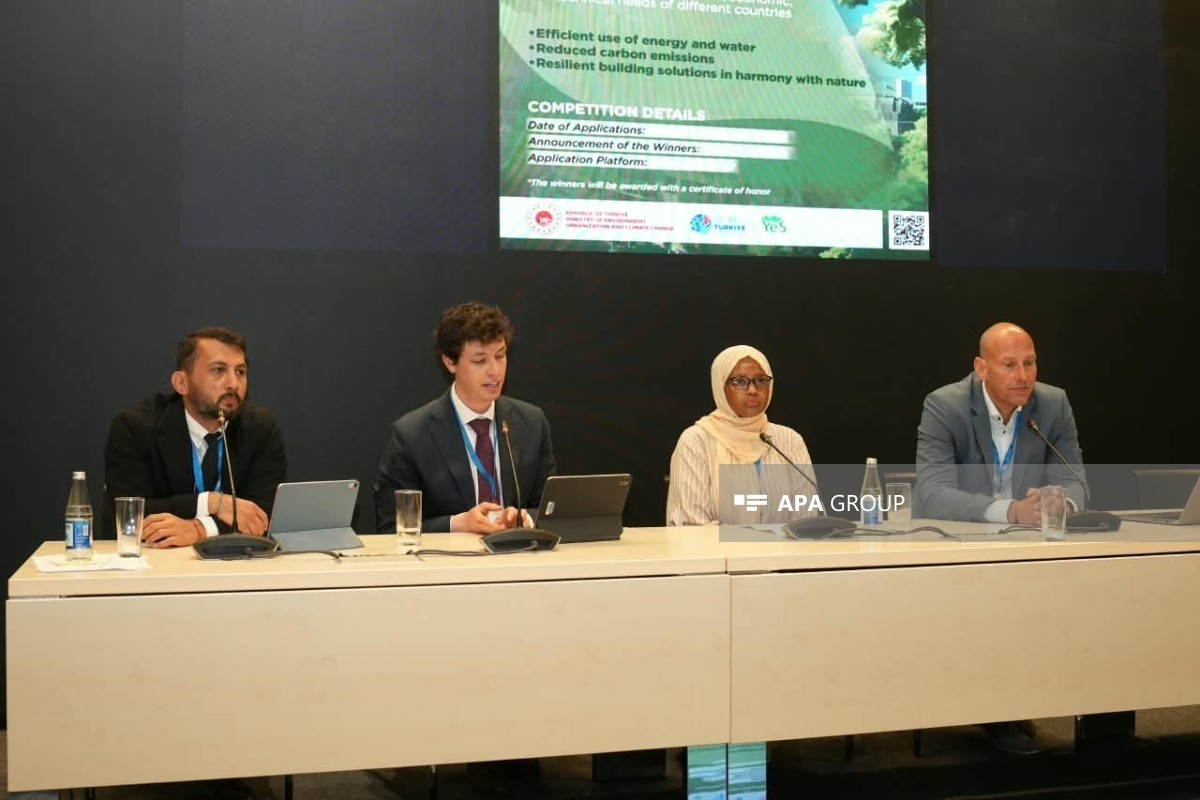


A panel discussion titled "From targets to implementation: Accelerating the development of climate-positive buildings through global cooperation" has been held in Baku as part of the Fourth Climate Week of the UN Framework Convention on Climate Change, hosted by the Republic of Azerbaijan and organized by the Ministry of Foreign Affairs, APA reports.
Representatives from Türkiye, Australia and Somalia shared their experiences in improving the energy efficiency of buildings, climate-resilient urban development, building standards and financing mechanisms during the panel.
Tuğba Dinçbaş, Deputy Director of the Directorate General of Climate Change at Türkiye's Ministry of Environment, Urbanization and Climate Change, said Türkiye is working on new approaches to climate-resilient urban development. According to her, rapid urbanization, growing energy demand, extreme heat and floods are increasing pressure on urban infrastructure and communities.
Dinçbaş noted that energy-efficient and climate-resilient buildings, access to finance, and strengthening the links between national climate targets and local implementation are among Türkiye's key priorities.
She said the COP31 Presidency is proposing a global ambition to reduce the energy intensity of buildings by at least 20% by 2035 compared with the 2025 baseline. At the same time, under the "35 by 35" global electrification goal, the share of electricity in total final energy demand is targeted to reach 35% by 2035.
Sebastian Salter, Director of Green Industrialisation and Climate Initiatives at Australia's Department of Climate Change, Energy, the Environment and Water, said his country is focusing on three main areas to improve the energy efficiency of buildings. These include disclosure of buildings' energy performance, setting building standards and financing mechanisms.
Salter noted that Australia's National Construction Code requires new buildings and existing buildings undergoing major renovations to meet established energy efficiency standards. He said the introduction of the energy rating system had resulted in a reduction of more than 44% in buildings' energy demand over 12 years.
The Australian representative also highlighted the problem of "split incentives" in rental properties, where the property owner bears the cost of improving energy efficiency while the tenant receives most of the benefits. According to him, financing mechanisms and energy rating systems are being used to address this issue. Salter added that Australia has established an AUD 1 billion fund to support household energy upgrades.
Ayan Harare, Somalia's National Climate Finance Coordinator, representative of the Designated National Authority (DNA) for Article 6 of the Paris Agreement, and National Gender and Climate Focal Point, said that combining appropriate capacity building, concessional financing and private investment would enable the development of energy-efficient and climate-resilient buildings in Somalia.
Harare emphasized that this approach could contribute not only to improving the energy efficiency of buildings but also to Somalia's broader recovery and development goals. She noted that Somalia is ready to cooperate with various organizations in this area.
The panel discussion continued with speeches by other speakers.


 Follow us on Telegram
 t.me/apanewsaz
 Follow us on Instagram
 Follow us on TikTok
 Follow us on Facebook
 Follow us on X